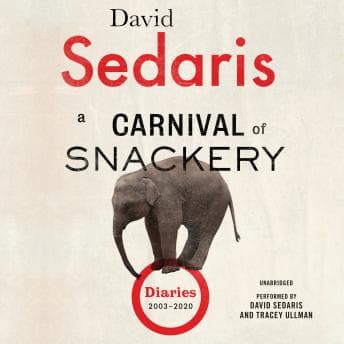

What makes a comedy album work when you're driving home at 4 AM, half-delirious from a twelve-hour shift where you coded two patients and comforted three families? Honestly? The sound of other people laughing.
I downloaded this one on a whim - one hour, perfect for my commute home, and I needed something that wasn't going to make me think about mortality for once. David Sedaris felt like a safe bet. I've read his essays before, but hearing them live? With an actual audience cackling in the background? That's a different animal entirely.
The Weird Comfort of Collective Laughter
Here's the thing about live recordings that I didn't expect to love: the audience becomes part of the experience. At 3:47 AM, driving through empty Phoenix streets, hearing a crowd in Denver lose it over a fable about a cat and a baboon made me feel less alone. (Carlos would say I'm getting sentimental in my old age. He's probably right.)
Sedaris reads his own work, obviously, and his timing is - okay, I'm just going to say it - surgical. The pauses, the way he leans into certain words, the deadpan delivery that makes you wait a beat before the punchline lands. It's like watching a really good nurse start an IV on a difficult stick. You know they've done this a thousand times. The confidence is quiet but absolute.
The structure jumps between venues - Denver, New York, Durham, LA, Atlanta - and each piece has its own flavor. "Laugh, Kookaburra" from the UCLA performance got me. Something about the way he describes this carnivorous bird and his own family dynamics in the same breath. I was ugly-laughing in my car. The kind where you have to pull over for a second. Bossypants hit me the same way - that perfect mix of self-deprecating and sharp that makes you laugh until your face hurts.
When the Crowd Drowns the Comedian
Okay, so here's my one complaint, and it's not even really a complaint? Sometimes the audience laughs SO hard that Sedaris's voice gets buried. There's this moment during the New York recordings where I genuinely couldn't catch what he said because the crowd was absolutely losing it. Had to rewind twice.
Some people would hate that. I get it. If you want a clean, studio-polished audiobook experience, this ain't it. This is messy and alive and occasionally you're straining to hear over the joy of strangers. But honestly? After the shifts I work, that chaos felt right. Real life is noisy. People interrupt. Things overlap. This felt human in a way that over-produced audiobooks sometimes don't.
The diary entries from Atlanta at the end are particularly good - more personal, a little rawer. Sedaris has this gift for making his own neuroses feel universal. I don't have a French backyard with feral rabbits, but the way he describes his relationship with the absurd? I felt that in my bones.
A Concert Recording in Audiobook Clothing
Let me be clear: if you're expecting a standard memoir narration, you're going to be confused. This is a comedy album that happens to be sold as an audiobook. The tracks start and stop in ways that feel abrupt if you're not ready for it. More like a concert recording than a book. Which - for an hour of content at the end of a brutal shift - was exactly what I needed.
My mom would probably find this too irreverent. (She still thinks I should've been a doctor, so her opinions on my entertainment choices are suspect.) But Carlos laughed when I played him the kookaburra bit, and he doesn't even like audiobooks. That's saying something.
The production quality is clean where it needs to be - you can hear Sedaris clearly most of the time, and the audience sounds are balanced enough that they enhance rather than overwhelm. Mostly. A few moments where I wished someone had turned down the crowd mic just a touch, but I'm being picky.
Night Shift Approved
Already listened twice. It's become my post-code decompression listen - when the adrenaline is still pumping and I need something that isn't silence but also isn't going to require my full attention. Sedaris's voice is warm without being saccharine, funny without trying too hard.
If you love his books, this is a must-have. If you've never read him, maybe start with one of his essay collections first to see if his humor lands for you. Hard Times proved to me that even when humor doesn't fully land, there's value in the attempt - sometimes the miss is as interesting as the hit. And if you hate the sound of other people's laughter? Skip this one. But if you've ever needed to feel like you're in a room full of people having a good time while you're actually alone in your car at 4 AM? This is your album.