
Denise and I were walking the lakefront last Saturday morning — one of those rare October days in Chicago where the fog hasn't burned off yet and the lake looks like it's hiding something. Perfect weather, as it turns out, for a book about houses that keep secrets and forests that swallow people whole.
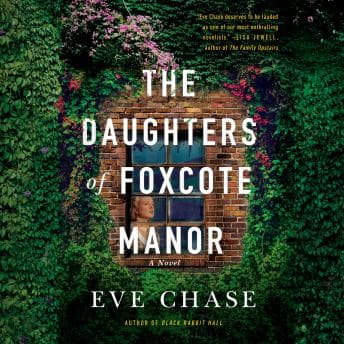
I'd picked up The Daughters of Foxcote Manor mostly because the Kate Morton blurb caught my eye and I trust Morton's taste in atmospheric fiction the way I trust my wife's taste in restaurants — she hasn't steered me wrong yet. And Chase earns the comparison, though she's doing something slightly different. Where Morton builds elaborate clockwork puzzles, Chase is more interested in the emotional wreckage families leave behind, and how it echoes across generations whether anyone wants it to or not.
The Forest Is a Character and It Knows What You Did
The setup: 1971, the Harrington family finds an abandoned baby in the woods surrounding their country estate, Foxcote Manor. They decide — in that particular way upper-class English families decide things, with tea and quiet certainty — to just... keep her. Raise her as their own. No authorities, no questions. And then a body turns up on the grounds, and the whole fragile arrangement starts cracking apart like old plaster.
Cut to the present day, where Sylvie is circling back toward those same woods, pulled by the kind of questions that won't stay buried no matter how much family silence you pile on top of them. The dual timeline structure isn't new — we've seen it in half the historical fiction published since 2015 — but Chase makes it work because the 1971 sections genuinely feel like a different world. The procedural satisfaction of piecing together what actually happened reminded me, oddly, of working through Adventures of Sherlock Holmes — that same pleasure of watching a hidden architecture slowly reveal itself, even when the emotional stakes are doing most of the heavy lifting. Not just bell-bottoms-and-wallpaper different, but morally different. The ease with which the Harringtons absorb a stolen child into their household says everything about who had power in that era and who didn't.
This reminds me of what Hemingway said about the iceberg — what's beneath the surface matters more than what's visible. Chase writes families that way. The Harringtons don't shout their dysfunction. They serve it at dinner with the good china.
Katherine Press Understands That Pause Is Punctuation
Here's what impressed me about the narration: Press handles the timeline shifts without ever making you feel lost. That's harder than it sounds with a single narrator managing two eras and multiple POV characters. She doesn't do anything showy — no dramatic accent changes, no theatrical gasps. What she does is shift her register. The 1971 sections carry this slightly breathless, almost naive quality, like someone telling a story they still can't quite believe happened. The present-day Sylvie sections are lower, steadier, more guarded. You hear the difference in your gut before your brain catches up.
The narration borders on gothic horror at times — and I mean that as a compliment. There's a section deep in the woods surrounding Foxcote where the atmosphere gets genuinely unsettling, and Press doesn't oversell it. She trusts the silence between sentences. At 1.0x speed (yes, I'm that person), those pauses land exactly right. The prose deserves to be savored, and Press gives it room to breathe.
My one quibble: the mystery elements occasionally feel like they're being held at arm's length. Chase is so good at the family dynamics — the way mothers and daughters orbit each other, sometimes colliding, sometimes drifting into separate galaxies — that when the plot needs to deliver traditional thriller beats, it feels almost reluctant. Like the book would rather sit in the emotional complexity than solve the puzzle. I didn't mind this. Some listeners will.
Who This Is For (And Who Should Maybe Walk Past)
If you loved The House at Riverton or anything by Kate Morton, this is its spiritual successor — same DNA, slightly warmer heart. It's a book about adoption, identity, the lies families tell to protect themselves and call it love. My students would hate this. I love it. (They'd call it "slow." I'd call it "patient." We'd both be right.)
Skip it if you want a propulsive whodunit. The mystery here is more emotional than procedural — the real question isn't who did what in 1971 but whether knowing the truth actually helps anyone in the present. That's a harder question, and Chase doesn't pretend the answer is simple.
This is a focused listen, by the way. The timeline jumps require your attention. Don't try to grade papers while listening. (I tried. I ended up giving a sophomore a B+ he definitely didn't earn because I was too wrapped up in the Harringtons to notice his thesis was about Lord of the Flies and not The Great Gatsby.)
Worth Pausing the Faculty Meeting For
At ten and a half hours, it's a proper commitment, but it earns its length. The final hour pulls threads together in ways that reframe everything you thought you understood about the first three. Not with some cheap twist — with the slow, devastating clarity of someone finally telling the truth after decades of silence. The New York Times was right: this isn't really about a murder or a creepy house. It's about the families we're born into, the ones we build, and especially the ones we run from. Chase knows that those three categories overlap more than we'd like to admit.