
Look, I wasn't expecting to spend my Saturday morning jog crying about a woman who'd been presumed dead for a year. And yet. Here we are.
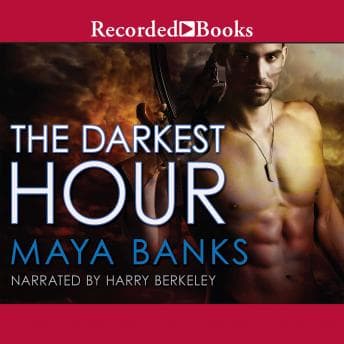
Maya Banks' The Darkest Hour grabbed me by the throat somewhere around hour three and didn't let go. The premise is almost unbearably simple: Ethan Kelly, ex-Navy SEAL, gets an anonymous call saying his wife Rachel—the one he's been mourning for over a year—is alive. Somewhere in a jungle. Held by a drug cartel. And suddenly this man who'd been walking through life like a ghost has a mission again.
This is a fascinating case study in grief interrupted. Psychologically, what Banks does here is pretty compelling. Ethan hasn't processed Rachel's death—he's been stuck in that frozen, dissociative state that happens when loss is too sudden, too violent to metabolize. The phone call doesn't give him closure. It rips the wound back open and pours adrenaline into it. My therapist would have thoughts about this character. Many thoughts.
The Emotional Gut-Punch That Actually Landed
What makes Ethan compelling is that Banks doesn't let him off easy. He's not just the heroic husband riding in to save the day. He's a man confronting the fact that he gave up. That he believed she was gone. That he started—tentatively, guiltily—to imagine a future without her. The research actually shows that survivor's guilt in presumed-death scenarios is particularly brutal, and Banks captures that specific flavor of self-loathing really well. That same psychological complexity shows up in Outlander, where Claire processes her own impossible grief across timelines.
Rachel's POV sections are harder to listen to. Not because they're poorly written—they're not—but because trauma portrayed this accurately is uncomfortable. She's been through hell. She's dissociated. She doesn't fully trust that rescue is real. Classic PTSD responses, and Banks doesn't rush her recovery or tie it up with a neat bow. (I appreciated that. So many romance novels treat trauma like a plot device to be resolved by good sex. This isn't that.)
The KGI team stuff? Look, I'm not usually here for the military brotherhood aspects of romantic suspense. Too much tactical jargon, too many interchangeable tough guys. But Banks manages to make these characters distinct enough that I actually cared who was who by the end. There's clearly sequel bait happening—I could practically see the "Coming Soon" banners over certain characters' heads—but it didn't derail the main story.
Harry Berkeley and the Voice in My Head
Harry Berkeley's narration is... interesting. His masculine voice works beautifully for the Kelly brothers and the KGI operatives. There's a gravel to it that sells the ex-military vibe without tipping into parody. And honestly? His female voices are better than I expected. Rachel sounds distinct from the other women, which is harder than it sounds. (I've listened to audiobooks where every female character sounds like the narrator doing a slightly higher pitch. This isn't that.)
The emotional beats land. When Ethan's voice cracks during certain scenes, Berkeley doesn't oversell it. He lets the silence do some of the work. That's a narrator who understands pacing.
But—and this is where I have to be honest—the intimate scenes get awkward. Not terrible. Just... stilted. Like Berkeley suddenly becomes very aware that he's reading these words out loud in a recording booth. The rhythm changes. The naturalism drops. It's not a dealbreaker, but if you're coming to this for the spicy scenes specifically, you might find yourself cringing a little. Why does the narration shift so dramatically during these moments? It's like he's reading a different book.
Who's This For (And Who Should Run)
This is romantic suspense done right. The romance and the suspense are actually integrated—one doesn't feel tacked onto the other. Best for commutes, honestly. The pacing is steady enough that you won't miss crucial plot points while merging onto the highway, but engaging enough that traffic won't make you want to scream. (Well. Not more than usual.)
Skip if: you're sensitive to trauma content, or if awkward-sounding sex scenes will pull you out of the story entirely. Also maybe skip if you need your romantic heroes to be emotionally uncomplicated. Ethan is a mess. A compelling mess, but a mess.
The production quality is clean—no weird audio glitches, no background noise, no moments where you're suddenly convinced your headphones are broken. At nearly eleven hours, it's a commitment, but it didn't drag. I finished it in three days, which for my schedule is basically binge-listening.
My Prescription
Would I continue the series? Yeah, probably. Banks clearly knows how to construct a character arc, and I'm curious about some of the secondary characters who got set up here. Plus I want to see if Berkeley figures out the intimate scenes by book three.
Solid romantic suspense. Psychologically more interesting than I expected. Just maybe don't listen to certain chapters with your mother in the car. Trust me on this one.