
What happens when a fantasy nerd who lives for hard magic systems and Sanderson-level world-building stumbles into a paranormal romance series 32 books deep?
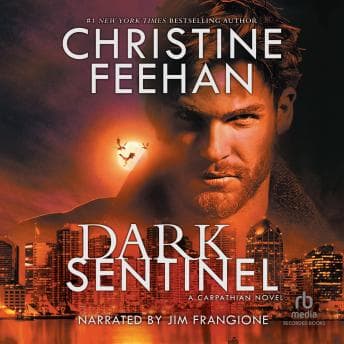
Look, I'll be honest. I picked up Dark Sentinel because someone in my D&D group described the Carpathian series as "vampires with a magic system" and that was enough to get me. I was knee-deep in a board game solo session—working through a Gloomhaven scenario at 1 AM because my thesis certainly wasn't getting written—and I needed something to fill the silence. Thirteen hours and thirty-nine minutes later, I have... thoughts.
Carpathians Are Basically a Homebrew Race and I'm Here For It
So here's the thing about Feehan's Carpathians that nobody warned me about: they're basically a D&D race sheet. Telepathic bonds, soul-sharing mechanics, the whole lifemate system where males literally lose the ability to see color and feel emotion until they find their bonded partner? That's not just romance flavor—that's a system. Andor Katona has lived centuries as a monk in the Carpathian Mountains, slowly losing himself, and the book actually tracks the mechanical progression of what happens when a Carpathian goes too long without their lifemate. The way Feehan handles the telepathic connection between Andor and Lorraine has specific rules and limitations. It's not just "oh they can read each other's minds." There are costs, there's a bonding ritual, there's a whole hierarchy of ancient protocols. The magic system is chef's kiss—even if it's wrapped in a romance I wasn't fully prepared for.
Lorraine Peters is the real surprise here. She's a human woman who's lost her entire family and walks into a three-on-one fight against what she thinks are just random attackers—they're actually vampire hunters who've mistaken Andor for prey—and she just... goes full barbarian. Like, if I were running this as a campaign, she'd be the player who rolled a nat 20 on initiative and decided to charge into melee with no armor. Feehan writes her as genuinely lethal and clever, not just "feisty" in the way romance novels sometimes pretend is the same thing.
Jim Frangione's Deep Voice Does Heavy Lifting in Combat
Okay, so Jim Frangione is no Steven Pacey—Steven Pacey walked so other narrators could run, and that's just facts—but the man is good at what he does here. His deep voice has this almost theatrical quality that works surprisingly well during the fight sequences and the vampire confrontations. When the master vampire shows up, that villain who's already lost something irreplaceable and is now targeting Andor with this cold, calculated fury? Frangione drops into this register that genuinely made me set down my Gloomhaven cards and pay attention.
What impressed me most is that he apparently took the time to learn the Carpathian pronunciations. If you've ever listened to a fantasy audiobook where the narrator butchers the made-up language—and if you're a fantasy listener, you have—you know how much that pulls you out. Frangione doesn't stumble over Feehan's naming conventions. The momentum stays consistent through the fighting, the kidnapping sequences, the... uh, the lovemaking scenes. (I was not prepared for the spice level. My D&D group failed to mention this part. Noted.)
The solo narration means he's carrying every character on his own, and while his female voices aren't going to fool anyone, the differentiation is clear enough that you always know who's talking. No confusion, which is more than I can say for some multi-character fantasy audiobooks I've suffered through.
Where the Campaign Stumbles
Here's where I level with you: if you don't like info-dumps, this isn't for you (but you're wrong). Feehan builds her Carpathian world with a LOT of exposition woven into the romance and the telepathic exchanges. For me, a guy who will happily read a three-page appendix on fictional metallurgy, this was fine. But I can see how someone who wants the plot to sprint might find the middle section—where Andor and Lorraine's bond deepens through extended telepathic conversations—a bit like a session where the DM is reading backstory for twenty minutes.
Also, coming into this at book 32 (thirty-two!), there's clearly lore I'm missing. Feehan does enough in-text explanation that I never felt completely lost, but there were references to ancient Carpathian warriors and past events that felt like other players' backstory being referenced at the table. You can follow the main quest without it, but completionists will want to start earlier.
The Loot Table: Who Picks This Up
If you're a paranormal romance fan who also secretly wishes your vampires came with a stat block? This is your book. If you're a fantasy nerd curious about a long-running series with genuine world-building depth? Surprisingly worth your time. My D&D group would love the combat sequences and the magic system—less sure about the explicit romance, but hey, some campaigns go there too. On the paranormal romance end of the spectrum, Once Burned is another entry point for fantasy-brained readers who want their supernatural world-building served alongside actual romantic stakes—though the magic system there leans more toward the "cool power reveal" side than a proper ruleset.
If you need hard sci-fi or purely plot-driven action with zero romantic elements, this is not your dungeon. The romance IS the main quest here, with the vampire war as the B-plot. Know that going in.
Yes, it's nearly 14 hours. And honestly? For what you get—a complete story with solid world-building, a narrator who clearly respects the material, and fight scenes that actually had me pausing my board game—it's a fair trade. I read this instead of writing my thesis, and I regret nothing. (Dr. Patel, if you're reading this, I am also making progress. Probably.)