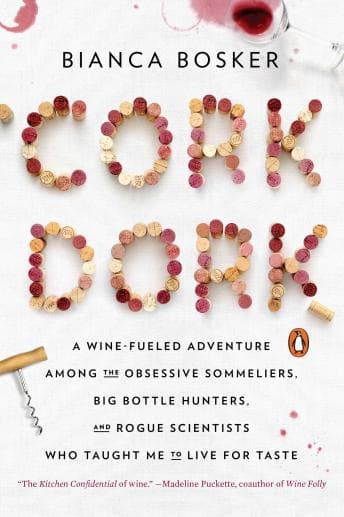

Bianca Bosker made me jealous of sommeliers, and I teach high school English. I already thought my obsession with close reading was intense. Then Bosker spent twelve hours describing people who can identify a wine's vintage, vineyard, and soil composition from a single sip, and suddenly my ability to distinguish Hemingway from Fitzgerald by sentence length feels pedestrian.
Here's what you need to know: Cork Dork is immersion journalism in the tradition of George Plimpton, except instead of playing quarterback, Bosker quits her tech journalism career to bus tables at a Michelin-starred restaurant and train for the Certified Sommelier exam. The stakes are lower than war reporting. The intensity is not.
When Obsession Becomes Its Own Subject
I was walking the lakefront with Denise on a Saturday morning, earbuds in, half-watching joggers dodge Canada geese, when Bosker described an exclusive Burgundy dinner where bottles worth thousands of dollars were being poured for guests who barely tasted them — swirling, sipping, dumping, moving on. The waste of it. The reverence mixed with carelessness. It reminded me of what Hemingway said about the very rich being different from you and me, except here the currency isn't money but attention. The sommeliers at these events are the ones truly tasting. Everyone else is performing.
That tension — between genuine sensory devotion and the absurd theater of wine culture — is what makes this book work. Bosker isn't just writing about wine. She's writing about what happens when people organize their entire lives around perception. The underground tasting groups she infiltrates treat blind tastings like combat. Her mentor Morgan figures prominently, and the way Bosker captures his particular brand of swagger — equal parts generosity and gatekeeping — gives you a real person, not a character sketch.
The neuroscience detour, where Bosker visits a lab in South Korea to get her brain scanned while tasting, is genuinely fascinating. She's asking the question I ask my students about literature: is the meaning in the text, or in the reader? Is there really a difference between a $12 bottle and a $200 bottle, or is it all context and expectation? The science doesn't give a clean answer, which is honest.
Bosker Reading Bosker — And Why It Works
Author-narrated audiobooks are a gamble. Half the time you get a writer who reads like they're dictating a grocery list. Bosker is the other half. She's got natural comic timing — there's a scene involving Chablis and a bedroom mishap that she delivers with exactly the right mix of embarrassment and delight. You can hear her grinning.
The narrator understands that pause is punctuation. When she's describing the Certified Sommelier exam — the tension of standing before judges, the pressure of blind tasting under a clock — her voice tightens. It's not dramatic performance. It's memory. She lived this, and you can hear the difference between someone reciting tension and someone re-experiencing it. The exam sequence had me genuinely nervous for her, which is ridiculous. I was listening while grading sophomore essays about The Great Gatsby. I had my own problems.
She also does something clever with character voices. Her impressions of the various sommeliers aren't impersonations — more like tonal shifts. A smirky confidence for one, a quiet intensity for another. It's enough to distinguish them without turning the narration into a one-woman show.
Now. The criticism I've seen — that Bosker sometimes feels like a tourist in this world rather than a true convert — isn't wrong. There are moments where her journalist's detachment creates a slight emotional gap. The big payoff moments (passing the exam, the relationships she builds) land softer than they should because you're never quite sure if she's in the story or observing it from a professional distance. If you loved Kitchen Confidential, Bourdain's commitment to the chaos was total. Bosker keeps one foot on dry land. That's not a dealbreaker, but it's the difference between a very good book and a great one.
Who Gets to Be Obsessed
There's something underneath Cork Dork that Bosker doesn't always state directly but that I kept thinking about: the sexism in restaurant culture. She mentions it — the abusive bosses, the boys' club dynamics of sommelier circles — but treats it almost as background noise. For a book about who gets access to expertise and sensory authority, that thread deserved more pulling. My students would have caught that. They're better at spotting structural critique than I was at their age. (They're still not reading Middlemarch, though.)
But here's why I'm recommending it: the prose deserves to be savored. Bosker's metaphors are fresh and specific — she describes wine the way good poets describe weather, finding language for experiences that resist language. And the central question — whether refined taste is innate or trained, elite or democratic — matters beyond wine. It's about whether paying close attention to anything is worth the sacrifice. Anne Morrow Lindbergh was asking something similar — quieter, more domestic — in Gift from the Sea, and I gave it four stars on the podcast mostly because it made Denise cry in a good way, but also because it takes the same position: the act of paying attention is itself the point.
If you loved Heat by Bill Buford, this is its spiritual successor, transplanted from the kitchen to the cellar.
Worth pausing the faculty meeting for. Just don't let anyone see the title or they'll think you have a drinking problem instead of a reading one.









![Steve Jobs [unabridged audiobook] audiobook cover](/_next/image?url=https%3A%2F%2Fcovers.audiobooks.com%2Fimages%2Fcovers%2Ffull%2F9788499923406.jpg&w=1920&q=75)