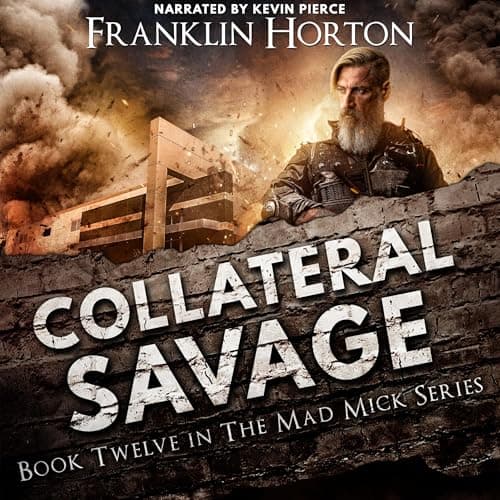
Look, I have a bone to pick with post-apocalyptic fiction that treats the American landscape like a video game map. You know the kind - protagonists sprint through "the wilderness" like it's a green-screened backdrop, never once acknowledging that a collapsed infrastructure means collapsed water treatment, collapsed supply chains for medicine, collapsed everything. So when I cracked open Collateral Savage during a late-February snowshoe through the Bitterroot Range - wind cutting sideways, trail breaking under fresh powder - I was ready to be annoyed.
And for the first hour or so, I kind of was. But not for the reasons I expected.
Cyprus Isn't Montana, But the Exhaustion Is Universal
The setup here threw me. Conor and his crew aren't hunkered down in some rural American compound. They're in Cyprus, licking their wounds, trying to figure out who they even are after everything that went down in the previous books. Franklin Horton does something I don't see enough in this genre - he lets his characters sit with the damage. Ricardo's dealing with the psychological toll of sustained combat. Conor's injured and demoralized, which is a word the blurb uses and which the book actually earns. These aren't action figures. They're broken people who happen to be dangerous. That same insistence on treating trauma as load-bearing rather than decorative shows up in Winter Witch: A Novel, though the damage there runs through entirely different kinds of war.
The pivot comes when a private military contractor starts assembling orphaned American military units, stranded operators, intelligence assets - basically anyone with skills and a grudge against the Chinese occupation. It's ambitious in scope. Maybe too ambitious for nine and a half hours. The book splits its attention between the intimate recovery arc in Cyprus and this sprawling coalition-building narrative, and sometimes the seams show.
Kevin Pierce Knows When to Shut Up
I mean that as the highest compliment. Pierce's narration here is restrained in a way that serves the material. During the quieter Cyprus scenes - the conversations about what's left to fight for, the moments where characters are just existing in their trauma - he doesn't push. No theatrical swelling. No voice cracking for effect. He lets the silence do work, which is something I appreciate as someone who spends half the year in actual silence.
His character differentiation is subtle. Tone shifts rather than full-blown accent performances. It works for a book like this where you've got military types who all speak in a similar register - the differences are in cadence and weight, not in vocal gymnastics. The Mad Mick sounds like a guy who's been punched in the face enough times to talk a certain way. Ricardo carries something heavier in his delivery. Pierce earns those distinctions through consistency rather than flash.
(I will say - and this is minor - that some of the geopolitical briefing scenes land a little flat in audio. Walls of strategic information delivered as dialogue. Pierce handles them fine, but there's only so much you can do with "here's why the Chinese control the eastern seaboard" when it's essentially an exposition dump disguised as a meeting.)
The Land Doesn't Lie, Even When the Plot Stretches
Here's where Horton earns points with me and also loses a few. The Cyprus setting feels researched - the heat, the landscape, the way a Mediterranean island operates as a staging ground. But when the narrative shifts back to American soil and starts painting the Chinese occupation in broad strokes, I wanted more texture. What does occupied America actually look like on the ground? What happened to the watersheds? The agriculture? Horton's clearly more interested in the tactical and human elements than the ecological ones, and that's his prerogative, but a collapsed America would smell different, sound different, look different in ways this book mostly glosses over.
The military contracting angle is genuinely interesting though. The idea that a PMC would step into the vacuum left by a fallen government - building an army from scattered assets, leveraging corporate infrastructure when national infrastructure is gone - that's plausible in a way that a lot of post-apocalyptic fiction isn't. Horton's background in this genre shows. He understands logistics, command structures, the ugly mathematics of force projection.
The pacing runs hot and cold. The Cyprus recovery sections are slow and deliberate (my kind of pace, honestly). The back half accelerates into mission planning and early-stage operations that had me picking up my snowshoe tempo without realizing it. Nine and a half hours feels right for what's here, though I suspect this is very much a setup book for bigger action to come.
Who Gets a Seat at This Fire (And Who Doesn't)
If you've been following the Mad Mick series, this is a no-brainer pickup. If you're new to Horton, start earlier - this book assumes you know these people and care about them already. If you need ecological accuracy in your collapse fiction, you'll find this lacking. But if you want a post-apocalyptic story that treats PTSD and recovery as seriously as it treats gunfights, and you want a narrator who respects the quiet, Collateral Savage delivers where it counts. Skip this one if you're looking for nonstop action or a standalone entry point - it isn't either.
Verdict From 8,000 Feet
I finished this one as the sun dropped behind the ridge, headlamp on, trail winding back toward the cabin. The book left me the way good mid-series entries should - satisfied with the breathing room but restless for what comes next. Horton's not reinventing the genre here. He's just doing it with more discipline than most. And Kevin Pierce is the kind of narrator you forget is there, which in this case is exactly right.









