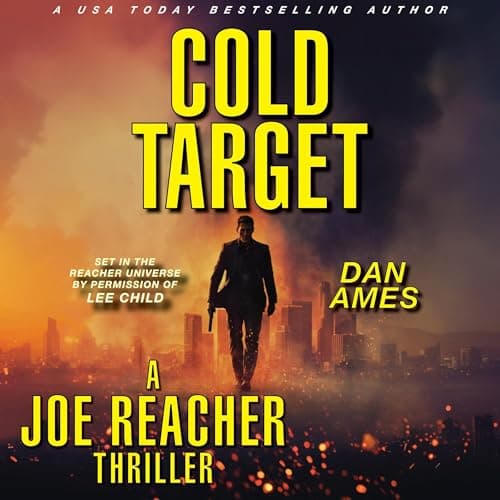

What happens when the guy who's supposed to be the good guy - the trained, lethal, morally upright operator - decides he's done playing by the rules? And what if he's the same person who pulled the protagonist out of a firefight years ago?
I was folding laundry at 2 PM, which is my version of a normal person's midnight. The kids were at school, Carlos was at work, and I had Alan Taylor's voice in my earbuds while matching tiny superhero socks. And honestly? For a book about bodies in the Michigan snow, the domestic backdrop made the tension hit differently. There's something about sorting your kid's Spider-Man socks while someone narrates a manhunt through frozen woods that makes you feel profoundly weird about your life choices.
Joe Reacher Is Not Jack Reacher (But He Wants To Be)
Let's get the elephant out of the room. Dan Ames has built a career writing Jack Reacher Cases - essentially fan fiction with the serial numbers filed off - and now he's created Joe Reacher, a Treasury agent with military intelligence roots. The name is obviously intentional. It's a wink, a nudge, maybe a full-on elbow to the ribs. If you can get past that (and some people genuinely cannot), there's a decent thriller underneath.
Joe Reacher operates as a shadow operative tracking threats that live in the gray space between military and domestic. When a decorated Special Forces officer goes dark in Michigan's Upper Peninsula and bodies start showing up, Reacher gets pulled in because he has history with this guy. Personal history. The kind where someone saved your life and you owe them something you can never fully repay.
The frozen Upper Peninsula setting works well. Ames writes the isolation of those backroads with enough detail that I could feel the cold through my earbuds - the crunch of snow, the way sound carries differently in sub-zero air, the claustrophobia of being miles from backup. The shift to Washington corridors gives the story a dual-track structure that keeps things moving.
The Medicine of Violence
Here's where I get picky, because this is what I do. The action sequences are competent - military precision, as the description promises - but some of the injury aftermath felt... optimistic. As someone who's actually worked a code, when characters take the kind of punishment described and bounce back for the next chapter, I notice. There's a scene where a character sustains what should be significant trauma and is operational within hours. My trauma center brain was screaming. But look - this is genre fiction, not a medical textbook. I've made peace with the fact that thriller heroes are basically made of Kevlar and stubborn.
The pacing clocks in at just over six hours, and it moves. No bloat, no extended philosophical monologues about the nature of patriotism. Ames knows his audience wants momentum, and he delivers. The personal stakes - Reacher hunting someone he cares about, someone who saved him - add a layer that keeps it from being just another "operator hunts bad guy" story. I genuinely wanted to know how Reacher would handle the moral weight of that confrontation.
Alan Taylor Gets the Job Done
Alan Taylor's narration is solid. Not flashy, not showy, but suited to the material. He's got the right register for military thriller work - authoritative without being stiff, capable of shifting between tension and quieter moments. Interesting note: this book was apparently originally released with a different narrator back in 2017, and the re-release with Taylor is a significant improvement based on what listeners have said. He doesn't do anything that made me yell at my laundry pile, which is honestly a compliment.
That said, I wouldn't call his performance distinctive. He handles the dialogue well enough, but I didn't find myself thinking "I need to find more of this narrator's work." Competent. Professional. Exactly what you need for a six-hour thriller you're burning through on a road trip or during chores. The same thing kept me going through First-Time Caller — narrator doing exactly what the material asks, no more, no less, and somehow that restraint is the right call.
Who Gets the Green Light (And Who Keeps Driving)
If you're a Lee Child completionist who's read everything and needs more of that lone-wolf operator energy, this scratches the itch. It's not the same quality - I won't pretend it is - but it's the generic brand version that still gets the job done when you're out of the name brand. If you're someone who gets genuinely annoyed by derivative character naming, or if you need prose that surprises you, this isn't your stop.
Night Shift Prescription
Carlos didn't ask why I was making weird faces during this one, but only because he wasn't home. It's a clean, efficient thriller that knows exactly what it is and doesn't pretend to be more. The personal stakes between Reacher and his former ally elevate it above standard military thriller fare, and at six hours, it doesn't overstay its welcome. Perfect for that post-shift decompression when you need something with enough momentum to keep your brain from replaying the shift, but not so complex that your tired eyes - ears? - can't track it. It's a solid opening to a new series. Not the filet mignon of the genre. More like a really good burger. And sometimes that's exactly what you need.









