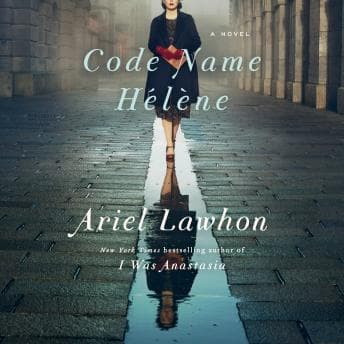

"My name is Nancy Wake, and I've killed a man with my bare hands."
That's not the exact quote, but it's close to the energy of the opening moments of this audiobook, and let me tell you — I was sitting in the school pickup line, surrounded by minivans and Goldfish cracker crumbs, and I got actual chills. The kind where you forget to inch forward and the mom behind you honks.
This book wrecked me. Fair warning.
Four Names, One Woman Who Had Zero Time for Nonsense
Here's the setup: Nancy Wake was a real person. An Australian journalist living in Paris who married a wealthy French industrialist, then spent WWII smuggling people across borders, training with British Special Operations, and eventually leading thousands of French Resistance fighters. The Gestapo put a five million franc bounty on her head and called her The White Mouse because she was impossible to catch. She killed a Nazi sentry with her bare hands. She radioed for weapons drops from the Allied Forces while wearing red lipstick.
I mean. This woman.
Ariel Lawhon structures the novel around Nancy's four code names — Lucienne Carlier, The White Mouse, Hélène, and Madam Andrée — and weaves between timelines. Now, normally I'd flag this as a problem for my Swiss-cheese-brain listening style. Multiple timelines plus 47 interruptions from a toddler who needs "more cwackers" should equal total confusion. But here's the thing: each code name represents such a distinct phase of Nancy's life that the transitions actually work. When we're with Lucienne, we're in the early smuggling days, scrappy and desperate. When we're with Madam Andrée, we're in full military operations mode. My brain could track it even after Sophie's nap ended 20 minutes early. The only other audiobook that's pulled off something similar for my chaos-brain lately is French Braid — also jumps around in time, also somehow never lost me.
Survived 47 pauses and still made sense. Genuinely impressive for a dual-timeline structure.
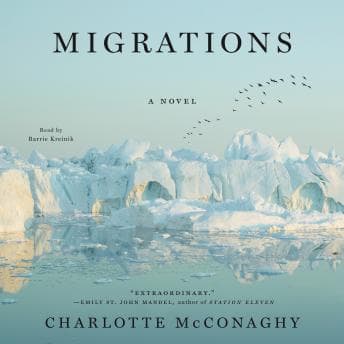
Barrie Kreinik Absolutely Understood the Assignment
Two narrators here — Barrie Kreinik handles Nancy's chapters and Peter Ganim takes the sections from other perspectives (Henri, various SOE officers, Gestapo agents). The split works well. Ganim brings this steady, serious weight to his portions that grounds the wartime scenes nicely.
But Kreinik. She's the star here and she knows it. Nancy Wake was Australian-born, lived in Paris, trained in England, and operated across rural France — that's a LOT of linguistic real estate to cover. Kreinik shifts between Nancy's brash Aussie directness and the smoother French-influenced tones she'd have picked up after years in Paris, and it never feels like a party trick. It feels like watching someone actually become this woman. The moments where Nancy is charming her way past checkpoints versus the moments where she's barking orders at Maquis fighters — those are two completely different vocal registers and Kreinik nails the shift.
The scene where Nancy has to make a decision about Henri — I can't say more without spoiling it — Kreinik's voice goes so quiet and controlled that I actually turned up the volume in my car thinking something was wrong with the audio. Nothing was wrong. That restraint was the whole point.
17 Hours Is a Commitment (But Nancy Wake Earned Every Minute)
Okay, I need to be honest. At 17 hours and 20 minutes, this is NOT my usual grab. I typically max out around 10-12 hours because that's what fits my week. This one took me almost two weeks, and there were stretches in the middle — particularly during some of the SOE training sequences — where the pacing slowed enough that I caught myself mentally drafting grocery lists.
But the back third? The BACK THIRD. When Nancy is dropped back into France as Madam Andrée and everything starts converging — the Gestapo closing in, the Resistance operations getting more dangerous, the question of what happened to Henri hanging over every chapter — I sat in my garage for an hour and fifteen minutes one night. The kids were inside. My husband texted me twice. I did not care.
Made me cry at school pickup. Worth it though. Actually, made me cry in my garage, at school pickup, AND during the author's note at the end where Lawhon explains what happened to the real Nancy Wake after the war. Three separate cries. New personal record.
Who Needs This in Their Ears
If you loved The Alice Network or The Nightingale, this is your next listen. If you want a WWII story centered on a woman who wasn't a quiet, tragic figure but a loud, stubborn, brilliant force of nature — yes. If you need something shorter than 12 hours and can't commit — maybe wait until you have a road trip coming up.
And if you're a mom who sometimes feels like managing chaos is your only skill? Nancy Wake managed actual military operations while being hunted by the Gestapo. Puts the Target meltdowns in perspective.
The One I'll Be Recommending at Every Soccer Game This Spring
My book club will love this (if I ever have time for book club again). It's the kind of story that makes you Google the real person immediately after finishing, then get mad that you'd never heard of her before. Nancy Wake deserved to be famous. This audiobook does her justice. Not a light listen, not a quick one, but a genuinely satisfying one — the kind that stays with you while you're washing dishes and folding tiny socks and wondering what you'd have been brave enough to do.