
I'm going to say something that might get my English teacher card revoked: this collection made me genuinely happy.
Look, I spend my days trying to convince sixteen-year-olds that Gatsby's green light means something. I have strong opinions about narrative structure and authorial intent. And yet here I am, a grown man walking the lakefront at 6 AM on a Saturday, grinning like an idiot because Tavia Gilbert is doing something wonderful with the voice of a clownfish's anxious father.
The Unlikely Case for Disney as Literature
Here's what nobody tells you about teaching literature for twenty years: you forget why stories matter. You get so deep into symbolism and motif and "what is the author really saying" that you lose the fundamental thing - the pure pleasure of a story well told. These are not complex narratives. They're condensed versions of films that were already simplified from their source material. Bambi's mother still dies. Simba still runs away. Aladdin still lies about who he is. But stripped down to their bones like this, you can see the archetypal scaffolding underneath, and honestly? It holds up better than half the contemporary literary fiction I've assigned. I'd put Brideshead Revisited in that same category of works where the bones — memory, longing, the particular grief of things you can't get back — matter more than any surface-level polish.
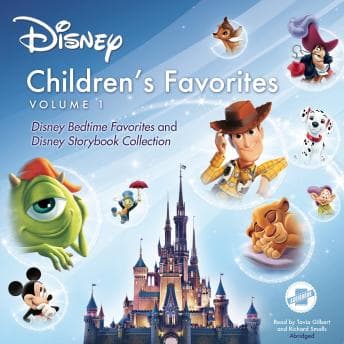
The collection runs about five hours across two bundled volumes - Disney Storybook Collection and Bedtime Favorites. That's roughly forty stories, which means each one clocks in at around seven to eight minutes. Short enough that a kid (or a tired teacher) never loses the thread. Long enough that the narrative actually breathes.
Two Narrators, Two Registers
Richard Smalls and Tavia Gilbert split duties here, and while I couldn't find much detail about how they divide the specific stories, the contrast between their styles is what keeps the collection from blurring into one long sugar rush. Gilbert - who has something like 400 audiobooks and an Audie Award to her name - brings genuine theatrical training to material that a lesser narrator would sleepwalk through. There's a warmth in her delivery that never tips into condescension, which is harder than it sounds. (I've heard plenty of children's audiobooks where the narrator sounds like they're performing for a particularly dim golden retriever.)
Smalls provides a steadier, more grounded presence. Think of it as the difference between the teacher who does all the voices during read-aloud and the teacher who trusts the story to carry itself. Both approaches work. Having them alternate keeps the ear from going numb across five hours.
Now, I'll be honest - I don't have granular detail on how they differentiate characters within individual stories. The research just doesn't give me that. What I can tell you is that the pacing feels right. These are bedtime stories, and the narrators treat them that way. No rushing, no artificial drama. The prose deserves to be savored, even when that prose is about a race car with eyes.
What Hemingway Would Say About Lightning McQueen
This reminds me of what Hemingway said about prose - that the dignity of movement of an iceberg is due to only one-eighth of it being above water. Disney stories work the same way. On the surface, Finding Nemo is about a fish looking for his son. Underneath, it's about the terror of parenthood, about learning that protecting someone and controlling someone aren't the same thing. The Lion King is Hamlet. (My students would hate this comparison. I love it.) Toy Story 3 is about obsolescence and mortality dressed up in cowboy hats.
I'm not saying Disney Press is producing great literature. I'm saying that the bones of great storytelling are here, and good narration - the kind Gilbert and Smalls provide - lets those bones show through.
Who This Is Actually For
The obvious answer is kids at bedtime, and yes, absolutely. Seven-to-eight-minute stories are perfect sleep architecture. But here's who else should consider it: exhausted parents who want to share stories with their children but whose brains are too fried to read aloud with any conviction. Teachers who need a classroom wind-down that isn't another YouTube video. And - I'll admit it - middle-aged English teachers who need to remember that stories are supposed to be fun before they're supposed to be analyzed.
Who should skip it? Anyone expecting full movie adaptations. These are condensed retellings, not transcripts. If your kid knows every beat of the film, they might get annoyed by what's missing. And if you're looking for production value with music and sound effects, this is straight narration. Two voices, clean audio, nothing else.
Worth Pausing the Faculty Meeting For
I listened to most of this while grading sophomore essays on The Great Gatsby at 11 PM on a Tuesday, and I'll tell you something: after three hours of red-penning run-on sentences, hearing Tavia Gilbert narrate a story about Bambi learning to walk on ice was exactly the reset my brain needed. Not every audiobook has to challenge you. Sometimes the best thing a story can do is remind you that once upon a time, you loved stories simply because they were stories.
My students would roll their eyes. Denise would understand. And my 47 podcast listeners - hi, Mom - would probably appreciate the irony of their host reviewing Disney. But if you loved the classics, this is their spiritual successor in miniature. The same archetypes. The same emotional beats. Just with more talking animals.