
What does it actually mean to come home to yourself — and can a book under two hours long genuinely guide you there?
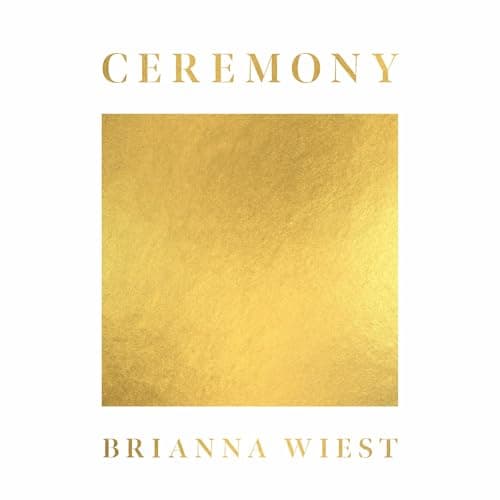
I'll be honest: when I first saw the runtime on Ceremony, I almost passed it over. One hour and forty-three minutes barely qualifies as an audiobook in most circles. But then I thought about the poetry collections and meditation guides that have stopped me cold in far less time, and I decided to give Brianna Wiest's latest offering a fair shot during a quiet Saturday morning with coffee and nowhere to be.
I'm glad I did, though I want to be upfront about what this is and what it isn't.
Ceremony is a collection — not a traditional self-help book with chapters, frameworks, and action steps. It reads more like a curated series of lyrical reflections on identity, self-worth, shame, and the slow process of becoming who you already are underneath all the noise. If you've read Wiest's earlier work like The Mountain Is You or 101 Essays That Will Change The Way You Think, you'll recognize her voice immediately: direct but gentle, philosophical but accessible. The difference here is that Ceremony leans harder into the poetic. Sentences are shorter. Ideas float rather than build arguments. It's less instruction manual, more sacred breath. I had a similar reckoning with form over function when I spent a commute with Making Sense of God — another book that earns its keep not through frameworks but through the quality of its questioning.
The fact that Wiest narrates her own words is the single biggest argument for choosing the audio format. There's a quality to hearing an author read lines like these — lines about releasing what isn't yours, about the unlikely moments that become doorways — that simply cannot be replicated on the page. Her delivery is unhurried, empathic, and carries the kind of warmth that feels like a friend sitting across from you at a kitchen table, not performing vulnerability but simply being vulnerable. She doesn't try to dramatize anything. She doesn't need to. The quiet conviction in her voice does all the heavy lifting.
I found myself pausing the audio repeatedly. Not because I was bored or confused, but because certain passages needed room to land. There's a line about other people not being meant to love us in the exact way we imagine, but instead being catalysts for us learning to love ourselves, and when Wiest reads it, the meaning arrives differently than when you scan it on a page. It settles somewhere in your chest. This is the kind of listen where you might want to keep a journal nearby — not to take notes in a productivity sense, but because ideas will surface that have nothing to do with the book and everything to do with you.
Now, the honest tension: this is a very short audiobook priced at a full credit. For listeners who measure value in hours, that's going to sting. And if you're someone who needs structured advice — concrete steps, research citations, clear before-and-after frameworks — Ceremony will feel like it's circling the same themes without ever landing anywhere actionable. The language is beautiful, but beauty without utility can frustrate certain listeners. I get that. I've been that listener.
But I think the brevity is actually intentional in a way that serves the material. This isn't meant to be consumed like a business book on your commute. It's meant to be absorbed, revisited, maybe even memorized in parts. Think of it less as an audiobook and more as a guided meditation dressed in literary clothing. The short runtime means you can return to it when you're in the thick of uncertainty or shame and let it wash over you again without committing half a day.
What struck me most personally is how Wiest frames self-love not as affirmation or confidence-building but as a homecoming — a return to something you already possess rather than a construction project. As someone who has spent years in the self-improvement space and grown somewhat weary of the "optimize yourself" rhetoric, this framing felt like cold water on a hot day. It's permission to stop building and start arriving.
The production quality is clean and intimate. No music, no sound effects, just Wiest's voice and the words. It works. Anything more would have felt like ornamentation on something that's meant to be bare.
Who Should Listen (And Who Should Skip)
If you're in a season of transition — processing a breakup, questioning your career, sitting with regret or shame you can't quite name — this is the kind of listen that might crack something open. It won't give you a five-step plan. It will remind you that you might not need one. Skip it if you want structured, actionable self-help with research backing and clear takeaways; Ceremony simply isn't built for that use case. I'd also recommend waiting for a sale or streaming it through a subscription service rather than spending a full credit, purely because of the runtime. The content earns its place on your shelf; the price-to-length ratio just doesn't quite match up for a credit spend.