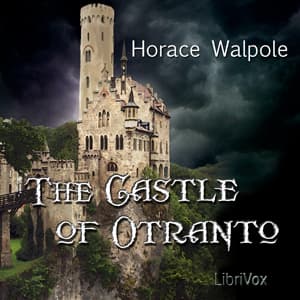

Look, I teach a unit on Gothic literature every October, and I've been assigning excerpts from The Castle of Otranto for probably fifteen years now. But here's my confession: I'd never actually read the whole thing cover to cover. (Don't tell my department chair.) So when I found this audiobook version narrated by Great Plains, I figured it was time to finally do my homework.
And honestly? I get why this book invented an entire genre. But I also get why my students groan when I hand out the photocopied pages.
The First Gothic Novel Sounds Exactly Like You'd Expect
Here's the thing about Walpole's 1764 experiment—it's delightfully unhinged in a way that feels almost campy by modern standards. Giant helmets crushing heirs. Prophecies. Secret passages. Portraits that bleed. The man threw every spooky trope he could think of at the wall, and somehow they all stuck. This is the ur-text. Everything from Ann Radcliffe to Bram Stoker to Stephen King traces a line back to this weird little novella. That same lineage runs through classics like Anna Karenina, where Tolstoy borrowed Gothic elements for his tragic arc.
But—and this is a significant but—the prose is dense. 18th-century dense. Walpole was writing for an audience that had patience for elaborate sentence structures and formal dialogue that no human being has ever actually spoken. I found myself rewinding sections during my morning walk along the lakefront because I'd zoned out during some particularly baroque passage about lineage and honor.
At just under four hours, it's a manageable commitment. Short enough that the archaic language doesn't completely wear you down. My students would hate this. I love it. But I understand both positions.
Great Plains and the Tightrope of Period Voice
I couldn't find much about Great Plains as a narrator online, but based on this performance, they've got a solid grasp of how to handle 18th-century material. The tone works for Gothic atmosphere—there's a theatrical quality that suits the melodrama of Walpole's plot. Mysterious prophecies and tyrannical princes kind of demand a certain... grandeur, I guess.
That said, I noticed some listeners have complained about the narration becoming monotonous in stretches, and I can see it. When you're dealing with extended passages of period dialogue, there's only so much vocal variety you can inject before it starts feeling anachronistic. It's a tightrope. Great Plains mostly stays balanced, but there are sections—particularly the middle act—where I wished for more distinct character voices.
The production quality is clean enough. No major distractions. A few listeners mentioned inconsistent sound in places, but nothing pulled me out of the story during my listen. (Though I was also grading sophomore essays on The Scarlet Letter at the time, so my attention was admittedly divided.)
Why This Still Matters—A Teacher's Perspective
What strikes me about Otranto is how Walpole essentially wrote literary fan fiction of his own dreams. The man built a fake Gothic castle at Strawberry Hill, had a nightmare about a giant armored hand, and thought: "This should be a novel." That's the energy. Pure creative chaos dressed up in formal 18th-century prose.
If you loved Radcliffe's Mysteries of Udolpho or Lewis's The Monk, this is their spiritual ancestor. It's shorter, rougher, and more experimental than its successors—but that's part of the charm. You're listening to someone invent a genre in real time.
For my fellow literature nerds: the audiobook format actually helps with Walpole's prose. Hearing it spoken aloud smooths over some of the syntactical complexity that makes reading it on the page feel like homework. The narrator understands that pause is punctuation, and uses it well during the more dramatic revelations.
Who Should Queue This Up (And Who Should Skip)
If you're coming to this expecting modern Gothic horror, you'll be disappointed. This is historical curiosity as much as entertainment. But if you want to understand where the genre came from—why we still have haunted castles and family curses and supernatural prophecies in our fiction—this is essential listening. Skip it if archaic prose makes you want to throw your earbuds into traffic; queue it up if you've ever wondered why every horror novel owes Horace Walpole a debt.
Class Dismissed
I'm glad I finally did my homework. My students still won't read the full thing, but at least now I can speak to it with actual authority instead of faking it from the SparkNotes summary I definitely never used. (I used it. Multiple times.)
Worth pausing the faculty meeting for. Just maybe bump the speed up slightly if you're not used to period prose.