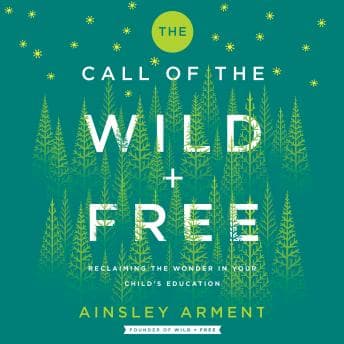

I'll be honest—I picked this up expecting to feel slightly judged. As someone who went through traditional schooling and turned out... fine? (My therapist might disagree, but that's a different conversation.) I had assumptions about homeschooling books. Conservative undertones, maybe some guilt-tripping about screen time, the works.
I was wrong. And I'm genuinely delighted to admit it.
Ainsley Arment's philosophy caught me off guard during a morning jog through Cambridge. She's not selling a rigid curriculum or a return to some imagined golden age. What she's actually doing is making a psychological case for childhood wonder—and the research she cites? Solid. The woman did her homework, which is fitting given the subject matter.
The Psychology Behind the Philosophy
Here's what grabbed me: Arment understands something fundamental about child development that a lot of educational approaches miss entirely. She's essentially arguing for intrinsic motivation over extrinsic rewards, for curiosity-driven learning over compliance-based systems. The research shows that autonomy, mastery, and purpose are the three pillars of genuine engagement—and this book builds its entire framework around that without ever getting preachy about it.
She pulls from Thoreau, obviously (the title kind of gives that away), but also from modern developmental psychology and attachment theory. There's a fascinating case study in here about how prolonged exposure to nature affects attention spans and emotional regulation in children. I found myself taking mental notes for a paper I'm supposedly writing. (It's not writing itself, in case you were wondering.)
The Wild + Free movement she founded isn't about rejecting structure—it's about questioning whose structure you're adopting and why. That distinction matters. Psychologically, this tracks. Children who feel ownership over their learning develop stronger executive function skills. Arment gets this intuitively, even when she's not explicitly citing the literature.
The Voice in My Head (Literally)
Okay, so here's where things get complicated. Piper Goodeve's narration is... divisive. I've seen reviews calling her "amazing" and others describing her delivery as "robotic, almost AI-like." Having listened to the whole nine hours, I land somewhere in the middle.
Goodeve has a clear, warm voice. She reads with genuine compassion, and you can tell she believes in what she's delivering. But—and this is a real but—there are moments where the pacing feels slightly off. Not enough to make me stop, but enough to notice. Some passages that should have landed with emotional weight just... didn't quite get there.
I think the issue is consistency rather than capability. When Goodeve is locked in, she's excellent. When she's not, there's a slight disconnect that pulls you out of the material. For a book this personal and philosophical, that disconnect matters more than it would in, say, a straightforward how-to guide.
If you're sensitive to narration style, maybe sample first. If you're primarily here for the content, you'll be fine.
Who Should Listen (And Who Should Skip)
Let's be real for a second. This isn't just for homeschooling parents, despite the marketing. I don't have kids. I'm not planning to homeschool anyone. (My houseplants barely survive my care, so.) But I found genuine value here because Arment is really writing about something bigger: how we nurture curiosity in humans of any age.
The book works best for:
- Parents who are homeschool-curious but intimidated by the logistics
- Traditional educators looking for supplementary ideas
- Anyone interested in educational philosophy without the academic jargon
- People who grew up feeling like school crushed something in them (hi, hello, that's half my research subjects)
Skip it if you want a step-by-step curriculum. That's not what this is. Skip it if you need your audiobooks to have dramatic range and vocal variety. Goodeve is skilled but not theatrical.
What Makes This Character Compelling
Wait, wrong genre. But actually—Arment herself is the compelling character here. Mother of five, built a movement from a blog, clearly has opinions but delivers them without condescension. You get the sense she's genuinely figured something out and wants to share it, not that she's selling you a lifestyle brand. (Even though she technically is, but it doesn't feel that way.)
The book is well-researched but never dry. Compassionate but not saccharine. It's the rare self-help-adjacent book that treats its readers like intelligent adults who can handle nuance.
My one complaint? Sometimes the inspiration runs a bit long. There were stretches during my jogs where I wished she'd get to the practical bits faster. But that's a minor gripe in an otherwise thoughtful listen.
Would I recommend it? Yeah. Even for the childless among us. Sometimes it's worth examining why we learn what we learn, and how much of our education was actually about wonder versus compliance. Surrender Experiment: My Journey into Life's Perfection asks similar questions about surrendering control and trusting a different kind of guidance—though Michael Singer's approach is more spiritual than educational. Arment made me think about that. And honestly, that's more than most audiobooks do.