
Lovecraft is difficult.
I don't mean difficult in the way my students use the word when they're trying to get out of reading The Sound and the Fury. I mean genuinely, structurally difficult. The man wrote sentences that would make Henry James weep with envy and exhaustion. His narrators are unreliable in ways that require your full attention. And his worldview—well, we'll get to that.
I finished this collection while grading a stack of sophomore essays on The Great Gatsby at 11 PM, which is perhaps the perfect state of mind for cosmic horror. You're already questioning humanity's capacity for understanding. You're already confronting the void. Lovecraft just gives it tentacles.
The Voice That Understands the Pause
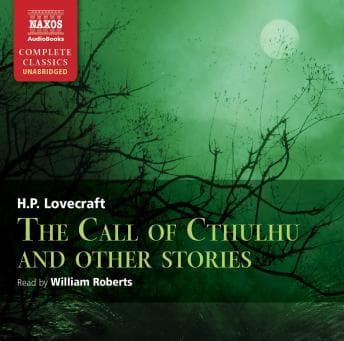
William Roberts does something I rarely hear in audiobook narration of classic literature: he trusts the prose. He doesn't rush through Lovecraft's elaborate sentence constructions or try to modernize the rhythm. When the narrator of "The Call of Cthulhu" describes that thing rising from R'lyeh—"A mountain walked or stumbled"—Roberts lets the impossibility of that image breathe.
His voice creates what I can only describe as a sinister ambiance. Not campy, not theatrical in the wrong ways. There's a measured quality to his delivery that mirrors the way Lovecraft's narrators try so desperately to maintain their sanity while describing the indescribable. The cadence is deliberate, almost scholarly, which is exactly right for stories told by academics and antiquarians who've seen too much.
That said. The passages where Roberts attempts the "native tongues" of Cthulhu worshippers? They're... well, they're ridiculous. "Ph'nglui mglw'nafh Cthulhu R'lyeh wgah'nagl fhtagn" is already absurd on the page. Spoken aloud with any kind of conviction, it sounds like someone having a very specific medical emergency. I laughed out loud during my grading. My wife Denise asked if I was okay. I was not prepared to explain.
The Elephant God in the Room
I can't review Lovecraft without addressing what my students would immediately notice: the man's prejudices are woven into the text like rot in old wood. The "degenerate" cultists, the fear of the Other in every sense—it's there. It's ugly. And any honest discussion of these stories has to acknowledge it.
What I tell my AP students about problematic classics applies here: you can hold two truths simultaneously. Lovecraft created something genuinely influential—cosmic horror, the idea that humanity is insignificant in a universe of incomprehensible forces, the Cthulhu mythos that's permeated everything from Stephen King to video games to metal album covers. That same tension between literary achievement and moral complexity runs through To Kill a Mockingbird, though Harper Lee's prejudices were the ones she was fighting against, not embodying. And Lovecraft was also a deeply fearful, prejudiced person whose anxieties shaped that horror in ways sometimes indistinguishable from his xenophobia.
Roberts, wisely, plays these passages straight without amplifying them. The text is what it is. The narration doesn't editorialize, for better or worse.
Why We Still Read the Weird Tales
At four hours and change, this collection is a manageable introduction to Lovecraft's universe. The title story remains the cornerstone—that slow build from newspaper clippings to fever dreams to the terrible revelation in the South Pacific. It's pulpy, yes. The characters are more archetypes than people. But Lovecraft understood something about dread that still works a century later: the horror isn't the monster. The horror is realizing the monster has always been there, and your entire understanding of reality was the illusion.
Some listeners find Roberts' pacing monotonous. I'd argue that's a feature, not a bug. These aren't action stories. They're slow descents into madness, told by men desperately trying to sound reasonable while describing the unreasonable. The measured pace mirrors that psychological struggle. Though I'll admit—if you're looking for something to keep you alert during a workout, this isn't it. This is focused listening. Late night listening. The kind where you're already half-convinced something is watching from the dark corners of your classroom.
Who Should Brave the Sunken City (And Who Should Stay on Dry Land)
If you've never read Lovecraft and you're intimidated by the reputation—the purple prose, the cosmic scope, the problematic elements—this is actually a solid entry point. Roberts makes the century-old language feel accessible without dumbing it down. You'll understand why Lovecraft matters to horror, even as you cringe at some of what he believed.
If you need fast pacing, relatable characters, or anything resembling emotional warmth? Skip this entirely. Lovecraft didn't write people. He wrote vessels for cosmic dread. My students would hate this. I love it.
Class Dismissed
This is a competent, atmospheric rendering of essential weird fiction. Not perfect—the cultist language bits genuinely undermine the tension, and the pacing will lose listeners who need more momentum. But Roberts understands that Lovecraft's prose deserves to be savored, not rushed. At 1.0x speed, in the dark, with nothing but the narrator's measured voice and your own imagination?
The Great Old Ones feel very close indeed.