
What happens to a person when the only story anyone tells about them is the worst thing they've ever been accused of?
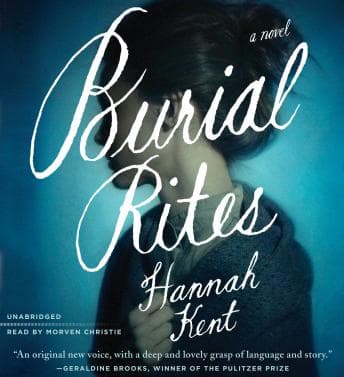
That question sat with me for three days after I finished this one. I wasn't on my usual drive home - I'd picked this up during a stretch of night shifts where the unit was so quiet it felt eerie (I knocked on every wooden surface within reach, believe me). Charting at 3 AM with Morven Christie's voice in my earbuds, surrounded by the hum of monitors and that particular fluorescent-light stillness of a trauma center between codes. It was almost too perfect a setting for a book this bleak and beautiful.
Agnes Magnúsdóttir Deserved a Nurse, Not a Priest
Look, I have a professional bias here. Agnes is sent to a remote Icelandic farm to wait for her own execution, and the system assigns her a young priest, Tóti, to be her spiritual comfort. And I kept thinking - this woman doesn't need someone to save her soul. She needs someone to sit with her. To listen without an agenda. That's what nurses do. That's what the farmer's wife Margrét ends up doing, almost against her will, and those scenes between the two women are the beating heart of this book.
Hannah Kent based this on a real case - Agnes was the last person executed in Iceland, in 1830 - and she doesn't sensationalize the murder or the punishment. Instead she builds this claustrophobic world of turf houses and endless winter darkness where Agnes peels back the layers of what actually happened with her former master Natan Ketilsson. And here's what Kent gets right that so many thriller writers get wrong: trauma doesn't reveal itself in one dramatic confession scene. It comes out sideways. In fragments. While your hands are busy with work. Agnes tells her story while helping with farm chores, while carding wool, while doing the physical labor of survival, and that felt so real to me. I've had patients who couldn't talk about what happened to them until they were doing something with their hands - folding blankets, adjusting their IV pole, anything.
The medical details are accurate. Finally. Not that there's a lot of clinical medicine here, but the descriptions of bodies, of cold, of what harsh physical labor does to a person's hands and joints and spirit - Kent clearly did her research on the bodily reality of 19th-century Icelandic life. No romanticizing. Just wool grease under fingernails and chilblains and the ever-present smell of fish. The physical honesty reminded me of what draws me to historical fiction done right - The Mystery of Mary attempts something similar with period authenticity, though it doesn't quite commit to the unglamorous parts the way Kent does here.
Morven Christie and the Art of the Slow Burn
I need to talk about this narration because it's going to be polarizing, and I want to be honest. Morven Christie reads this book like the Icelandic weather itself - measured, relentless, occasionally devastating. Her Agnes voice is calm and controlled in a way that makes the emotional moments hit harder precisely because she doesn't oversell them. When Agnes describes finding Natan's body, Christie's voice barely shifts, and that restraint made my hands stop typing mid-chart note.
Her pronunciation of the Icelandic names is impeccable. I'm talking Blöndal, Margrét, Natan Ketilsson - she doesn't stumble or anglicize, and after a few chapters your ear adjusts completely. She gives each character a distinct enough voice that I never lost track of who was speaking, but she doesn't do theatrical accents or big vocal shifts. It's subtle work.
Here's my honest warning though: this is a slow listen. Not slow like boring - slow like winter in Iceland is slow. The pacing is deliberate. If you're someone who needs plot momentum to stay engaged, you might struggle. I listened at normal speed because speeding it up felt wrong, like fast-forwarding through a vigil. But I get why some people bounce off it.
Who This Is For (and Who Should Back Away)
This is for focused listening. Full stop. Don't put this on while you're doing meal prep or chasing kids around the house. This is for your drive home at 6 AM when the world is quiet and you need something that makes you feel deeply without requiring you to think hard. Perfect for that post-shift decompression.
If you want a murder mystery with twists and reveals and a detective piecing clues together - that's not this book. The murder happened. Everyone knows who did it. The question is why, and whether knowing why should matter. Kent structures the novel so Agnes's first-person chapters alternate with third-person sections about the farm family, and that dual perspective is what makes it work. You're watching people learn to see another human being.
Carlos asked why I was crying in the car after my last shift. I blamed allergies. It was 6:15 AM and 97 degrees in Phoenix. He didn't buy it.
My mom would love this - she's always drawn to stories about women who survive impossible things. (She still thinks I should've been a doctor, but she'd appreciate the historical accuracy.)
Night Shift Prescription
This is a 12-hour listen that earns every minute. It's quiet and devastating and it trusts you to pay attention. Morven Christie's narration is the kind of performance where you forget someone is reading to you - it just becomes Agnes's voice in your head, telling you her story while the world sleeps. I'm going to carry this one with me for a while.