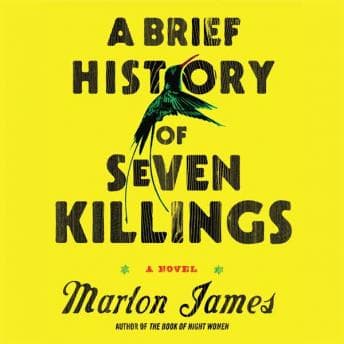

Twenty-six hours. Let me say that again. Twenty-six hours and four minutes. That's what Marlon James asks of you, and I'm going to be honest - somewhere around hour eight, sitting in the parking lot of the Jewel-Osco on 95th while Denise was inside getting groceries, I thought about quitting. The Jamaican patois was thick, the timeline was spiraling, and I had three narrators' voices tangled up in my head like Christmas lights in a box. I almost switched to something easier.
I didn't. And I'm telling you right now, that would have been one of the worst literary decisions of my life.
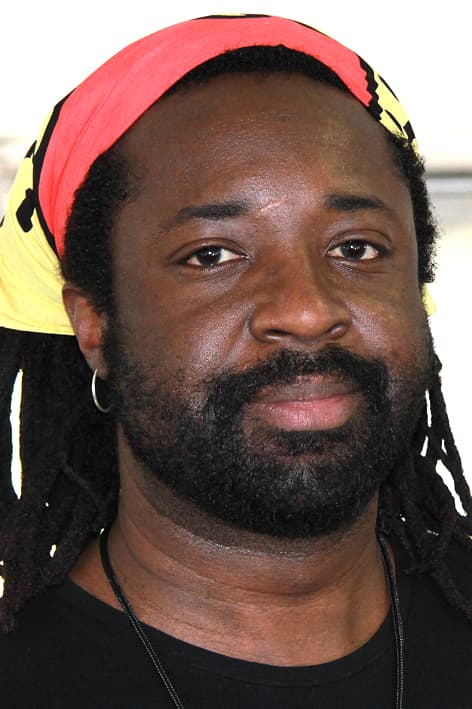
Marlon James Doesn't Want You Comfortable
Let me complain first, because I think the complaints are part of the experience. This book is hard. It's intentionally, aggressively hard. James writes in stream-of-consciousness patois that shifts register depending on who's speaking - a CIA agent doesn't sound like a Kingston ghetto youth, who doesn't sound like a Rolling Stone journalist, who doesn't sound like a dead politician narrating from beyond the grave. Yes. There are ghosts here. And they talk like ghosts should - fragmented, circling, refusing to let go of the living.
The structure mirrors 1970s Kingston itself: chaotic, violent, sometimes incomprehensible, but underneath it all, a brutal logic. Bob Marley is never named directly - he's "The Singer" throughout - and that absence becomes its own kind of presence. James is doing something my grad school professors would have lost their minds over. He's writing about the gravitational pull of a cultural figure by showing only the orbiting bodies - the gunmen hired to kill him, the CIA operatives meddling in Jamaican politics, the women surviving in the margins, the drug runners who'd eventually export Kingston's violence to the crack houses of 1980s New York.
This reminds me of what Hemingway said about the iceberg theory, except James flipped it. The seven-eighths below the surface? He drags all of it up and dumps it in your lap, bloody and screaming.
Six Narrators and Cherise Boothe Is the One You'll Remember
Six narrators for a book this sprawling is the right call, and HighBridge Audio made smart casting decisions. Robertson Dean handles the American voices - the CIA handler, the journalist - with appropriate detachment. There's a clinical quality to his delivery that works for characters who view Jamaica as a chessboard rather than a home. Dwight Bacquie carries much of the Kingston material, and his patois feels lived-in rather than performed. The distinction matters.
But Cherise Boothe. Lord. She voices Nina Burgess - this perpetually furious, perpetually disappointed woman trying to claw her way out of Jamaica - and her performance is the emotional spine of the entire audiobook. There's a scene where Nina reinvents herself after fleeing Kingston, and Boothe shifts her voice so gradually over the chapters that you almost don't notice the woman you're listening to has become someone else entirely. The narrator understands that pause is punctuation - Boothe uses silence the way James uses em dashes, to let dread settle in.
The weaker link is that with this many voices and this many narrators, transitions between chapters can be disorienting. You're pulled from one consciousness to another, and sometimes the handoff between narrators feels abrupt. But I'd argue that's the point. James doesn't want smooth transitions. He wants you off-balance. He wants you feeling what Kingston felt in December 1976 - that anything could happen, anyone could be next.
The Prose Deserves to Be Savored (Even When It's Ugly)
I listen at 1.0x. My students think I'm ancient for this take. But with this book? 1.0x is non-negotiable. James writes sentences that function like jazz - syncopated, recursive, building to crescendos that hit different if you rush them. The patois needs time to settle into your ear. By hour five or six, something clicks and you stop translating and start hearing. It's like learning a language through immersion, and speeding it up would destroy the effect.
The violence is extreme. I should say that plainly. There are scenes in this book - particularly involving the gang wars and their aftermath - that made me pull out my earbuds during a faculty meeting. (Principal Martinez, this was the one time I was actually trying to listen to your presentation on standardized testing benchmarks. Bad timing.) The sexual violence is handled with unflinching honesty that serves the story but will be too much for some listeners. Content warnings exist for a reason.
Who Needs This in Their Ears
If you loved The Brief Wondrous Life of Oscar Wao by Junot Díaz, this is its spiritual successor - or maybe its angrier, more ambitious older brother. American Dirt scratches a similar itch if you want fiction that plants you inside a world most American readers only know from the outside looking in - though James makes even that book feel cautious by comparison. If you want Caribbean literature that refuses to be digestible for a Western audience, James wrote this for you. If you need plot-driven narrative with clear heroes and satisfying resolution, this will make you miserable.
My students would hate this. I love it.
The Bell Already Rang But Sit Down Anyway
This is why we still read the classics - except this one's not a classic yet, it's becoming one in real time. Twenty-six hours is a commitment. The Booker committee thought it was worth it. Forty-seven podcast listeners are about to hear my three-part series on it whether they like it or not. (Mom, you can skip the Faulkner comparison episode. Sleep through that one guilt-free.) But if you're willing to let Marlon James take you somewhere genuinely dangerous and genuinely brilliant, put in your earbuds and clear your schedule. Worth pausing the faculty meeting for. Worth pausing everything for.