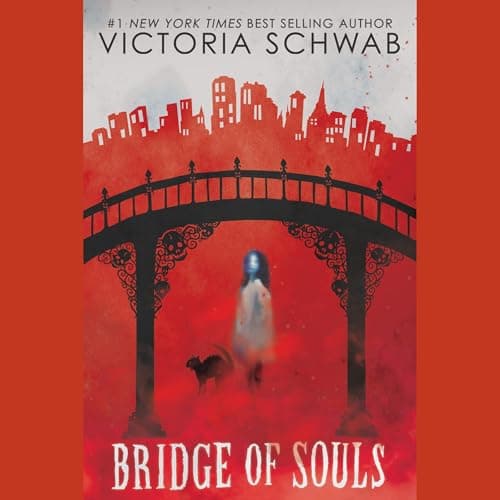
Look, I need to air a grievance before we get into this: why does middle-grade horror so often pull its punches right when things get interesting? I say this with love — I've been championing V.E. Schwab's Cassidy Blake series since episode 47 of my podcast — but Bridge of Souls had me yelling at my cat at 11 PM on a Tuesday because I could feel the story reaching for something darker and then gently, politely stepping back from the edge.
I was shelving returns at the library, AirPods in, lights dimmed because we were thirty minutes past closing and I like to pretend I'm living in a haunted archive. New Orleans as a setting for a ghost story is almost cheating — the city does half the atmospheric work for you — and Schwab knows this. She leans into it. The tombs, the jazz funerals, the way magic and death just coexist on every street corner like old drinking buddies. When Cassidy arrives and the Veil starts pressing in, thick with spirits that wear their history loud and garish, I got that familiar prickle. This understands that horror isn't about gore — it's about dread. At least, it does for about the first act.
Death Comes Knocking (and Waits Politely at the Door)
The Emissary — this servant of Death that Schwab introduces as the book's central threat — is genuinely unsettling in concept. There's a scene where Cassidy senses its approach, this creeping inevitability that isn't a ghost or a poltergeist but something older and more final, and Schwab writes it with real menace. The problem? The first third of the book takes its time getting there. Like, scenic-route-through-the-bayou takes its time. Listeners who flagged the pacing weren't wrong — there's a stretch where Cassidy is doing tourist things in New Orleans and the plot is essentially on hold. For a book that clocks in at only five and a half hours, that's a lot of real estate to spend sightseeing.
But when the Emissary threat intensifies and the stakes become genuinely personal for Cass — when it becomes clear that her ghost best friend Jacob is more vulnerable than either of them wants to admit — the emotional weight lands. The Cassidy-and-Jacob dynamic has always been the beating heart of this series, and Schwab earns the payoff here. Their relationship has this bittersweet undertone that's surprisingly sophisticated for middle-grade fiction. Jacob is dead. He's always been dead. And this book forces both characters to sit with what that actually means.
Shirley Jackson walked so Schwab could — okay, maybe not run, but definitely jog with purpose. The ghost mythology Schwab has built across three books is clever and internally consistent, which is more than I can say for a lot of adult horror franchises.
Reba Buhr Owns Cassidy Blake. Period.
Three books in and Reba Buhr is Cassidy's voice in my head. That's not something I say lightly. She's got this slightly breathless quality for Cass that captures a kid who's genuinely scared but stubbornly brave about it — not performative brave, but the kind where you can hear the fear underneath the determination. Her Lara has this crisp, no-nonsense edge that contrasts perfectly with Cassidy's anxiety, and Jacob gets this warm, slightly hollow quality that reminds you — subtly, without hammering it — that he's not entirely here anymore.
The narrator commits. That's rare, especially in middle-grade where some narrators default to a generic "reading to children" mode. Buhr doesn't condescend. She plays it straight, trusts the material, and the creepy moments are creepier for it. When Death's servant shows up, her delivery drops into something quieter and more deliberate, and it works better than any sound effect could.
No production flourishes here — just clean narration, no music or effects. For a book this short, that's fine. Buhr carries it.
Who Gets Lost in This (And Who Walks Away)
If you loved Small Spaces or The Clackity and want that same middle-grade-horror-that-actually-has-teeth energy, this delivers — with the caveat that it's a trilogy closer, so start with City of Ghosts or you'll be lost. If you need your horror uncompromising and adult, this isn't going to scratch that itch. It's a ghost story for younger listeners that happens to be smart enough for older ones to enjoy, but it is still aimed at that audience. The scares are real but restrained.
Skip this if you're looking for full-throttle adult dread — or if you haven't read the first two books. But if you've got a kid (or an inner kid) who's ready for a ghost story with actual emotional stakes, put this in their ears.
Lights Off, Library Closed, Headphones On
I listened in the dark. Mistake? Maybe. Worth it? Absolutely. Bridge of Souls isn't going to keep me up at night the way Hill House does, but for a middle-grade trilogy finale, it's got genuine emotional stakes and a villain concept that I wish an adult horror novel would steal. My podcast listeners are going to love this — specifically, the ones who've been asking me for gateway horror recommendations for their kids. This is the gateway. The dread is real, the friendship is earned, and New Orleans has never sounded more haunted. That particular flavor of grief-soaked Southern atmosphere is something Lost Roses also conjures, though it trades ghosts for a different kind of haunting — the kind war leaves behind. Shirley (my cat) was unimpressed. I was — not terrified, but genuinely moved. And a little spooked. At 5 hours 36 minutes, it's a single-evening listen that earns its ending.









