
Okay, real talk: I picked this up because Kevin said I only read 'space stuff' and I needed to prove him wrong. Three hours later I was sitting on the floor of our apartment at 11 PM, not moving, which is not something that happens to me with a 3-hour audiobook I could've knocked out on a single commute.
The Part Where I Complain (Briefly)
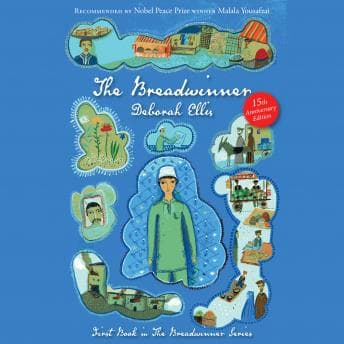
Here's my one gripe, and it's structural, not the book's fault: three hours is a weird length. Too short to feel like a full commitment, too emotionally dense to treat as background noise. I tried starting it on the Caltrain Tuesday morning at 6:15 AM, half-asleep with my coffee, and had to rewind twice because I kept missing things. This is not a 1.5x book. This is not a 'zone out and let it wash over you' book. Parvana's situation - eleven years old, father arrested by the Taliban for the crime of having a foreign education, family literally unable to buy food because no man can accompany them to the market - demands your full CPU. I eventually finished it at home, dedicated listening, no distractions. That's the right call.
What Actually Happens (And Why It Hits Different)
The premise sounds like a history lesson. It isn't. Ellis wrote this in 2000, right before 9/11, after actually going to Pakistan and interviewing Afghan refugee women - and that ground-level research shows in ways that matter. Parvana doesn't transform into a boy through some montage of empowerment. She cuts her hair and puts on her dead brother Hossain's clothes and then has to figure out how to walk differently so she doesn't get caught. There's a scene where she's digging up bones in a graveyard at night - bones that might be her brother's - and the mundane horror of it, the way it's just another task she has to do to keep her family alive, is more affecting than any dramatic set piece could be.
The family dynamics are specific in a way that keeps this from feeling like a 'issues book.' Her mother is not a saint. She's traumatized and sometimes takes it out on Parvana in ways that feel uncomfortably real. Her older sister Nooria is prickly and dismissive. These are not convenient supporting characters - they're people under impossible pressure behaving imperfectly, which is exactly right. The middle-grade comparison that kept coming to mind was Kid Normal, which also refuses to let its supporting cast exist just to serve the protagonist - though the stakes there are considerably more whimsical.
Rita Wolf Is Doing Real Work Here
I'll be honest: I saw 'accented narration' in the notes and my first instinct was mild skepticism - not because accented narration is bad, but because it can go sideways fast into something that feels performative. Wolf doesn't do that. Her Parvana has this quality of... controlled stubbornness? Like a kid who has learned to keep her face neutral but you can hear the calculation happening underneath. The calm, measured pacing she uses for the narration itself works against the chaos of the subject matter in a way that's genuinely effective - it mirrors how Parvana has to hold herself together.
The authenticity reads as earned, not costumed. I don't have the background to evaluate every choice she made, but I can tell you it never pulled me out of the story, which at 1x speed on dedicated listening is the bar that matters.
So: Should You Listen?
If you have kids in the 10-14 range, this is a yes with no caveats - it's the rare middle-grade book that doesn't condescend to its audience about hard things. If you're an adult who reads mostly genre fiction and wants something that'll recalibrate your brain in three hours, also yes. The ROI on this audiobook is disproportionate to its runtime.
Skip it if you need something you can half-listen to. This one requires you to actually show up.