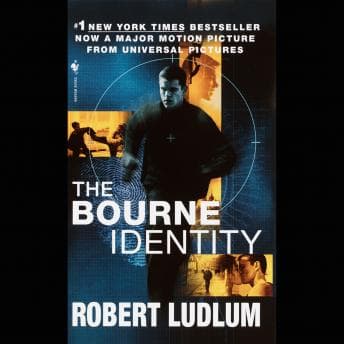

Look, I wanted to love this. I really did. The Bourne Identity is one of those novels I've taught alongside le Carré when discussing the evolution of the spy thriller - Ludlum basically invented the amnesia-driven protagonist that Hollywood has been recycling ever since. So when I found this audiobook version narrated by Darren McGavin (yes, that Darren McGavin - the dad from A Christmas Story, Kolchak himself), I thought I'd struck gold.
I was grading sophomore essays on The Great Gatsby - the ones where they all think the green light is "just a light" - and figured some Cold War espionage would be the perfect antidote. Two hours and ten minutes later, I'm not sure what I actually listened to.
The Bread Without the Sandwich
Here's the thing nobody tells you upfront: this is an abridged version. And not just trimmed around the edges - we're talking gutted. The original novel is a dense, layered web of conspiracies, identity crises, and Ludlum's signature paranoid prose. This audiobook feels like someone handed you the CliffsNotes and called it dinner.
One listener nailed it when they said it's "like ordering a sandwich and being served only the bread." That's exactly right. The bones of the story are there - Jason Bourne fished from the Mediterranean, the microfilm in his hip, the Swiss bank account, the four million dollars, the hunt by Carlos the Jackal. But the connective tissue? The slow-burn tension that makes Ludlum's writing work? Gone.
For my students who complain about reading the "boring parts" of novels, this is what happens when you skip them. The boring parts are doing work. Ludlum's digressions build the paranoia. Without them, you're just watching plot points tick by like a grocery list.
McGavin's Retro Delivery
Now, about McGavin. The man was a genuine talent - watch him in any of his film work and you'll see presence, timing, charisma. But audiobook narration is a different beast, and this recording has a distinctly 1970s radio drama quality that hasn't aged gracefully.
He's got moments of genuine energy. When the action kicks in, you can hear him trying to inject life into the chase sequences. But there are long stretches where the delivery goes flat - monotone readings that made me check if my earbuds had died. And then suddenly he'll swing into over-dramatic territory that feels disconnected from what's actually happening on the page.
I couldn't find much technical information about this specific recording, but based on the production quality, it feels like an artifact from a different era of audiobooks. There's music layered over the narration at odd moments - not atmospheric scoring, but distracting intrusions that compete with the words. The sound mixing is inconsistent, with volume dropping unexpectedly. It genuinely sounds like a 1970s movie trailer stretched to feature length.
(Don't tell my students I said this, but I almost fell asleep during a faculty meeting while listening. In my defense, it was the budget presentation AND the audio quality.)
What Ludlum Actually Deserves
Here's what frustrates me as someone who teaches narrative structure: The Bourne Identity is a clinic in pacing when you read it properly. Ludlum understood that amnesia isn't just a plot device - it's a lens through which the reader experiences the world alongside Bourne. Before I Go To Sleep uses that same lens brilliantly, though it trades espionage for domestic terror. Every recovered memory, every flash of violence from his past, is supposed to hit with weight because we've earned it through the slow accumulation of clues.
This abridged version treats those moments like checkboxes. Memory recovered? Check. Assassination attempt survived? Check. Marie's loyalty tested? Check. But without the breathing room, without the paranoid tangents and the careful layering, it all feels rushed. The story still technically happens, but the experience of the story is missing.
This reminds me of what Hemingway said about the iceberg theory - the dignity of movement comes from the seven-eighths underwater. This audiobook is all tip, no iceberg.
The Professor's Verdict
Would I assign this to my students? Absolutely not. If you want The Bourne Identity, read the book. Or find the unabridged audiobook - I have to believe one exists that does Ludlum justice.
But here's where I'll give it some credit: at two hours and ten minutes, this works as a nostalgia piece. If you grew up with McGavin, if you remember when audiobooks were called "books on tape" and came in those plastic cases from the library, there's a certain charm here. It's a time capsule of how we used to consume stories.
Who should listen: Commuters who just want the basic Bourne plot delivered quickly, don't mind dated production, and want background noise more than deep engagement. Also McGavin completists chasing nostalgia. Who should skip: Anyone who actually wants to understand why Ludlum mattered, why this novel launched a thousand imitations, why the prose deserves to be savored rather than summarized. The author chose those words for a reason, and most of them aren't here.