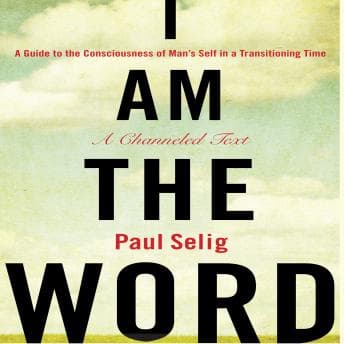

I started this audiobook expecting to analyze it like a case study in spiritual psychology. Ten hours later, I'm still not sure if I witnessed genuine channeled wisdom or an elaborate performance piece. And honestly? That uncertainty is kind of the point.
Paul Selig's Book of Mastery arrived during a week when I was cooking my way through my grandmother's dal recipes—alone in my kitchen, phone propped against the spice rack, trying to recreate something that felt like home. The Guides' repetitive affirmations ("I know who I am, I know what I am, I know how I serve") became an odd meditation while I measured turmeric. My therapist would have thoughts about me choosing this particular book during a week when I was already excavating identity through food.
When the Messenger IS the Message
Here's what makes Selig fascinating from a psychological perspective: he's reading his own channeled material. The author-as-narrator situation creates this strange loop where you're listening to a man vocalize what he claims came through him from external entities. It's like watching someone read their own therapy transcripts aloud—intimate in a way that feels almost too close.
The delivery has been compared to a diamond commercial ("Now YOU have a friend in the diamond business"), and I can't unhear it. There's this salesman-adjacent quality to how Selig emphasizes certain words. "YOU are being CLAIMED in your WORTH." The capitalization is audible. Some listeners find this grandiose and off-putting—one reviewer compared it to 17th-century literature, which... fair. But I found myself asking: why does this particular cadence exist? Is it Selig's interpretation of how cosmic wisdom should sound? Is it the Guides' actual "voice"? Channeled material often adopts formal, archaic patterns—a fascinating case study in how we expect transcendent knowledge to sound.
The Psychology of Surrender
The protagonist here—if we can call the listener that—exhibits classic patterns of someone seeking external permission for internal transformation. The Guides repeatedly tell you that you're already worthy, already divine, already claimed. It's affirmation therapy dressed in metaphysical language. The same psychological mechanism drives Character Building, though that one skips the cosmic middleman and goes straight for behavioral conditioning. I've read enough self-help to recognize what's happening: repetition creates neural pathways, and hearing "I am in my worth" for the forty-seventh time does something to your brain whether you believe in spirit guides or not.
What makes Selig-as-vessel compelling is his total commitment. There's no winking at the audience, no hedging. He reads passages about humanity returning to "the stone ages" with the same measured certainty as he reads instructions for claiming your divine self. The lack of irony is either deeply authentic or deeply concerning, depending on your relationship with channeled material.
Psychologically, this doesn't track for skeptics—and it's not trying to. The book assumes buy-in. If you're listening with crossed arms, you'll spend ten hours annoyed by the grandiose language. If you're listening with openness, you might find the repetition genuinely transformative. (My therapist would have thoughts about that binary too.)
Ten Hours Is a Relationship
At 10 hours and 33 minutes, this isn't casual listening. The Guides explicitly say these books will change you "molecularly," and while I can't speak to my cellular structure, I can say the length forces a kind of surrender. You either leave or you stay. You either roll your eyes at "the physical realm is about to go back to the stone ages unless you all get it together" or you lean in.
I stayed. Partly for research purposes. Partly because somewhere around hour six, while burning the bottom of my dal, I realized I'd stopped analyzing and started just... listening. That shift is either the book working or Stockholm syndrome. Possibly both.
Who Should Listen (And Who Should Run)
If you loved A Course in Miracles, this is your next obsession. If the phrase "channeled literature" makes you want to throw your phone, save yourself the frustration. This is for people already curious about metaphysical self-development, not skeptics looking to be convinced. The commercial-pitch delivery will either fade into background or drive you absolutely mad—there's no middle ground.
Best consumed during repetitive tasks where your analytical mind can quiet down. Commutes work. Cooking works. Don't try this during focused work—the affirmations will interrupt your thinking in ways that feel invasive rather than supportive.
Case Notes: Incomplete But Worth Filing
I can't tell you if the Guides are real. I can tell you that Selig believes they are, and that belief shapes every syllable of this narration. The author understands human nature—or at least, human longing for meaning and worth. Whether that understanding comes from Yale-educated psychology or interdimensional entities is above my pay grade.
This is a fascinating case study in faith as performance, identity as claim, and the strange intimacy of hearing someone channel their own channeling. I'm not transformed. But I'm not unchanged either. And I made really good dal.