
Why are we yelling?
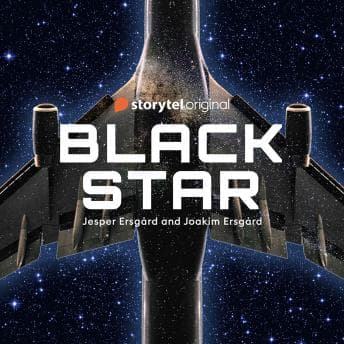
I have a rule in my apartment. The lights go off, the candles go on, and the audio starts. It's a ritual. But about twenty minutes into Black Star - Book 2, I had to break the mood just to check if I'd accidentally switched to a football broadcast.
Here's the thing about William Hope. The man is genre royalty. He was Lieutenant Gorman in Aliens. He knows—or should know—that space is terrifying because it's quiet. Dread lives in the silence between the pings on the radar. But here? He's narrating Henry Jäger's return to Earth with the energy of a sportscaster announcing a touchdown in overtime.
Every sentence feels like it ends with an exclamation point. I was shelving some new arrivals in the mystery section at the branch today—usually a meditative task—and I found myself getting stressed out. Not because the plot was scary, but because the delivery was so relentlessly high-octane. If everything is a crisis, nothing is a crisis.
The Ersgård Formula
To be fair to the authors, Jesper and Joakim Ersgård write specifically for audio. They know the medium. The chapters are short, the cliffhangers are aggressive, and the pacing is designed to keep you from hitting pause. It's popcorn.
But popcorn isn't a meal.
Since this is the second book, I expected Henry and Monty to develop some actual layers. Instead, they feel like vehicles for the plot. They run, they shout, they try to convince authorities about the threat to Earth. It works if you just want noise while you're cleaning the garage, but if you're looking for the kind of psychological depth that makes you stare at the ceiling at 2 AM wondering if we're alone in the universe? This isn't it.
The Lieutenant Gorman Letdown
I really wanted to love the performance because of Hope's pedigree. But the direction here is baffling. There's a specific cadence he uses—a sort of breathless urgency—that makes even mundane exposition sound like a bomb is about to go off.
Some listeners might call this "engaging." I call it exhausting.
When the actual scary elements kick in—and there are a few decent moments of violence and tension—the impact is dulled because the narrator has been at a level 10 since the prologue. Horror and thrillers need dynamics. You have to earn the scream. You can't just start screaming. Good Samaritan understood that restraint—the narrator there knew when to pull back and let the silence do the work.
Who's This Actually For?
Shirley (my cat) usually sits on the arm of the chair when I listen to good sci-fi. For this one? She left the room. Too loud. Too frantic.
If you need something to keep you awake on a long drive where nuance doesn't matter, this works. The sound quality is clean, and the story moves fast enough that you won't get bored. But if you want atmospheric dread—the kind of slow-burn space horror that crawls under your skin—skip this one. It's an action movie for your ears, minus the subtlety.