
Around hour three, there's this moment where Emmett first touches a book in the vault—not just any book, but one that seems to pulse with something almost alive—and Carl Prekopp drops his voice to barely above a whisper. I was shelving returns at the library, alone after closing, and I actually stopped moving. Just stood there in the stacks like an idiot, holding a copy of Where the Crawdads Sing and forgetting to breathe.
That's when I knew this book understood something fundamental about horror that most fantasy refuses to acknowledge: the scariest thing isn't what's done to you. It's what you've chosen to forget.
Memory as Monster
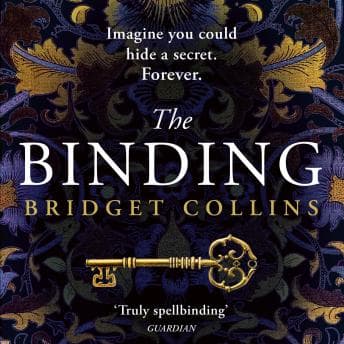
Bridget Collins has written something that Shirley Jackson would've appreciated—and yes, I'm invoking her name deliberately. The Binding operates on that same principle of domestic dread, where the horror isn't lurking in shadows but embedded in the everyday. The premise is deceptively simple: in this alternate historical England, binders can extract painful memories and seal them into books. You forget. The book remembers. And somewhere in a vault, your worst moment sits on a shelf, waiting.
But Collins isn't interested in the easy scares. She's interested in the rot. What happens to a society where the wealthy can simply... opt out of consequence? Where trauma can be commodified and stored? Where love itself can be erased because it's inconvenient?
The world-building unfolds slowly—almost too slowly for some listeners, and honestly, the first few hours do require patience. This isn't a book that explains itself. You piece together the rules of binding the way Emmett does: through observation, through horror, through the growing realization that everything he's been told is a carefully constructed lie.
Prekopp's Quiet Devastation
Here's where I have to be honest about something: Carl Prekopp's narration is polarizing, and I understand why. Those early chapters? Deliberately muted. Almost flat. Some listeners bounced off this hard, calling it monotone or unfeeling. I had a similar initial reaction to Lost World, where the narrator's restraint felt off-putting until I understood what the story was doing.
But here's the thing—and I think this is intentional—Emmett starts the book hollowed out. He's recovering from an illness he can't remember, in a life that doesn't quite fit him, and Prekopp plays that emptiness. His soft northern accent gives Emmett this working-class groundedness that contrasts beautifully with the aristocratic characters who show up later. When the emotional stakes escalate (and they escalate hard in the second half), Prekopp's restraint pays off. The moments where his voice cracks feel earned because he hasn't been performing emotion—he's been living it.
The character differentiation is subtle but effective. He doesn't do theatrical voice changes; instead, he shifts rhythm and register. The binder Seredith has this measured, careful cadence. Lucian de Havilland—oh, Lucian—gets something sharper, more dangerous, more desperate.
(I should mention: there are some scattered production issues. A few odd audio artifacts, maybe two or three moments where the recording quality shifts slightly. Nothing that pulled me out completely, but noticeable if you're listening with good headphones.)
The Love Story You Didn't See Coming
I went into this expecting gothic fantasy. I got that—but I also got one of the most devastating queer love stories I've encountered in audiobook form. And I mean devastating in the best possible way. The kind where you're listening at 1 AM with Shirley (my cat) curled against your chest, and you realize you've been holding your breath for the last ten minutes.
Collins structures the book in three parts, and the middle section—which jumps backward in time—recontextualizes everything you thought you understood. It's a narrative trick that could feel gimmicky, but here it works because the emotional logic is airtight. You understand, viscerally, what's been lost. What's been stolen.
The ending has divided readers. Some found it abrupt, unsatisfying. I think it's perfect—not because it wraps everything up neatly, but because it refuses to. Horror that respects the genre doesn't promise clean resolutions. It promises truth. And the truth here is complicated and painful and exactly right.
Who Should Listen (And Who Should Walk Away)
If you need fast pacing, this isn't your book. At nearly sixteen hours, The Binding demands investment. It's a slow burn that rewards attention—the kind of listen that works best during focused sessions, not as background noise during your commute.
If you scare easily, skip. Not because there's gore (there isn't, really), but because the dread here is existential. The horror of forgetting. The horror of being forgotten. The horror of discovering that the person you love might not remember loving you back. Echo Burning explores similar questions about memory and what we choose to believe about our own past, though in a completely different genre framework.
But if you're the kind of listener who appreciates craft—who wants fantasy that asks uncomfortable questions about consent and memory and class—this is essential. My podcast listeners are going to love this, especially the ones who've been begging me to cover more literary horror.
Closing the Book
Shirley Jackson walked so Bridget Collins could run. And Carl Prekopp? He understood the assignment.