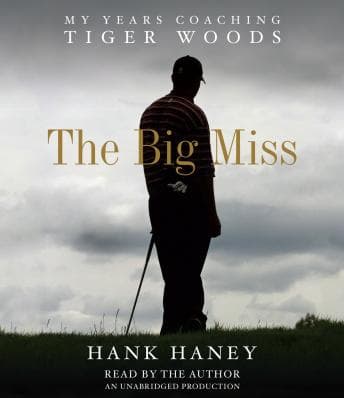

What happens when the person who knows your weaknesses better than anyone decides to write a book about them?
I finished this one at 6 AM, sitting in my driveway after a brutal night shift. Three codes, two combative patients, and a resident who kept asking me if I was "sure" about vitals I've been reading for fifteen years. I needed something that wasn't life or death, and golf - a sport I've watched exactly twice in my life, both times because Carlos had it on - seemed about as far from the trauma bay as I could get.
But here's the thing. This book isn't really about golf.
The Coach Who Couldn't Save His Patient
Hank Haney spent six years with Tiger Woods. 110 days a year in person. 200 days a year on the phone. Stayed at his house. Watched him eat sugar-free Popsicles and obsess over Navy SEAL training videos. And the whole time, Haney was trying to fix something Tiger didn't want fixed - not really.
As someone who's actually worked with patients who refuse to follow treatment plans, who sabotage their own recovery, who you KNOW could get better if they'd just trust you - I felt this book in my bones. Haney describes watching Tiger hit shots on the range that seemed physically impossible, then turn around and make decisions that seemed designed to destroy everything he'd built. The "big miss" of the title isn't just about golf swings. It's about watching someone you've invested everything in choose their own destruction.
The swing mechanics stuff? Honestly, it went over my head. I don't know a draw from a fade. But Haney explains things clearly enough that even I understood why certain adjustments mattered, and more importantly, why Tiger resisted them.
Haney Reads His Own Receipts
Some people hate that Haney narrates this himself. They say he sounds whiny, hurt, like he's settling scores. And yeah - there's definitely some of that. His voice has this quality that can tip into defensive, especially when he's comparing his coaching record to Butch Harmon's (Tiger's previous coach). The pacing drags in spots where he's clearly more interested in proving a point than telling a story.
But here's my take: I'd rather hear the uncomfortable truth from the person who lived it than a polished performance from someone who didn't. When Haney describes the moment he realized Tiger had stopped caring about improvement, you can hear the disappointment in his voice. It's not pretty. It's not professional. But it's real.
My mom always says you can tell when someone's lying by how smooth they sound. Haney doesn't sound smooth. He sounds like a guy who's still processing what happened.
The Scandal Elephant
Let's address it. Yes, this book came out after Tiger's personal life exploded. Yes, some people think Haney cashed in on private information. Yes, there are moments that feel like they're included because they're salacious rather than necessary.
But - and this is where I might lose some of you - I don't think Haney is wrong to tell this story. He was there. He saw things. And the picture he paints isn't of a monster, it's of someone who built walls so high that even the people trying to help him couldn't get through. The personal scandals aren't the focus. They're the inevitable result of everything Haney saw building for years.
Is it a betrayal of trust? Maybe. But Tiger wasn't exactly forthcoming about his own life either. And I've seen enough families torn apart by secrets to know that silence isn't always the moral high ground.
Who Should Listen (And Who Should Skip)
If you're looking for a golf instruction book, this isn't it. If you want a hagiography of Tiger Woods, definitely not. If hearing someone process complicated feelings about a relationship that ended badly makes you uncomfortable - you'll be yelling at your dashboard, and not in the fun way.
But if you've ever tried to help someone who didn't want to be helped? If you've ever watched talent squander itself? If you've ever wondered what it's like to have a front-row seat to greatness and still feel like you failed? This one hits different.
Night Shift Verdict
I didn't expect to care about golf. I still don't, really. But I care about the human dynamics here - the push and pull between coach and athlete, the boundaries that get crossed, the moment you realize you're more invested in someone's success than they are.
Carlos asked why I was still sitting in the driveway when he came out to get the newspaper. I blamed the sunrise. But really, I was thinking about all the patients I've had who could've recovered but chose not to. Life and Laughing captures that same feeling of watching someone navigate their own complicated relationship with success, though McIntyre's self-awareness makes it less painful to witness. Sometimes you can see the big miss coming, and there's not a damn thing you can do about it.
Haney knows that feeling. You can hear it in every word.