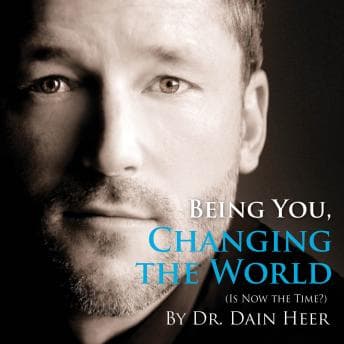

Bottom Line: Worth your commute if you're open to woo-woo frameworks with surprisingly practical applications. Skip if you need peer-reviewed citations for everything.
I'll be honest—I almost didn't finish this one. The first hour had me rolling my eyes so hard on the Caltrain that the guy next to me probably thought I was having a seizure. Access Consciousness? "What else is possible?" as a mantra? This is basically The Secret but for people who also do yoga retreats in Sedona. If you thought that sounded woo-woo, Kybalion takes hermetic mysticism to a whole other level—though at least Heer's framework has immediate practical applications.
But here's the thing. I was debugging a particularly nasty race condition at 11 PM, completely stuck, and I caught myself muttering "what else is possible?" like some kind of incantation. And then I actually found the bug. Coincidence? Probably. But the framework stuck in my brain anyway.
When Your Inner Skeptic Meets Your Inner Mess
Dr. Heer narrates his own book, which usually makes me nervous—authors aren't always great performers. But he's got this chiropractor-turned-guru warmth that somehow doesn't feel slimy. There's genuine humor in his delivery, like he knows some of this sounds bonkers and he's inviting you to laugh with him about it. The caring comes through without feeling performative, which is rare for self-help narrators who often sound like they're trying to sell you a timeshare.
The core concept is asking questions instead of making conclusions. Feeling stuck? Don't decide you're stuck—ask "what else is possible?" Feeling like garbage about yourself? Don't conclude you're garbage—ask "who does this belong to?" (the idea being that a lot of our negative self-talk isn't even ours, it's absorbed from everyone around us).
Look, I'm an engineer. I debug systems for a living. And I have to admit—this question-based framework is weirdly similar to good debugging practice. You don't conclude the problem is in the database layer; you ask questions until you find the actual root cause. Heer's just applying that to your brain.
The Parts That Made Me Uncomfortable (In a Useful Way)
There's a section where he talks about being willing to be "wrong" about everything you've decided about yourself. Who you are. What you're capable of. What's possible for you. I was listening to this while stuck in traffic on 101—Kevin was driving us back from his parents' place in San Jose—and I had this uncomfortable realization that I'd basically decided I'm "not a morning person" and "bad at networking" and "always going to be anxious about production incidents" without ever questioning if those were actually true or just... conclusions I made once and never revisited. That pattern of unexamined assumptions reminded me of the rigid thinking patterns explored in Driven to Distraction, though Heer's approach is less clinical and more "let's question everything."
The book doesn't give you a 7-step program or a worksheet or a morning routine. It gives you questions. Which is either profound or lazy, depending on your perspective. At 7 hours, it's not padded with fluff—"could've been a blog post" is NOT my verdict here, surprisingly.
Who This Is (and Isn't) For
Perfect for: train commutes (you can zone out and zone back in without losing the thread), gym sessions if you're doing cardio, anyone in a rut who's tried the more structured self-help approaches and bounced off them. Skip if: you need scientific backing for every claim (there is none), you get irritated by repetition (he circles back to core concepts a lot), or you're trying to do deep work while listening (the questions will distract you).
The ROI on this audiobook is weird to calculate. It's not teaching you a skill. It's not giving you a framework you can implement in Notion. It's more like... installing a different operating system for how you relate to your own thoughts? Which sounds insufferably woo-woo when I type it out, but here I am, still asking "what else is possible?" when I'm stuck.
Debug Log: Give It a Shot
I'm giving this a 3.5, which feels right. It's not going to change everyone's life despite what the devotees claim. But it's also not the pseudoscientific garbage I expected. Heer's narration is genuinely warm without being saccharine, and the core tools are simple enough to actually use.
If you're the kind of person who's read all the productivity books and still feels stuck—not in your systems, but in your head—this might be worth 7 hours of your commute. Worst case, you've got some new questions to ask yourself. Best case? Well. What else is possible?