
This is not my usual genre. Let me just say that upfront.
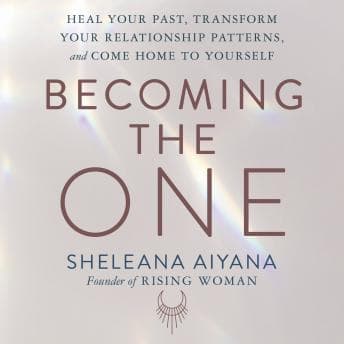
I picked up Becoming the One at 11PM on a Tuesday after debugging a particularly gnarly race condition that had been haunting our service mesh for two weeks. Kevin and I had gotten into one of those dumb arguments about nothing that's actually about everything, and I was scrolling through recommendations in bed, irritated, when the title caught my eye. Sometimes you need a book that has nothing to do with distributed systems or alien civilizations. Sometimes you need a book that reverse-engineers the bugs in your own operating system.
Your Attachment Style Has a Stack Trace
Here's what Sheleana Aiyana does that most self-help authors don't: she actually shows her work. This isn't "love yourself!" repeated for seven hours with different affirmations stapled on. She walks through her own childhood — growing up with addiction in her family, cycling through relationships where she was the fixer, the caretaker, the one holding everything together while slowly disappearing. And then she maps those experiences onto concrete patterns: chasing emotionally unavailable partners, abandoning your own needs to keep the peace, mistaking anxiety for passion.
The inner child work sections hit harder than I expected. There's a moment where she describes how the kid version of you learned to be "good" as a survival strategy, and how that same programming runs in the background of your adult relationships like a daemon process you forgot you started. She didn't use that metaphor — I did — but the concept is precise enough that my engineer brain latched onto it immediately. The framework is: identify the pattern, trace it back to origin, grieve what you needed and didn't get, then consciously choose a different response. It's basically root cause analysis but for your love life. Radical Awakening works through similar territory — pain-to-pattern tracing, reclaiming yourself from the relationships that shaped you — and I found it hit comparably hard, though Aiyana's framework here is tighter.
At 7 hours and 15 minutes, it's lean. No padding. I was braced for the usual self-help bloat where chapter 8 is just chapter 3 wearing a different hat, but she keeps moving. New concepts, new exercises, new angles. The ROI on this audiobook is genuinely high for the runtime.
Sheleana Reading Sheleana
She narrates it herself, and this is one of those cases where author-narration actually works. Her voice is warm without being saccharine — there's a steadiness to it that made the heavier sections (childhood trauma, grief, self-abandonment) feel held rather than clinical. Multiple listeners describe it as feeling like she's sitting next to you, and yeah, that tracks. It's not a performance the way Ray Porter delivers a performance. It's more like a really good therapist who happens to have a pleasant speaking voice and knows when to pause.
The production is clean but basic. No music, no sound effects, no flourishes. Just her voice and the material. Audio quality is solid if not exceptional — I noticed a slight flatness in some sections that made me wonder about the recording setup, but nothing that pulled me out of the content.
I bumped it to 1.25x and that felt right. At 1.5x (my default), some of the emotional weight got lost. The pacing is already pretty efficient, so speeding it up too much turns the vulnerable moments into bullet points.
Who This Is Actually For (And Who Should Hard Pass)
If you've ever caught yourself thinking "why do I keep ending up with the same person in a different body" — this book is for you. If you grew up being the responsible one, the peacekeeper, the kid who learned to read the room before you learned to read books — this will hit specific nerves you didn't know were exposed.
But if you want research-heavy attachment theory with citations and clinical frameworks, grab Attached by Levine and Heller instead. Aiyana's approach is more spiritual and experiential. She references therapy concepts but filters them through a lens that's more "wisdom tradition" than "peer-reviewed study." The science doesn't not hold up, but it's not really trying to be science. It's trying to be a guide, and it knows what it is.
Also: this book is written primarily for women, specifically women who've been in caretaking/people-pleasing patterns. Kevin actually listened to a few chapters with me on a weekend drive and said it was useful but clearly not written with him in mind. Fair.
The Commit Message
I started this as a spite-listen after an argument and finished it genuinely grateful I'd picked it up. It didn't fix anything overnight — no book does — but it gave me language for patterns I'd been running on autopilot. The concept of "becoming the one" isn't about being single or finding a partner. It's about stopping the outsourcing of your wholeness to another person. Which, when you think about it, is just eliminating a single point of failure in your emotional architecture.
Perfect for: bedtime, solo weekend mornings, long walks when you need to think. Skip for: the gym, 6AM zombie train (too introspective for half-consciousness).
I texted Kevin "sorry" after chapter 4. He texted back a heart emoji and a link to a new Bobiverse fan theory. We're fine.