
I wasn't ready for this one.
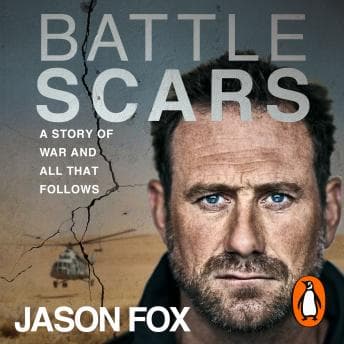
It was 2 AM, insomnia hitting hard, Frida curled up on my chest while I stared at the ceiling. I'd picked this audiobook thinking a military memoir might be dry enough to lull me to sleep. Instead, I ended up sitting straight up in bed by hour three, tears streaming down my face, texting my best friend "you need to listen to this immediately."
Here's the thing - I almost didn't make it past the first chapter. Jason Fox's narration starts out so stiff, so mechanical, that I genuinely thought something was wrong with my app. It felt like he was reading a grocery list, not telling the story of his life. And I'm someone who needs emotional subtlety from my narrators. Julia Whelan has ruined me. So this monotone delivery? It was rough.
But then something shifted.
When the Soldier Becomes the Storyteller
Around hour two, Foxy's voice starts to crack open. Not literally - the man's got military composure for days - but you can hear him settling into the telling. The mechanical quality starts to feel less like bad narration and more like... armor. Like he's protecting himself from his own story. And once I realized that, everything changed.
This isn't a polished celebrity memoir. This is a man who spent twenty years in Special Forces learning to suppress every emotion, now trying to articulate the most painful parts of his existence. The flatness isn't a bug. It's the whole point. When he describes operations - hostage rescues, firefights, the kind of stuff that sounds like action movie plots - his voice stays level. Controlled. And that control tells you everything about who he had to become to survive that life.
The War That Follows You Home
I've listened to a lot of memoirs. A LOT. (My spreadsheet doesn't lie.) But I've never heard someone describe PTSD the way Foxy does. He doesn't romanticize it. He doesn't turn it into some redemption arc with a neat bow. He talks about becoming his own enemy. About the moment when life itself stops feeling worth fighting for.
My heart. MY HEART.
Becoming Mrs. Lewis wrecked me in a similar way — that same quality of watching someone carry unbearable weight with almost no language for it.I thought about my abuela while listening to this - how she survived things she never talked about, how she'd sometimes get this faraway look during telenovelas when something hit too close. Foxy's honesty about mental health, about the shame of asking for help, about the brotherhood he lost when he left the military... it felt like finally hearing someone say the quiet parts out loud.
The book is blunt. Almost brutally so. There's no flowery language, no poetic metaphors. Just a man telling you exactly what happened and exactly how it broke him. And somehow that directness hits harder than any beautiful prose could.
Not Background Noise - This One Demands Your Full Attention
Fair warning: you cannot half-listen to this. I tried putting it on while sketching some logo concepts and had to stop because I kept missing crucial moments. This is a dedicated listening experience. The kind where you need to be still and present.
At seven hours, it's not a huge commitment. But those seven hours will sit with you. The violence is real - this is war, not sanitized for comfort. The psychological trauma is unflinching. If you're in a fragile headspace, maybe save this one for when you're feeling sturdy.
But if you're ready? If you want to understand what service actually costs, what happens after the heroism, what it means to rebuild yourself from shattered pieces? This book felt like being trusted with something sacred.
Who Needs This in Their Ears (And Who Should Wait)
Anyone who's ever felt like they're fighting a battle no one else can see. Anyone who loves someone struggling with PTSD. Anyone who wants to understand military experience beyond the action sequences. Skip it if you need polished narration from minute one, or if you're looking for light listening - this isn't that.
The vibes are not immaculate - they're raw and uncomfortable and real. And that's exactly why it works.
Abuela Would Have Clutched Her Rosary
I ugly-cried twice. Once during the PTSD revelations, once at the end when I realized how much courage it took to write this. To narrate it himself. To let his voice crack under the weight of his own truth.
This isn't a book about war. It's a book about what war leaves behind. And Jason Fox's imperfect, honest, initially-mechanical narration is somehow the most perfect vessel for that story.
I'm adding this to my spreadsheet under "Books That Changed Something in Me." Column exists for a reason.






![Steve Jobs [unabridged audiobook] audiobook cover](/_next/image?url=https%3A%2F%2Fcovers.audiobooks.com%2Fimages%2Fcovers%2Ffull%2F9788499923406.jpg&w=1920&q=75)