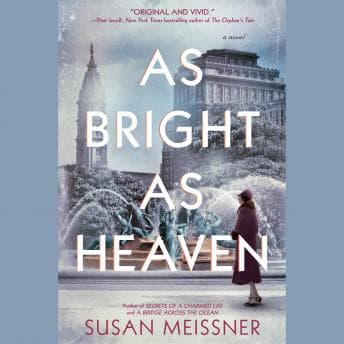

I was designing a memorial program for a client's grandmother when I started this audiobook. Seemed fitting, somehow - working with death while listening to a story steeped in it. By hour three, I had to stop working because I couldn't see the screen through my tears. Diego jumped on my keyboard, probably concerned. Or hungry. With cats, who knows.
This book wrecked me in the best possible way.
Four Women, Four Voices, One Devastated Heart
Susan Meissner does something clever here - she gives us four narrators for four perspectives, and each one carries their own weight of grief differently. Tavia Gilbert voices Pauline, the mother, with this quiet, almost resigned acceptance that made my chest ache. There's this particular quality to how she talks about death as a 'dark friend' - not morbid, just... honest. The kind of honesty that comes from living through impossible things.
But here's the thing that got me: Cassandra Morris as Willa, the youngest daughter. This kid battling the flu, fighting for her life while the world crumbles around her family - Morris captures that specific mix of childhood innocence and forced maturity that just. Destroyed. Me. (I added this to my crying spreadsheet. Yes, I'm still keeping it. No, I won't apologize.)
Jorjeana Marie handles Evelyn's sections with this credible horror that made me pause the audiobook more than once. When you're listening to someone describe the 1918 pandemic and you can hear the fear in their voice - the real, visceral terror of watching people die around you - it hits different. Especially now. Especially for those of us who remember 2020.
Maggie's Letters Made Me Miss My Abuela
Abigail Revasch voices Maggie, the middle daughter, and there's this subplot about letters she writes to a deployed neighbor that felt so achingly personal. Strong and determined, yeah, but also vulnerable in ways she's trying to hide. Revasch nails that balance.
My abuela used to write letters to everyone. Actual letters, with stamps and everything. She'd tell me about writing to my grandfather when he was working in Houston, before they got married. Listening to Maggie's letters, I kept thinking about those stories. About connection across distance. About love that survives separation.
Meissner weaves hope into this narrative in ways that shouldn't work but absolutely do. The family takes in a baby orphaned by the pandemic - this tiny ray of light in all that darkness - and I ugly-cried at that part. Not the sad crying, but the kind where you're crying because something beautiful exists in the middle of something terrible.
This Is a Rainy Sunday Book (Clear Your Schedule)
Thirteen and a half hours. You need to commit to this one. I listened at my usual 1.0x because rushing through grief feels wrong, and this book deserves your full attention. The four-narrator format means you're constantly adjusting to new voices, new perspectives, and that requires focus.
Don't put this on during a client call. Don't listen while you're trying to meet a deadline. This is a curl-up-with-tea-and-tissues situation. The vibes are heavy but not hopeless - there's warmth here, genuine warmth, even when the content is devastating. Bourbon Kings had that same mix of darkness and warmth, though with less historical weight and more family drama.
The production quality is clean, no weird audio issues, no jarring transitions between narrators. Each voice is distinct enough that you always know whose head you're in, which matters when you're jumping between a mother and her three daughters.
Who Should Listen (And Who Should Maybe Skip)
If you're looking for light escapism, this isn't it. If you're still raw from pandemic losses, proceed with caution - the Spanish flu parallels might hit too close. But if you want to feel something real, if you want a book that examines how families survive the unsurvivable, if you're okay with crying in your apartment while your cats judge you? This one's for you.
This book felt like sitting with my abuela during one of her telenovelas, both of us crying, her patting my hand and saying 'así es la vida, mija.' That's life, baby. Beautiful and terrible and worth feeling all of it.
My Heart Is a Mess and I'm Grateful
Abuela would have loved this one. She would have clutched her rosary during the death scenes and smiled through tears at the baby. She would have understood Pauline's quiet acceptance, that particular kind of faith that doesn't ask why, just keeps going. That quiet strength shows up differently in Naked Love, but it's the same core of resilience.
I finished this audiobook at 2 AM, Diego asleep on my feet, Frida somewhere judging me from the darkness. I sat there in the quiet for a long time, just... feeling it. That's what good books do. They don't let you go easily.
Four crying sessions. Beach Read still holds the record, but this one came close.