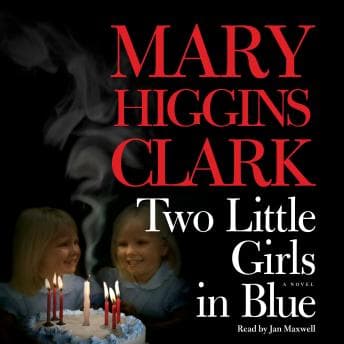

Denise and I were walking the lakefront last Sunday — one of those gray Chicago mornings where the water looks like hammered steel and you can smell rain coming off the lake — and I finished this in a single loop. Six hours and change. That's the thing about Mary Higgins Clark: she writes books that fit neatly into a Sunday. Whether that's a compliment or a complaint depends on what you're looking for.
Let me be honest about where I'm coming from. I've read maybe a dozen Clark novels over the years, mostly because Denise loves them and they're the literary equivalent of a clean, well-made bed. You know what you're getting. The sheets are tucked. The pillows are fluffed. Nobody's going to surprise you with experimental bedding. And there's genuine comfort in that.
A Cruise Ship Mystery That Never Leaves the Shallow End
The setup here is pure Clark: Celia Kilbride, a gem expert, boards a luxury cruise to escape the humiliation of her fiancé getting arrested right before their wedding. On board is Lady Emily Harworth, an elderly aristocrat with a priceless emerald necklace she plans to donate to the Smithsonian. Three days in, Lady Em is dead and the necklace is gone. Suspects include her devoted secretary, her lawyer, and basically everyone else in first class.
If you've read Clark before, you know the formula. And I don't mean that dismissively — Agatha Christie had a formula too, and we don't hold it against her. But where Christie would layer in genuine misdirection and psychological complexity, Clark tends to telegraph her punches. By the halfway point, I had the killer pegged. Not because I'm particularly clever (my students would confirm this), but because Clark gives you maybe three real suspects and then spends most of her energy on the one she wants you to overlook — which, of course, makes them impossible to overlook.
What does work is the world of the cruise ship itself. Clark clearly did her homework on luxury ocean liners, and there's a specificity to the dining rooms, the deck culture, the social hierarchy of who sits where that feels lived-in. The emerald necklace — with its supposed connection to Cleopatra — is a nice MacGuffin, the kind of object that gives characters something to orbit around.
Jan Maxwell Reads Like Someone Who Respects the Material (Maybe Too Much)
Here's where it gets complicated. Jan Maxwell has a genuinely pleasant voice — clear, warm, the kind of voice you'd want reading you the news if the news were about emerald heists instead of, you know, everything else. Her portrayal of Celia is sensitive and grounded. When Celia's processing the betrayal of her fiancé, Maxwell finds something quiet and wounded in the prose that Clark herself might not have fully earned on the page.
But — and this is a real but — the pacing drags. Not everywhere, and not fatally, but enough that I noticed. There's a lethargy to certain passages, particularly the middle stretch where Clark is moving her suspects around like chess pieces. Maxwell reads these sections at the same measured tempo she uses for the emotional beats, and the effect is a kind of flattening. The narrator understands that pause is punctuation, but sometimes you need a comma, not a period.
I'll put it this way: at 1.0x speed — my usual — I found my attention wandering during the investigative scenes with Alvirah and Willy Meehan (Clark's recurring amateur sleuths, who show up here like old friends at a party you're not sure you invited them to). At 1.15x, the whole thing probably clicks better. And I don't say that lightly. You know I'm a 1.0x purist. But Maxwell's deliberate pacing and Clark's already brisk prose create a mismatch in spots.
The Clark Paradox
Here's what I keep turning over. Mary Higgins Clark published this in 2017, near the end of a career spanning decades. She was the Queen of Suspense — that's not my title, that's what the industry called her. And yet this book reads like the work of someone who's mastered a form so completely that the mastery itself has become invisible. There's no friction. No rough edges. No moment where you think, "Oh, she's really pushing herself here."
This reminds me of what Hemingway said about writing — that the dignity of movement of an iceberg is due to only one-eighth of it being above water. Clark gives you the one-eighth. But I'm not always convinced there's an iceberg underneath.
My students would probably enjoy this, actually. It's accessible, it moves (despite the narration pacing), and it doesn't ask you to sit with ambiguity. The mystery resolves cleanly. The good people are rewarded. The bad people are caught. Nothing New for Sophie Drew scratches a similar itch — that same satisfaction of a story that wraps itself up without leaving you stranded in ambiguity. If you loved Clark's earlier work — Where Are the Children?, A Stranger Is Watching — this is comfort food from the same kitchen, just with slightly less seasoning.
Worth Canceling a Faculty Meeting? Not Quite.
Listen. This is a perfectly fine audiobook for a Sunday walk or a long drive. It won't change your life. It won't make you rethink the mystery genre. But it'll keep you company, and sometimes that's enough. Maxwell's narration is warm even when it's sluggish, and Clark's plotting — predictable as it is — still has that old professional sheen.
Who should grab this: Clark completists, cruise-mystery fans, anyone who wants a low-stakes listen that won't keep them up at night. Who should skip: if you need genuine suspense in your suspense novels, or if slow narration makes you reach for the speed dial reflexively, you'll get frustrated.
At six and a half hours, it's a short commitment. I've spent longer listening to Principal Martinez explain budget allocations. At least this had an emerald necklace.