
Who gets to narrate the story of a woman's heartbreak?
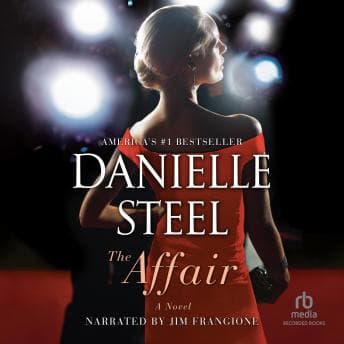
I was at the kitchen table, half-grading a stack of sophomore essays on The Great Gatsby (ironic, given the themes of infidelity I was about to spend eight hours with), when I started Danielle Steel's The Affair. Denise was already asleep. The house was quiet. And I thought - okay, let me give this an honest shot. I teach my students that literary snobbery is the enemy of understanding. Steel has sold 650 million copies. You don't get to dismiss that. You do, however, get to examine it.
The McCarthy Sisters and the Problem of Predictability
Here's what Steel does well: she builds a family system. Rose McCarthy runs Mode magazine. Her daughter Nadia is an interior designer married to Nicolas, a bestselling French author who's been sleeping with a young Hollywood actress - and gotten her pregnant. Nadia's three sisters - Athena the celebrity chef, Olivia the stern judge with a secret, Venetia the fashion designer - rally around her. The setup is efficient, almost mechanical in how quickly it moves you through the chess pieces.
And that's both the strength and the weakness. Steel writes like someone building an IKEA bookshelf: every piece is labeled, every instruction followed, nothing left ambiguous. Athena is "jovial" and "leery of marriage." Olivia is "stern" and "conservative." Venetia is "zany" and "happily married." Each sister arrives with her adjectives pre-attached and never really grows beyond them. My students would call this "flat characterization" and they'd be right, though I'd remind them that not every novel is trying to be Middlemarch.
The real frustration - and this is where I found myself pausing to stare at the ceiling - is the ending. Multiple listeners have called it a letdown, and I understand why. There's a late twist that seems designed to undercut the character growth Nadia spends the whole book building. It's like watching someone climb a mountain and then take an elevator back down. The journey wasn't pointless, exactly, but the destination feels like it belonged to a different book.
Jim Frangione Behind a Story That Isn't His
Let's talk about the elephant in the recording booth. Jim Frangione is a genuinely talented narrator - the man won AudioFile's Best Voice in Mystery and Suspense, he's stacked Earphones Awards. He knows how to work a microphone. But here's the thing: The Affair is fundamentally a story about women. About sisters. About a mother watching her daughter's marriage disintegrate. About a wife deciding who she wants to be after betrayal.
And it's narrated by a man.
Frangione is professional throughout. His pacing is steady, his tone appropriate. But there's a distance baked into the performance that no amount of skill can fully close. When Nadia is processing her husband's affair, when the sisters are arguing about what she should do - I kept wanting to hear those scenes through a voice that carried the weight of that specific kind of feminine solidarity. This isn't about whether men can narrate women's stories. Of course they can. But the narrator understands that pause is punctuation, and some pauses need a different kind of lived experience behind them.
I didn't hate the narration. I just kept wondering what it would've been like with a different choice. A female narrator - someone who could shift between Rose's editorial authority and Venetia's warmth and Olivia's barely-concealed panic - might have elevated this from adequate to alive.
The Danielle Steel Question (The One We Never Ask Honestly)
Here's what I kept thinking about during my lakefront walk the next morning, replaying sections in my head: Steel isn't trying to write literary fiction. She's writing emotional architecture. The affair itself is a framework for exploring how families absorb shock, how sisters love each other imperfectly, how mothers balance professional power with personal helplessness. And at eight hours, it's brisk enough that the thinness of the characterization doesn't completely sink you.
But "not completely sinking" isn't the same as swimming. The prose is functional. The conflicts resolve too neatly (except for that final twist, which resolves too messily). The Parisian setting - which should feel like its own character - barely registers beyond a backdrop.
If you loved Steel's family-centered novels, this is familiar territory. Comfortable. Predictable in the way a favorite restaurant is predictable. You know what you're ordering. The same comfort-food quality shows up in Booked: A Collection of Rom-Com Novellas for Book Lovers, though that one leans harder into the warmth and earns it more honestly, I think.
Who This Works For (And Who Should Keep Walking)
Steel fans will find exactly what they expect. If you want a light domestic drama for a long drive or a weekend of housework, this'll carry you through without demanding much. But if you're looking for the kind of affair novel that actually interrogates betrayal - the way, say, Anna Karenina refuses to let anyone off the hook - this isn't it.
And if the narrator question matters to you, maybe wait for an alternate version that doesn't exist yet. Or pick up the print copy.
The Grade I'd Write in the Margin
I've listened to worse. I've graded worse. But I kept wanting more from this - more depth from the sisters, more consequence from the affair, more risk from the ending. At 1.0x speed, eight hours felt like exactly the right length for a story that never quite decided whether it wanted to challenge its characters or just comfort them. My students would say "it was fine." And sometimes fine is the hardest grade to give.