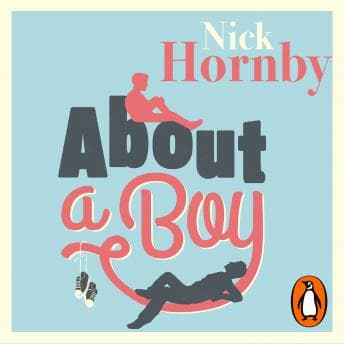

I expected comfort food. The kind of breezy British wit that pairs well with grading papers at 11 PM when you've already red-penned the same comma splice seventeen times. What I got instead was Nick Hornby quietly dismantling everything I thought I knew about emotional maturity—and doing it so gently I didn't notice until hour six.
Denise was already asleep. I was supposed to be finishing a stack of sophomore essays on The Great Gatsby. Instead I'm sitting in the kitchen, headphones in, genuinely moved by a thirtysomething man-child learning to care about someone other than himself. My students would hate this. I love it.
Will Freeman Is the Worst Person You'll Root For
Here's the thing about Will—he's not a bad guy. He's worse. He's a guy who's opted out of being anything at all. Lives off his father's novelty song royalties, structures his days into meaningless "units" of time, and joins a single parents' group by inventing a fictional two-year-old son named Ned. To meet women. To meet single mothers.
And Hornby makes you understand him completely.
This is why we still read the classics—because the best contemporary fiction does the same work. Will isn't a villain. He's a void. A perfectly pleasant, well-dressed void who's terrified of connection because connection means obligation, and obligation means growth, and growth means... what, exactly? That's the question Hornby keeps circling.
Stephen Mangan gets this. His Will has this practiced casualness, this carefully cultivated detachment that sounds almost rehearsed—because it is. Will has been performing "cool" for so long he's forgotten there's supposed to be a person underneath.
Marcus, or: The Twelve-Year-Old Who Reads the Room Better Than Any Adult
Marcus is the kid in every classroom who makes you want to simultaneously protect him and teach him to protect himself. He listens to Joni Mitchell because his mother, Fiona, believes in raising a child untouched by commercial culture. He sings aloud without realizing other kids can hear. He has no idea that his earnestness is a target.
Mangan's Marcus voice—slightly higher, more tentative, but never mocking—captures something essential: this is a child trying to decode a world that runs on rules nobody will explain to him. When Marcus decides Will is going to be his project, his way into understanding how normal people operate, there's this heartbreaking pragmatism to it. He's not looking for a father figure. He's looking for a survival guide.
The narrator understands that pause is punctuation. There's a moment—I won't spoil it, but it involves Fiona and a very bad day—where Mangan lets the silence sit. Just... sits there. And you realize Hornby isn't writing a comedy about an odd couple. He's writing about what happens when two people who've been failing at life in opposite directions finally collide.
The 1990s as Character
If you loved the film, you'll find more here. The book is steeped in mid-90s London—Kurt Cobain's death becomes a plot point, the Nirvana vs. Joni Mitchell divide isn't just a throwaway joke but a genuine cultural fault line. There's something almost archaeological about listening now, thirty years later. These characters are navigating a world without smartphones, without social media, where a twelve-year-old can still be genuinely isolated in ways that feel almost impossible today.
My students wouldn't get it. They'd wonder why Marcus doesn't just find his people online. And that's precisely the point—Marcus has to do the hard work of finding his people in physical space, in real time, with all the risk that entails.
Who This Is For (And Who Should Skip)
This is for anyone who's ever wondered if they're growing up or just getting older. For parents who worry they're doing it wrong. For the child-free who've been told they're missing something essential. For anyone who's ever used ironic detachment as armor and then forgotten how to take it off.
Skip it if you need plot. This is character-driven to its core—the "action" is mostly people talking, thinking, slowly changing. If you want a thriller, look elsewhere. But if you want to spend eight hours with two people learning how to be human together? Worth pausing the faculty meeting for.
The Annotation I'd Give My Students
Hornby does something sneaky here. He writes a book that seems to be about Will learning responsibility, but it's actually about Marcus learning that adults are just as lost as kids—and that's okay. The ending isn't triumphant. It's something better. It's honest.
Mangan's narration elevates material that could've been a simple comedy into something that sticks with you. His comic timing is sharp, yes, but it's his restraint in the emotional moments that makes this worth your credit. He trusts Hornby's prose. He trusts the silences. That same restraint—knowing when to let a moment breathe—is what makes Lost World: A Novel work so well in audio format.
I finished at 1 AM. Still had twelve essays to grade. Didn't care. Some books remind you why you fell in love with reading in the first place. This is one of them.