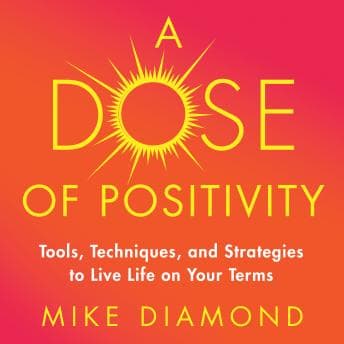

I was on a red-eye back from a client meeting in Phoenix—the kind where you realize halfway through that the founder has no idea what a burn rate is—and I needed something to drown out the guy next to me who'd decided 2 AM was the perfect time to eat an entire rotisserie chicken. So I queued up Mike Diamond's book expecting the usual self-help padding.
Bottom line: There's maybe 90 minutes of genuinely useful content here stretched across nearly 7 hours. My 2.0x speed couldn't save this one.
The Parts Worth Your Time
Look, Diamond's origin story is legitimately compelling. Dyslexia, substance abuse starting at 12, nearly dying before getting sober in 2006—this isn't some trust fund kid who read a few books and decided to become a life coach. The man clawed his way out of real darkness. When he talks about hitting spiritual bankruptcy despite having a successful TV career (the Ink shows, for those who remember that era), you believe him.
His framework around what he calls "Source"—essentially trusting your intuition while staying grounded—isn't revolutionary, but it's presented with the credibility of someone who's actually tested it in recovery contexts. He's helped hundreds of people get sober. That's not nothing.
The problem? He tells you this. Multiple times. In slightly different ways. Across multiple chapters.
The Padding Problem
This is what my parents did instinctively. Now it has a TED talk. And a book. And the book needed an editor with a machete.
Diamond falls into the classic self-help trap: he's got maybe five core ideas, and he's determined to make you hear each one from seventeen different angles. The "flexible attitude" concept? Solid. Hearing it reframed as "staying adaptable," then "maintaining mental agility," then "keeping your mindset loose"—all within the same section? That's where you start checking your phone.
William Paul Williams does competent work as narrator. Nothing flashy, nothing distracting. He's got a steady, encouraging tone that fits the motivational content. But competent narration can't fix structural bloat. I found myself zoning out during the middle third, and I was literally trapped in a metal tube with nowhere else to go.
What Actually Lands
The concrete tips—when they finally arrive—are practical. His approach to morning routines, his methods for staying grounded when life goes sideways, his framework for identifying what he calls your "ideal future"—these are actionable. I've seen worse at three-day corporate retreats that cost $15,000 a head.
Skip to the chapters on practical application. Thank me later.
The recovery angle also gives this book something most positivity books lack: stakes. Diamond isn't talking about optimizing your already-comfortable life. He's talking about not dying. About rebuilding from zero. That urgency makes his advice hit different than the usual "manifest your best self" nonsense.
Who Should Listen—And Who Should Skip
If you're in recovery, or supporting someone who is, this book has genuine value. Diamond speaks that language fluently because he's lived it. That authenticity—earning your credibility through actual struggle—is what separates the real stories from the manufactured ones, something David and Goliath explores in a completely different context.
If you're a general self-improvement listener looking for efficiency? You'll be frustrated. The insight-to-runtime ratio is brutal. I kept thinking about my parents working those 14-hour days at the dry cleaners—they didn't have 7 hours to absorb what could be a pamphlet. Atomic Habits respects your time better—same self-improvement category, about a third of the bloat.
Jenny would say I'm being harsh. Jenny is right. But I'm also not wrong.
The ROI Breakdown
Here's my issue with most self-help audiobooks: they're priced like they're giving you a system, but they're really giving you a feeling. Diamond's book is somewhere in between. The system exists—it's just buried under too much repetition and too many anecdotes that make the same point.
At 6 hours 46 minutes, this should have been 3 hours. The core framework is worth hearing. The other 4 hours? Padding.
If you're going to commit, do it at 2x speed with your finger on the skip-forward button. The good stuff is in there. You just have to dig for it.