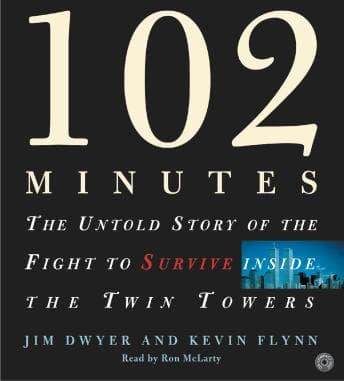

Look, I've spent 25 years in the Army. I've written after-action reports on firefights. I've debriefed soldiers who've seen things no training prepares you for. And I thought I understood crisis response.
This book humbled me.
The Debrief Nobody Wanted to Write
Dwyer and Flynn did something here that most journalists can't pull off—they wrote a minute-by-minute operational account that never loses the human beings inside it. Every decision, every radio call, every stairwell conversation. As someone who's analyzed tactical failures for a living, I was glued to this thing. The structural engineering details, the communication breakdowns between agencies, the improvised solutions people came up with when everything went sideways—it's all here, and it's all accurate.
What got me was the small stuff. The guy who went back up the stairs because he couldn't leave his coworkers. The Port Authority officers making calls with information that was already outdated. The firefighters climbing into a building they knew was compromised because that's what the mission required. I've known men like this. Served with them. Some of them didn't come home either. That same understanding of what drives people into impossible situations is what made Geronimo's Story of His Life stick with me—different war, different century, same kind of courage.
The authors clearly did their homework. Thousands of pages of transcripts, hundreds of interviews. This isn't speculation or dramatization—it's documentation. And that matters. When you're dealing with something this significant, you owe it to the people involved to get it right. They got it right.
Ron McClarty Carries the Weight
I was skeptical about listening to this instead of reading it. Some subjects feel too heavy for audio. Too easy to miss details when you're driving.
McClarty changed my mind. His delivery walks this razor-thin line between reporter and witness. He doesn't overplay the emotional moments—and God knows there are plenty of them—but he doesn't flatten them either. When he's reading someone's last phone call to their family, you hear it in his voice. Just enough. Not theatrical. Real.
The pacing matches the subject matter. Some sections move fast—the initial impact, the evacuation chaos—and McClarty keeps up without rushing past important details. Other sections slow down, give you time to process what you just heard. At 1.25x speed (my usual), it worked perfectly. Six hours felt like three.
Ranger actually left the room during one section. Dogs know when something's wrong. He came back eventually, but I noticed.
Who Needs This Intel
If you work in emergency management, incident command, or any kind of crisis response—this is required reading. Period. The lessons about interagency communication failures alone are worth your time. The radio systems that couldn't talk to each other. The information that got stuck in one agency while another agency needed it. We fixed some of this afterward. Not all of it.
If you're a civilian who wants to understand what actually happened inside those buildings—not the TV coverage, not the political aftermath, but the actual 102 minutes—this is the definitive account. Dwyer and Flynn don't editorialize. They don't have to. The facts speak for themselves.
Skip this one if you're easily triggered by trauma or violence. It's not gratuitous, but it's honest. And honest, in this case, means difficult.
I listened during a long drive to a client site in Houston. Probably not the smartest choice—I had to pull over twice. Not because I couldn't see the road. Because some moments demand you stop and pay attention.
End of Mission
This one sticks with you. I finished it three days ago and I'm still thinking about the people in it. The ones who made it out. The ones who didn't. The split-second decisions that meant everything.
Worth your time? Without question. This isn't entertainment—it's history. Important history. Told by people who understand that the details matter, narrated by someone who understands that the humans matter more.
Ranger approved this one. So do I.







![Steve Jobs [unabridged audiobook] audiobook cover](/_next/image?url=https%3A%2F%2Fcovers.audiobooks.com%2Fimages%2Fcovers%2Ffull%2F9788499923406.jpg&w=1920&q=75)