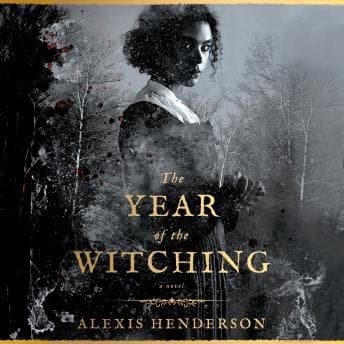
Alexis Henderson wrote a book that feels like it was pulled directly from the nightmares I had growing up in a church that banned Harry Potter.
I need to sit with that for a second. Because Year of the Witching hit me in a place I wasn't expecting. I went in for the witches. I stayed for the indictment of religious authoritarianism that felt so uncomfortably familiar I had to pause the audiobook and just... breathe.
The Darkwood Knows What You Grew Up With
Bethel is a theocratic settlement ruled by a Prophet whose word is literally law - Holy Protocol governs everything from what women wear to who they marry to how they grieve. Immanuelle Moore exists at the margins of this world: biracial, the daughter of a disgraced woman, carrying a bloodline the community considers blasphemous. And the Darkwood surrounding Bethel? It's where the original Prophet hunted down four witches, and their spirits are still very much active.
Here's what Henderson understands that a lot of fantasy-horror writers don't: the scariest thing in this book isn't the witches in the woods. It's the men in the church. The plagues that descend on Bethel - blood, blight, darkness, slaughter - they're horrifying, sure. But the real dread comes from watching a community that's already oppressing its women scramble to oppress them harder when things go wrong. The scapegoating. The silence. The way Immanuelle's own family would rather she submit than survive.
Shirley Jackson walked so this author could run. And I don't say that lightly.
The Darkwood sequences have genuine atmospheric horror - Henderson writes the forest as a living, hungry thing, and the four witch spirits (Lilith, Delilah, Jael, and Leah) each carry distinct menace. But the book's sharpest teeth are in the scenes set inside Bethel's walls. The church gatherings. The Prophet's private chambers. The way power operates in plain sight and everyone agrees not to see it.
Brianna Colette's Voice - Almost There
So here's where I got complicated feelings. Brianna Colette builds atmosphere like a pro. Her pacing through the Darkwood scenes is measured and deliberate - she doesn't rush the dread, and that matters enormously in horror audiobook narration. She creates genuine urgency when the plagues hit, and her voicing for the religious authority figures carries the right weight of sanctimonious control.
But - and I kept circling back to this - her voice for Immanuelle skews young. Light. Airy. In early chapters, it works. Immanuelle is sheltered, raised under crushing conformity, and there's an innocence to her that makes sense. But by the time Immanuelle is confronting the Prophet, uncovering her mother's secrets, making choices that will reshape Bethel entirely? That same lightness undercuts the gravity of what she's doing. I wanted to hear Immanuelle's voice darken as the story darkened. I wanted the weight of her discoveries to land in the vocal performance. It doesn't quite get there.
The narrator commits to the world-building. That's rare. The brooding, oppressive atmosphere of Bethel comes through clearly. But I kept wanting her to commit harder to Immanuelle's transformation - to let the character grow up in the voice, not just the text.
And Ezra. The love interest. He's already thinly drawn on the page (the Prophet's son who sympathizes with Immanuelle but never quite earns his place in the story), and Colette doesn't have much to work with there. He sounds functional. Not magnetic. For a character who's supposed to represent Immanuelle's complicated relationship with the church that raised her, that's a miss.
Where the Bones Show
I listened to this over two nights - one at the library after closing (the Oregon branch gets dark fast and the old heating system makes sounds I have chosen not to investigate), and one in bed with Shirley purring on my chest. Shirley was unimpressed. I was deeply invested but also aware of the seams.
Henderson's world-building is evocative but sometimes leans on familiar scaffolding. If you've read The Handmaid's Tale, if you've consumed any puritanical dystopia, you'll recognize the architecture here. That's not automatically a flaw - what Henderson does differently is center a Black woman in that structure and let the intersection of race and gender and religion create something the genre desperately needed. But the plot beats themselves (forbidden knowledge discovered, truth about the founding, confrontation with power) move along predictable rails.
At 11 hours and 38 minutes, the pacing holds steady. No major drag. But I'll be honest - during breaks, I found myself having to re-anchor in the specifics. The emotional throughline is strong. The plot details are less sticky.
This understands that horror isn't about gore - it's about dread. The dread of being watched. Of being judged. Of knowing the system you live inside was built on violence and being the only one willing to say it out loud.
Who Needs This in Their Ears
If you grew up in any flavor of religious rigidity - especially if you were a girl or a queer kid or anyone who was told your body and your choices belonged to God (meaning: belonged to men who claimed to speak for God) - this book is going to crawl under your skin. If you scare easily, skip. If you don't, you need this for the institutional horror alone.
If you're looking for a complex magic system or deep fantasy world-building, temper your expectations. This is horror wearing fantasy clothes. The Darkwood is atmosphere, not cartography.
My podcast listeners are going to love this one - it's exactly the kind of feminist horror that deserves more shelf space in the genre. Henderson's debut isn't flawless, and Colette's narration doesn't quite match the darkness the story earns. But the anger in this book? I've been thinking about what separates horror that earns its darkness from horror that just performs it — Total Control is a useful comparison point, a thriller that knows how to build institutional dread but doesn't quite commit to the fury underneath it the way Henderson does here. The clear-eyed fury at systems built to consume women? Finally, horror that respects the genre.
I listened in the dark. Mistake? Maybe. Worth it? Absolutely.