
"The minutes of the women's meeting." That's how it starts. Not with a bang, but with the scratching of a pen. We are dropped right into a hayloft, smelling the livestock and the fear, while a man writes down what the women say.
The Man in the Hayloft
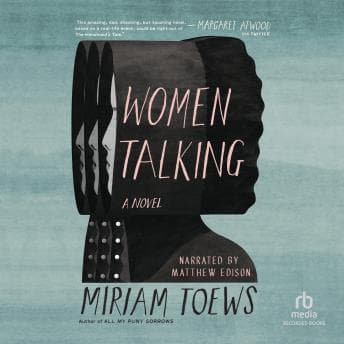
Okay, let's address the elephant in the audio booth immediately. You see the title Women Talking and then you see "Narrated by Matthew Edison." A dude. (I can hear my AP English students rolling their eyes already. "Typical," Sarah in the front row would say.)
But hold on. Put the pitchforks down.
This isn't a casting mistake. It's the whole point of the structure. The book is framed as the minutes taken by August Epp, the one guy the women trust enough to hold the pen because he's an outcast too. If Edison had tried to do eight distinct, high-pitched female voices or a falsetto, this would have been a disaster. An absolute farce. Instead, he plays August exactly right—mild, reserved, almost invisible.
He reads like a man terrified of taking up too much space. He knows he is a guest in their pain. It works. (Though, yeah, I admit it takes a solid twenty minutes to adjust your brain to hearing a baritone voice describe female rage.)
12 Angry Men, But Make It Mennonite
This isn't a thriller. There are no car chases. It's eight women in a barn, sitting on hay bales, debating three options: Do nothing. Stay and fight. Or leave.
It reminds me of teaching The Crucible, but stripped of the hysteria. Pure logic and raw pain. They talk about faith, about safety, about whether their cows will be milked if they run. It's the most high-stakes city council meeting you've ever heard.
I listened to this while grading a stack of terrible essays on The Great Gatsby at 11 PM, and honestly, I had to put the red pen down. The arguments these women make? They're brilliant. Uneducated, maybe—they can't read the map of the county—but brilliant. That same fierce intelligence in the face of impossible odds shows up in Girl with the Make-Believe Husband, though admittedly with fewer hay bales and more historical espionage. Toews gives them a dignity that just... it floors you.
And it's funny. Dark funny. The kind of funny that happens when you've run out of tears and the absurdity of the patriarchy just hits you in the face.
Why the Silence Matters
Edison's pacing is slow. (My students would say "glacial.") But he understands that the pause is punctuation. He lets the silence hang there between the arguments.
Some folks might find the male voice distancing. I get that. It puts a layer of glass between you and the women's trauma. But honestly? Maybe we need that glass. The reality of what happened to these women—drugged with cow tranquilizer and assaulted in their sleep—is so horrific that having August's gentle, sad voice narrating it makes it bearable. Barely.
It's not an easy listen. I had to pause it three times during my commute just to breathe. But it's the kind of book that makes you look at your own silence differently.
Who Should Press Play (And Who Should Skip)
If you want plot-driven action, this isn't it. Skip it. But if you teach literature, study theology, or just want to hear women's voices given the weight they deserve—even filtered through a man's pen—this one will stay with you. Fair warning: you need patience for the slow burn and stomach for the subject matter.
(Principal Martinez, if you're reading this, I promise I'll finish those grading reports. Eventually. Right now, I'm still stuck in that barn.)