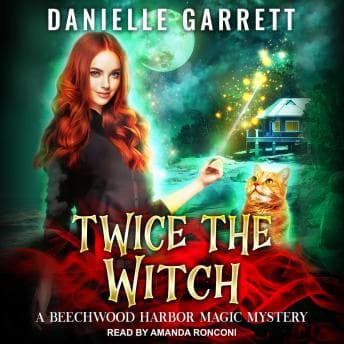

Okay, look. I have a bone to pick with the "rag-tag group of friends" trope.
I was listening to this while attempting to make a decent chana masala (spoiler: I burned the garlic), and I found myself shouting at the speaker. Not because the plot was confusing—it's actually pretty straightforward—but because psychologically, these group dynamics always feel so... convenient. Holly is banished, she's stressed, her ally is dead. High stakes, right? Maslow's hierarchy of needs is screaming at her. But the way this group comes together? It felt a little too easy. A little too scripted.
(My mother would say I'm being too critical and should just enjoy the magic. She's wrong, but don't tell her that.)
The Voice in My Head (And Why It Confused Me)
Let's talk about Amanda Ronconi. Usually, she's solid. She has this energy that keeps you awake during a 6 AM jog along the Charles River. She differentiates voices well—you know who's talking without needing a "he said, she said" tag.
But—and this is a big but—the accent work here? Yikes.
It's supposed to be Southern (I think?), but it wanders. One minute we're in Savannah, the next minute we're dangerously close to my home state of New Jersey. As someone who studies identity, hearing a character's vocal identity shift mid-sentence is... distracting. It breaks the immersion. It's like a cognitive dissonance spike right in the ear. I didn't have this problem with Clash of Kings, where the narrator manages multiple regional accents without the identity drift. Some listeners found it grating, and frankly, I have to agree. If you're sensitive to inconsistent accents, this might itch your brain the wrong way.
When the Stakes Don't Match the Pace
The premise is actually great. Holly is fighting for her freedom. Her ally is murdered. This should be a high-octane, cortisol-spiking thriller.
So why did I feel like I could stop and make a cup of tea in the middle of a chase scene?
The pacing drags. Seriously. There are moments where the urgency just evaporates. Psychologically, if you're under threat of losing your freedom (or life), your focus narrows. You act fast. But the narrative here meanders. It felt like the author wanted to hang out in the world more than solve the murder. Storm of Swords balances world-building with urgency in a way this book never quite manages. Which is fine if you're writing a slice-of-life witch story, but for a mystery? It kills the tension.
Also, the character depth. Or lack thereof. Some reviews called them "caricatures," and that's spot on. I wanted to analyze Holly's trauma from banishment, but there wasn't much there there. Just archetypes moving through a plot.
The Diagnosis (Over Burnt Garlic)
Is it terrible? No. It's fine. It's brain candy. If you want something to listen to while you're doing chores and you don't want to think too hard about human motivation or consistent linguistics, this works. The production quality is clean, and Ronconi is energetic enough to keep you company.
But if you're like me and you need characters to act like real human beings (even if they are witches) and accents to stay in one zip code? Maybe skip this one. Or at least sample it first to see if the Southern-Jersey hybrid voice bothers you as much as it bothered me.