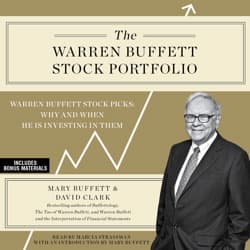

I was sitting in a rental car in a Palo Alto parking structure, waiting for a founder who was twenty minutes late to his own panic attack—I mean, consultation. I needed something to kill the time that wasn't another meditation app or a podcast about 'hustle culture.' I checked my library. Four hours. *The Warren Buffett Stock Portfolio*. Perfect. I could finish half of it before the guy showed up.
Most books about Warren Buffett are 10% financial insight and 90% folksy anecdotes about Cherry Coke and bridge games. They're basically Hallmark cards for capitalists. This book is different. It's the vegetable course. No dessert. Clark and Mary Buffett (the ex-daughter-in-law, which remains the shrewdest branding pivot in history) strip away the 'Oracle of Omaha' mythology and just throw math at you.
The ROI on Your Eardrums
Here's the thing: Audio is a terrible medium for math. Usually. But because this book is structured as seventeen specific case studies—dissecting companies Buffett actually bought—it works as a repetitive drill. Like listening to financial flashcards. They hammer home 'per-share book-value' and 'compounding annual rates' until you start dreaming in spreadsheets.
Unlike *The Snowball*, which is a biography the size of a doorstop, or *The Intelligent Investor*, which is dry enough to crack a lip, this is tactical. It explains *why* he bought Wells Fargo or Coca-Cola at specific price points. Efficient. My parents would have liked this. They didn't care about market philosophy; they cared about the spread between cost and revenue. This book respects that hustle.
The systems-over-philosophy mindset reminds me of what made Atomic Habits stick with me too—both books strip out the inspirational fluff and hand you a repeatable framework instead.The Time Capsule Problem
You have to grade this on a curve. The book was published around 2011, and it shows. The narrator talks about the "banking situation in Europe" and high unemployment in America with a sense of immediate dread that feels quaint now. Listening to it today is like finding a newspaper from the last recession. The specific stock picks are dated—the prices they quote are ancient history—but the *logic* used to evaluate them is the point. You're here for the formula, not the ticker price.
The Sitcom Mom Reads Your Portfolio
We need to talk about Marcia Strassman. Yes, the mom from *Honey, I Shrunk the Kids*. Bizarre casting choice for a heavy finance book. I kept expecting her to tell Rick Moranis to watch the kids. Instead, she's articulating "durable competitive advantage" with crisp, professional detachment. She doesn't try to act out the earnings reports, which I appreciate. Reads it straight, clear, and fast enough that I only had to bump it to 1.25x. Any faster and the numbers blur together.
Who Gets Value Here (And Who Doesn't)
If you can visualize a balance sheet in your head and want the mechanics behind the myth without wading through 800 pages of biography, this is worth the four hours. Skip it if numbers without visuals make your eyes glaze—this audiobook will just sound like a random number generator. And don't buy it for the specific stock tips. Unless you have a time machine.