
Stuck in bumper-to-bumper traffic on I-35 just outside Austin—heat index pushing 105, AC barely keeping up—when I decided to finally crack this one open.
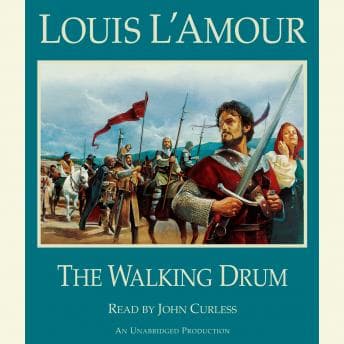
Look, I grew up on Louis L'Amour. My dad had a shelf full of those paperback Westerns. I went back to his more traditional work recently with Comstock Lode, just to make sure I wasn't misremembering what made those stories tick. So when I saw The Walking Drum—a story set in the 12th century with zero cowboys and exactly zero Winchesters—I was skeptical. Figured it was like seeing a tank commander try to fly a helicopter. Usually ends in a fireball.
I was wrong. Dead wrong.
Not Your Granddad's Western
Let's cut to the chase. This isn't a Western in drag. It's a full-blown tactical operation across medieval Europe and the Middle East. You follow Mathurin Kerbouchard—a guy who is part scholar, part warrior, and frankly, would've made a hell of a Special Forces operator. He's looking for his father, seeking revenge, the usual motivators. But the execution? The author clearly did his homework.
I've spent time in some of these regions—different century, same dust—and L'Amour captures the geography and the sheer logistical nightmare of travel back then perfectly. It's not just "go here, kill bad guy." It's survival. It's gathering intel. It's learning the local dialect so you don't get your throat slit in a bazaar.
(And yes, for the record, the combat scenes track. No infinite ammo—or the sword equivalent—and the tactics make sense for the era.)
The Voice in the Humvee
John Curless. I hadn't heard much from him before this, but the man deserves a medal.
Narrating a book like this is a minefield. You've got French, Arabic, Russian, and a dozen other backgrounds mixing together. A lesser narrator would've turned this into a cartoon. Curless manages to give distinct voices to a massive cast without making them sound like caricatures.
He's got this grit to his voice that fits the road-weary vibe of the protagonist. I listened at my usual 1.25x speed, and he didn't lose any clarity. There were moments—specifically when Kerbouchard is dealing with the "Old Man of the Mountain" (the Assassins)—where Curless drops his register and the tension just spikes. Kept me awake through three hours of Texas highway monotony, which is saying something.
Mission Debrief
Here's the thing about this book: It respects your intelligence.
Kerbouchard isn't just a brute; he wins half his battles by being smarter than the other guy. He reads, he studies medicine, he understands trade. Reminded me that the best soldiers I ever commanded weren't the biggest guys—they were the ones who could think on their feet when the plan went to hell.
Is it perfect? No. Sometimes L'Amour gets a little too in love with his own research. There are sections where he describes a city or a trade route that drag a bit—I zoned out once or twice looking for a rest stop. But honestly, I'd rather have too much detail than a hollow story.
Ranger (my German Shepherd) seemed to enjoy it too, though he mostly slept through the politics and woke up for the sword fights.
Who's This Op For?
If you like historical fiction but want something with a pulse, or if you want to see what L'Amour does when he steps out of his comfort zone, grab this. Skip it if you need constant action—there are stretches of politics and travelogue that'll test your patience. It's a long haul—16 hours—but it's a ride worth taking.