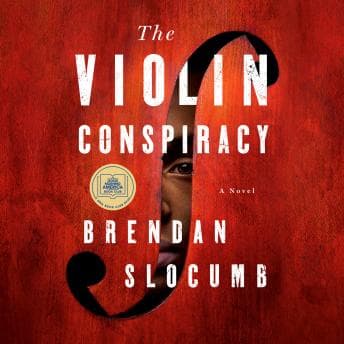

I picked this one up because a coworker in the ICU kept telling me it was "like The Queen's Gambit but with violins." I was skeptical. I've been burned by that comparison before. But three nights into my commute home from the trauma center, I was sitting in my driveway at 7 AM, engine running, refusing to go inside until I heard what happened next.
So yeah. She was right.
The Part Where I Yelled at My Dashboard (In a Good Way)
Ray McMillian's story hit me in ways I wasn't expecting. Here's this kid from rural North Carolina, working twice as hard as everyone around him just to be seen as half as good. The classical music world's racism isn't subtle in this book - it's the kind of quiet, systemic garbage that makes you want to throw things. And honestly? It reminded me of my first years in nursing. Being Filipina-American in healthcare, being the first in my family to get a degree, constantly proving yourself to people who already decided you don't belong there.
Brendan Slocumb is a classical musician himself, and you can tell. The way he writes about Ray's relationship with his violin - that beat-up family fiddle that turns out to be a Stradivarius - it's not just plot device stuff. It's intimate. The scenes where Ray practices, where he loses himself in the music, where he fights for every opportunity? Those felt real. Because they probably were.
The mystery element - the stolen violin, the ransom note, the ticking clock of the Tchaikovsky Competition - that's where things get a little wobbly. I saw some of the twists coming from a mile away. But here's the thing: I didn't care. The mystery isn't really the point. Ray is the point.
JD Jackson Made Me Miss My Exit. Twice.
JD Jackson's narration is warm and clear and exactly what this story needed. He doesn't overdo the emotional moments - which is good, because there are plenty of them - and he makes Ray feel like someone I actually know. The supporting characters are distinct without being cartoonish. Ray's frustrating family members sound like actual frustrating family members. (My mom would recognize that energy. She still thinks I should've been a doctor.)
And the musical interludes? I wasn't expecting those. Little snippets of violin music woven into the audiobook that made the whole thing feel more immersive. It's a small touch, but it works. When Ray talks about how a piece of music makes him feel, and then you actually hear it - that's the kind of thing that makes audiobooks better than print sometimes.
Slocumb himself narrates the author's note at the end, and it's worth sticking around for. He talks about his own experiences as a Black classical musician, and suddenly everything Ray went through feels even more personal. I appreciated that he shared it.
Who Should Listen (And Who Should Skip)
Perfect for that post-shift decompression. Seriously. It's got enough tension to keep you awake on the drive home, but it's not so dark that you'll have nightmares. The pacing is steady - not a thriller pace, but it doesn't drag either. I listened at normal speed and never felt the urge to bump it up.
If you're looking for a tight, twisty mystery where every clue matters? This might frustrate you. The mystery plot has some weaknesses - a few convenient coincidences, a resolution that's a little too neat. If you want something with tighter mystery mechanics, Murder in an Irish Village delivers on that front without sacrificing character. But if you're here for Ray's journey, for the music, for the way Slocumb writes about fighting for your dreams when the world keeps telling you to give up - you'll love it.
Classical music enthusiasts will probably get more out of the technical details than I did. I know medicine, not Stradivarius violins. But Slocumb writes accessibly enough that I never felt lost.
Carlos asked why I was crying in the car after the last chapter. I blamed allergies. He didn't believe me.
Clocking Out
This is the kind of book that reminds you why you keep listening. Not every audiobook needs perfect plot mechanics. Sometimes you just need a story about someone who refuses to give up, told by people who clearly care about getting it right. JD Jackson nails it. The musical interludes are a bonus. And Ray McMillian is going to stick with me for a while.
My mom would love this. She'd also probably ask why I don't play violin. Some things never change.