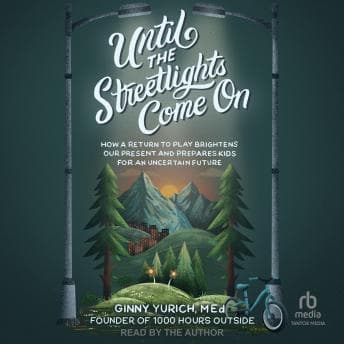

Four to seven minutes outside per day. Four to seven HOURS on screens. I was listening to this stat while staring at three monitors debugging a memory leak at 11pm and honestly felt personally attacked.
Ginny Yurich's premise hit me during a rare weekend morning when I wasn't on-call—I'd queued this up while making coffee, half-expecting another "screens bad, nature good" lecture that could've been a Medium post. Instead I found myself still standing in my kitchen an hour later, cold coffee in hand, actually thinking about what childhood looked like before we optimized every minute of it.
The 1000 Hours Framework Is Basically SRE for Kids
Here's the thing—Yurich isn't just preaching "go outside more." She's built a system. 1000 hours annually breaks down to roughly 3 hours daily, which sounds insane until she walks you through the math and the research backing it. As someone who lives by metrics and observability, I appreciated that she's not just vibes-based. There's actual data here about sunlight exposure, unstructured play's impact on problem-solving, and why boredom is basically your brain's defrag cycle. Mindbody Prescription takes a similar research-backed approach to something we've over-complicated—in that case, chronic pain instead of childhood development.
The section on what boredom contributes to cognitive development genuinely surprised me. She argues that the discomfort of having nothing to do is when kids develop internal motivation and creativity—it's the idle time that lets the brain do garbage collection. (Kevin would roll his eyes at that metaphor but he's not writing this review.)
Author-Narrated With Genuine Mom Energy
Ginny narrates this herself, and it works. She sounds like that one friend who's really into something and wants to share it with you—not preachy, not condescending. That conversational authenticity reminded me of Leaders Eat Last, where Sinek manages to discuss organizational psychology without sounding like a consultant deck. There's a warmth there that feels earned, like she's talking across a kitchen table rather than lecturing from a stage. You can tell she's lived this with her five kids.
The production is clean, nothing fancy. No sound effects, no dramatic music—just her voice and the content. For a book like this, that's the right call. It would've felt weird to have nature soundscapes punctuating a book about getting off your devices.
Where It Gets a Little Youth-Group-Retreat
Okay, full disclosure: this is published by a Christian imprint and there are moments where that shows. It's not overwhelming—she's not quoting scripture every chapter—but there's definitely an undercurrent of "God designed children for outdoor play" that might land differently depending on your worldview. I'm personally pretty secular, and I could mostly translate it to "evolution designed children for outdoor play" and keep moving. But if faith-adjacent language is a dealbreaker for you, heads up.
Also—and this is my main critique—the book assumes a level of flexibility with time and resources that not everyone has. Homeschooling mom of five with the ability to structure her days around outdoor time is a very specific demographic. She acknowledges working parents exist, but the solutions feel a bit hand-wavy. "Just prioritize it" is easier said than done when you're commuting 4+ hours a day and your kid is in after-school care until 6pm.
The ROI Calculation
At just under 6 hours, this is a quick listen—I knocked it out over a weekend of cooking and errands. The pacing is good, not padded. She makes her points and moves on. Could some sections have been tighter? Sure. There's a bit of repetition around the core thesis. But it never dragged to the point where I reached for the 1.75x button.
The practical tips section toward the end is genuinely useful. How to make outside more attractive than screens, how to handle weather resistance, how to structure unstructured time (yes, that's a thing). It's the implementation guide that a lot of parenting books skip.
Who Gets Value Here (And Who Won't)
If you're the type who has a spreadsheet for your kid's activities and secretly worries you're overscheduling them into anxiety—this is your book. It's validation wrapped in research wrapped in gentle encouragement. Skip if you're looking for something with deep scientific rigor (this is more pop-science adjacent), or if you're already doing the outdoor thing and don't need convincing.
Quick Verdict For My Fellow Commuters
I don't have kids yet, but I sent this to three friends who do. The framework is solid, the narrator is likeable, and even as a childless tech worker, it made me think about my own relationship with screens and sunlight. That 4-7 minutes stat is going to haunt me every time I look at my Screen Time report.
Not going to change your life, but might change how you think about your kid's afternoon. And honestly? That's worth a few hours of listening.