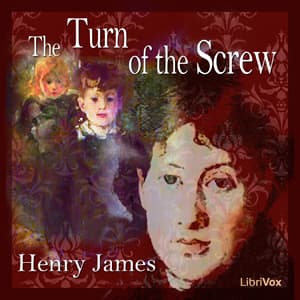
I made the mistake of listening to this at 2 AM with all the lights off. Classic me. Shirley (the cat, not the author, though obviously named after the author) was curled up on my chest, and I swear she opened one eye during the Flora scene like she knew.
Here's the thing about The Turn of the Screw that I've been telling my podcast listeners for years: it's not really a ghost story. I mean, it is. But it's also maybe the most sophisticated piece of psychological horror ever written in English. Henry James understood something that modern horror often forgets—the scariest thing isn't what you see. It's what you can't trust. Including yourself.
The Governess Problem (And Why It Works)
So you've got this unnamed governess, right? She shows up at this creepy estate to care for two angelic children, and she starts seeing ghosts. Or does she? James never tells you. He refuses. And that ambiguity—that refusal to let you off the hook—is what makes this novella feel genuinely dangerous even 125 years later.
The prose is dense. I won't lie. James writes sentences that loop back on themselves like snakes eating their own tails. There are moments where you have to just... let it wash over you. Stop trying to parse every clause and trust the rhythm. This is where audiobook format actually helps, because Nikolle Doolin's pacing carries you through passages that might trip you up on the page.
Doolin's Governess: Unhinged by Design
Doolin's narration is going to be divisive. I need to be upfront about that. She's expressive—really expressive—and her reading leans into the emotional intensity of the governess's perspective. Some listeners find this too much. They hear hysteria where I hear commitment.
Here's my take: the governess IS unhinged. That's the point. Whether she's seeing real ghosts or projecting her own psychological breakdown onto these children, she's not a reliable narrator. She's not supposed to sound calm and measured. Doolin's lush, almost sentimental delivery? It works for me because it puts you inside a mind that's spiraling. You're not watching the governess from a safe distance. You're trapped in her head.
That said—if you prefer narrators who step back and let you decide how to feel, this might frustrate you. Doolin makes choices. Strong ones. The sign-on/sign-off thing some listeners complain about is a minor annoyance (I barely noticed), but the overall style is definitely a "love it or hate it" situation.
Those Children. God, Those Children.
The scenes with Miles and Flora are where this audiobook really earns its keep. James wrote them to be simultaneously innocent and deeply wrong, and Doolin captures that unsettling sweetness perfectly. When Flora's voice shifts, when Miles says something that sounds too knowing for a child his age—the narrator commits to those moments. That's rare.
I kept pausing to text my co-host about specific scenes. The tower. The lake. That final confrontation with Miles that still has scholars arguing about what actually happened. (My interpretation? Email me. I have thoughts. Many thoughts.)
The production quality is clean and professional, which matters for a text this dense. No audio issues pulling you out of the story. At just under six hours, it's a perfect weekend listen—long enough to build genuine dread, short enough that you won't lose the thread.
Who Needs This in Their Ears (And Who Should Run)
If you're a horror fan who only knows the film adaptations, you need the source material. The Innocents (1961) is brilliant, but James's original does something film can't—it makes you complicit in the ambiguity. You can't see what the governess sees. You only have her words. And Doolin's voice.
If you're new to Henry James, this is actually a decent starting point. It's short by his standards, and the gothic atmosphere gives you something to hold onto while you adjust to his style.
Skip if you need your horror fast-paced or your narrators neutral. This is a slow burn that requires patience and a willingness to sit with uncertainty. The kind of horror that follows you to bed and makes you wonder if you really saw something in the corner of your room or if you just... wanted to. That same creeping paranoia lives in Big Little Lies, where you're never quite sure who's lying to themselves and who's just lying.
Shirley Jackson Walked So—Wait, No
Shirley Jackson walked so Henry James could—wait, no, James came first. Shirley Jackson ran because Henry James showed her where the path was. There. Fixed it.
My podcast listeners are going to love this one. I'm already planning an episode.









