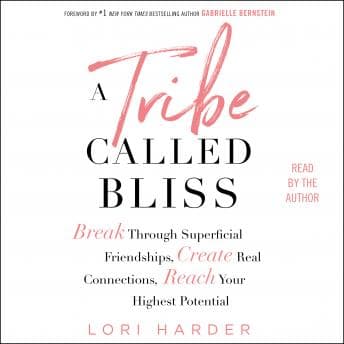

This book has no business being as useful as it is.
I started skeptical. Like, genuinely skeptical. I was chopping onions for a biryani that would take three hours and feed one person (me, obviously), and I needed something to fill the silence. A book about finding your "tribe" and "bliss"? The research psychologist in me was already composing counterarguments. The literature on female friendship is fascinating but complicated, and most self-help books reduce it to Instagram platitudes.
But here's the thing. Lori Harder actually knows what she's talking about.
The Introvert's Paradox (And Why This Book Gets It)
Harder opens with her own story of anxiety-riddled isolation, and—okay, fine—I recognized myself. The woman describes being an introverted underachiever who exhausted herself trying to succeed alone, and suddenly I'm thinking about all those conference dinners I've eaten in my hotel room "to prepare for tomorrow's panel." Sure, Priya. Sure.
What makes this compelling is that Harder doesn't pretend connection is easy or natural for everyone. One listener called it "a revelation to my introverted soul," and psychologically, this tracks. The research actually shows that introverts don't need *less* connection—they need *different* connection. Harder seems to understand this distinction intuitively. She's not telling you to become an extrovert. She's giving you permission to build relationships on your own terms.
The exercises are where the book earns its credibility. These aren't vague journal prompts about "visualizing your ideal friend." They're structured self-work activities that force you to examine your patterns. Why do you keep attracting certain types of people? What are you actually offering in relationships? My therapist would have thoughts about this approach—specifically, she'd probably approve.
When the Author Reads Her Own Work
Harder narrates the audiobook herself, which is always a gamble. Some authors sound like they're reading a grocery list. Others oversell every sentence like they're auditioning for a TED Talk.
Harder lands somewhere warm and genuine. Her voice has this friendly, almost conspiratorial quality—like she's telling you secrets over coffee. The inspirational content delivery works because she clearly believes what she's saying. You can hear it. There's no performance anxiety, no trying too hard.
That said, if you're allergic to motivational speaker energy, you'll notice it here. She's earnest. Very earnest. At seven hours, that earnestness can feel like a lot. I found myself needing breaks—not because the content was bad, but because absorbing this much positivity requires processing time. (My natural state is "mildly cynical academic," so your mileage may vary.)
The Science Behind the Sisterhood
Here's where I got genuinely interested. Harder cites the connection between strong social circles and longevity, happiness, health outcomes—and she's not wrong. The epidemiological data on social isolation is frankly terrifying. Loneliness is a public health crisis. Women who lack meaningful friendships don't just feel worse; they die earlier. The mortality data here actually overlaps with what David Sinclair unpacks in Lifespan—the social isolation findings sit alongside sleep deprivation and metabolic stress as quietly devastating variables that most longevity conversations still underweight.
But most books stop at "connection is important!" and leave you to figure out the how. Harder provides frameworks for identifying what you need, finding people who can provide it, and—crucially—being someone others want in their tribe. She addresses classic attachment patterns without ever using the clinical terminology. Smart move for accessibility.
The "soul sisters from scratch" approach is particularly useful. You don't need to already have friends to use this book. You can start from zero. For someone who moved cities for a postdoc and realized their entire social network was 2,000 miles away... this matters.
Introverts Who Need Connection, Apply Here
This is for you if: you're an introvert who knows you need more connection but finds the process exhausting. If you've ever felt like success is a solo project and wondered why it feels so empty. If you're tired of surface-level friendships that never go deeper.
Skip it if: you're looking for rigorous social science. This is self-help, not a psychology textbook. Harder draws on research but doesn't cite it systematically. If motivational warmth makes you roll your eyes, you'll struggle. Also skip if you're in crisis—this book assumes you have the bandwidth for self-reflection and gradual change. It's not therapy. (Though it might convince you to try therapy, which—not the worst outcome.)
The Researcher's Reluctant Endorsement
Look. I've published papers on narrative psychology that approximately nobody read. I know the difference between evidence-based intervention and feel-good advice dressed up in research language.
This book is somewhere in between. Harder isn't a scientist, but she's not a charlatan either. She's someone who figured out what works through trial and error, and she's sharing it with genuine generosity. The exercises are practical. The framework is sound. The audiobook format works because her voice carries the material.
Would I assign this to my students? No. Would I recommend it to my cousin who just moved to Seattle and called me crying about being lonely? Absolutely.
Sometimes that's enough.