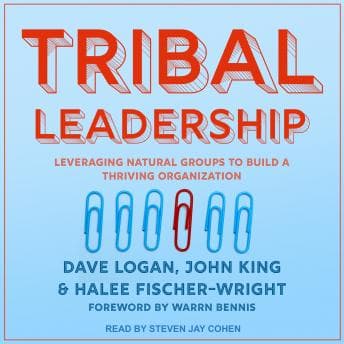

Everyone's been recommending this book for years. "It'll change how you see organizations," they said. "Revolutionary framework," they said. So I finally downloaded it during a red-eye to Chicago, expecting some groundbreaking revelation.
The revelation? My parents figured this out in 1987 running their dry cleaning shop in Koreatown. They just didn't have a five-stage model and a TED talk to explain it.
The Framework That's Actually Worth Your Time
Bottom line: There's maybe 90 minutes of genuinely useful content here stretched across 10+ hours. The core concept—that organizations contain tribal cultures operating at five distinct stages, from "life sucks" cynicism to "we're changing the world" mission—is legitimately valuable. I've seen every single one of these stages play out at client companies. Stage 3 ("I'm great, and you're not") is basically every McKinsey partner I ever worked with. Stage 4 ("We're great") describes the best startup teams I've consulted for.
The authors provide real diagnostic tools. How do people talk about their work? What language patterns emerge? Are they focused on individual achievement or collective purpose? This stuff actually works in practice. I used the tribal assessment framework with a Series B startup last month, and it helped the CEO understand why her engineering team and sales team literally couldn't communicate—they were operating at different stages.
But here's my problem: they take forever to get there.
Steven Jay Cohen and the Case for 1.5x Speed
Cohen's narration is... fine. Professional. Clear enunciation. But the pacing is glacial. I bumped it to 1.5x within the first hour and honestly should've gone higher. At normal speed, this book feels like sitting through a PowerPoint presentation where someone reads every bullet point aloud and then explains what they just read.
I'm firmly in the faster-narration camp here. This isn't a criticism of Cohen's voice or delivery—it's the combination of academic pacing in the writing and deliberate narration speed that makes you want to skip ahead. Jenny would say I'm being harsh. Jenny is right. But also, time is money.
What My Parents Knew Without the Consulting Fees
Here's what gets me about business books like this: the authors present tribal dynamics as some discovery, when anyone who's actually run a business—especially an immigrant small business—understands this instinctively. My dad knew which employees were "life sucks" people (Stage 1) and which ones genuinely cared about the shop's reputation (Stage 4). He didn't need a framework. He just paid attention.
But—and this is the key takeaway worth the listen—having the vocabulary changes things. When you can name the stages, when you can identify the linguistic markers, when you can map the upgrade path from Stage 2 to Stage 3 to Stage 4... that's actionable. That's what separates this from pure academic navel-gazing.
The case studies help. Zappos, IDEO, the USC football program under Pete Carroll. Real organizations, real tribal dynamics, real outcomes. Some examples feel dated now (the book's from 2008), but the principles hold up.
Skip to Chapter 5. Thank Me Later.
Seriously. The first few chapters are setup and throat-clearing. If you're a business person who's already bought into the idea that culture matters, you don't need the preamble. Jump to the stage breakdowns, absorb the diagnostic criteria, then decide if you want to go back for the case study details.
This is a focused listening experience—not something for the gym or half-attention commuting. You'll want to pause and think about your own organization, your own teams. Maybe even take notes. (I dictated three voice memos to myself during the Chicago flight.)
I've seen the tribal leadership framework fail when leaders try to force-upgrade their culture without understanding where people actually are. The book addresses this, but not enough. Stage 2 people ("my life sucks") don't respond to Stage 4 messaging ("we're great"). You have to meet them where they are. The authors know this, but the audiobook format makes it easy to miss the nuance if you're not paying attention. QBQ! The Question Behind the Question takes a different angle—focusing on individual accountability rather than tribal dynamics, but the underlying principle is the same: you can't change culture without changing how people think about their role in it.
Who Gets ROI Here (And Who Doesn't)
If you're in any leadership role and haven't encountered this framework before, it's worth the credit. The core model is genuinely useful—I reference it with clients regularly. Skip it if you've already spent serious time on organizational culture theory; you'll recognize most of this.
The Dry Cleaner's Son's Final Take
Bump the speed, skip the slow parts, and don't expect revelations. My 2.0x couldn't save this one from feeling padded, but the 90 minutes of insight? Actually solid. A business book that respects your intelligence, even if it doesn't quite respect your time.