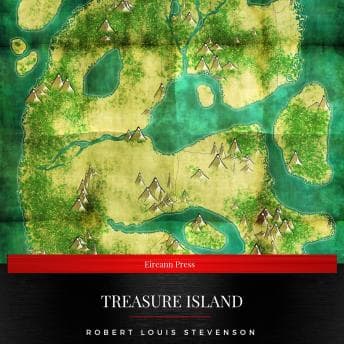

How many business books have I listened to that reference pirates as metaphors for disruptive innovation? At least a dozen. How many times have I actually gone back to the source material? Zero. Until last Tuesday, stuck in a hotel room in Austin after my flight got cancelled, with nothing but this audiobook and a minibar I was determined not to touch.
Turns out, every startup founder who's ever said "move fast and break things" was basically channeling Long John Silver. And Stevenson did it better in 1882 without a single PowerPoint slide.
The Original Pivot: Young Jim Hawkins as Accidental CEO
Here's what struck me about Treasure Island that no one talks about in business contexts: Jim Hawkins is essentially a kid who inherits a chaotic situation (dead pirate shows up at his family's inn, leaves behind a treasure map) and has to navigate a hostile takeover by a crew of pirates who've infiltrated his own ship. Sound familiar? I've literally consulted for three startups with that exact dynamic—minus the parrots.
Stevenson's pacing is ruthless. No padding. The action moves from the Admiral Benbow inn to the Hispaniola to the island with the kind of efficiency that would make any McKinsey partner weep with joy. Seven hours and twenty-two minutes, and not a wasted scene. This is what my parents did instinctively—tell the story, make the point, get back to work.
Melvin Adams delivers a solid, workmanlike narration. Nothing flashy, but he understands something crucial: Long John Silver needs to sound charming enough that you'd actually trust him with your company's finances before he stabs you in the back. The one-legged cook's dialogue has this oily reasonableness that reminded me of every smooth-talking COO I've seen torpedo a company from the inside. Adams doesn't oversell it, which is exactly right.
Silver as the Anti-Mentor: What Every Business Book Gets Wrong
Every leadership book wants to give you a hero to emulate. Stevenson gives you Long John Silver—and he's more honest about human nature than anything published in the last fifty years.
Silver is competent. Silver is likeable. Silver will absolutely cut your throat if the math works out in his favor. And the terrifying thing is, Jim knows this by the middle of the book and still finds himself drawn to the man. I've watched founders do this with toxic investors. I've watched myself do this with clients I should have fired.
The scene where Silver pivots from mutineer to Jim's protector—not because he's had a change of heart, but because he's recalculating his odds in real-time—that's the most accurate depiction of opportunistic leadership I've ever encountered. Adams reads it with just enough ambiguity that you're never quite sure if Silver's affection for Jim is genuine or strategic. Probably because Silver himself doesn't know.
No Filler. Seven Hours. I'm as Surprised as You Are.
I can't believe I'm saying this about a novel, but: there's nothing to skip. Seven hours, no filler. The chapters in the stockade drag slightly—defensive positions are boring whether you're in a wooden fort or a board meeting—but even those serve the plot.
The production is clean, if basic. No sound effects, no music, just Adams and Stevenson's prose. For a book this old, that's probably the right call. You don't need waves crashing when the language already puts you on that beach. Anne of Green Gables has that same quality—prose strong enough that you don't need production tricks to sell the world.
One thing that surprised me: how much of this story is about information asymmetry. Who knows about the treasure? Who knows about the mutiny? Jim keeps stumbling into intelligence—hiding in an apple barrel, overhearing Silver's plans—and the entire plot hinges on who knows what when. My parents ran their dry cleaning business on exactly this principle. Know more than your competition. Listen more than you talk. Don't let anyone know your margins.
Who Gets Value Here (And Who Doesn't)
If you've got kids between 10-14, this is the move. It's violent enough to hold attention without being gratuitous, and Jim Hawkins is a protagonist who actually earns his wins through observation and courage rather than superpowers or chosen-one nonsense.
For adults: if you've read every business book on disruption and want to see where those metaphors actually came from, Treasure Island is seven hours well spent. It's also just a damn good story—something I'd forgotten existed after years of listening to books that are really just extended LinkedIn posts.
Skip this if you need constant action or can't handle 19th-century prose rhythms. The language is accessible, but it's not modern, and some listeners find that a barrier.
Jenny would say I'm being harsh on business books. Jenny is right. But she'd also agree that Stevenson understood human motivation better than most contemporary authors.
Closing the Ledger
I finished this at 1:30 AM in that Austin hotel room. Minibar untouched. That's the highest compliment I can give any audiobook—it made me forget I was bored and stranded.
Melvin Adams won't blow you away, but he won't get in the way either. For a classic that's been adapted a hundred times, this production respects the source material without trying to compete with Disney. Sometimes that's exactly what you need: just the story, told straight, no gimmicks.
At 2.0x speed, this clocks in under four hours. Perfect for a long flight or a day of mindless admin work. I listened at 1.5x because I actually wanted to hear the prose, and I don't regret it.
Now if you'll excuse me, I need to go find a copy of Kidnapped. Apparently Stevenson wrote more than one book, and I've been sleeping on the man for forty years.