
I finished this one at 2 AM, grading a stack of junior essays on The Great Gatsby, and the irony nearly broke me. Here I am, red pen in hand, watching seventeen-year-olds fumble through Fitzgerald's critique of the American Dream, while Boyle's voice in my earbuds is dismantling that same dream with a precision that would make Nick Carraway weep.
This is why we still read the classics. And why we need contemporary novels that refuse to let us off the hook.
The Author Reads His Own Indictment
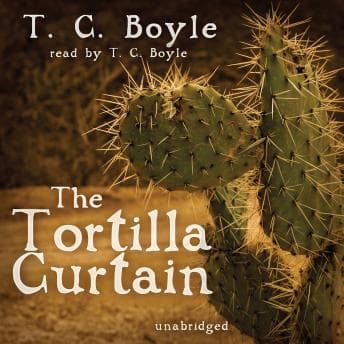
T.C. Boyle narrating his own work is a gamble that pays off in ways I didn't expect. There's an intimacy here—he knows exactly where the satirical knife should twist, when to let a sentence breathe, when to accelerate through Delaney's increasingly unhinged internal monologue. His Delaney is pitch-perfect: that particular breed of liberal smugness that recycles religiously while voting for gated communities. You can hear Boyle's contempt wrapped in compassion.
But here's the thing—and I'll be honest because I believe in being honest—Boyle stumbles on the Spanish. A few moments where you can hear him guessing at pronunciation, and it creates this uncomfortable meta-commentary. The American author narrating a story about Mexican immigrants, tripping over their language. I don't know if that's accidental irony or just a limitation, but it's there.
His energy never flags across nearly twelve hours, though. My students think audiobooks should be consumed at 2x speed like they're cramming for a quiz. No. The prose deserves to be savored. Boyle's sentences have rhythm—the way he shifts between Delaney's comfortable anxiety and Cándido's desperate hope requires you to sit in the discomfort.
Two Americas, One Canyon
The structure is what kills me. Boyle alternates between the Mossbachers—recycling, jogging, worrying about coyotes eating their dog—and the Rincóns, literally starving in a ravine a quarter mile away. The opening car accident, where Delaney hits Cándido with his Acura and pays him off with twenty dollars, sets up everything. It's a transaction. That's what Boyle is saying. That's what we do.
And then there's the Thanksgiving fire. Without spoiling it—this scene is devastating. An accident born of desperation that destroys the canyon, and the way the two storylines crash together afterward... This reminds me of what Hemingway said about writing: the dignity of movement of an iceberg is due to only one-eighth of it being above water. Boyle shows you the surface actions, but the weight underneath is crushing.
The women, though. América and Kyra. Some listeners complain they're underdeveloped, and I understand the criticism. Kyra especially feels like a type—the real estate agent obsessed with property values, more concerned with her listings than her humanity. But I'd argue that's the point. She's a symbol. Whether that's satisfying characterization or a flaw depends on what you want from the novel.
Who Gets to Dream, Who Gets to Drown
Let me tell you who should listen to this: anyone who's ever said "I'm not racist, but" without hearing themselves. Anyone who's taught The Grapes of Wrath and wondered what Steinbeck would write about today. That same unflinching honesty shows up in Fast Ice, though in a completely different context. Anyone who can handle a novel that offers no easy answers and an ending that some will call unsatisfying but I call honest.
Who should skip it: if you need hope, if you want redemption arcs, if you're looking for something to fall asleep to. This is not bedtime material. This is focused listening—dinner prep at best, but really you want to be walking somewhere, moving, because the stillness of this story will get under your skin.
My students would hate this. They'd call it depressing, ask why nothing good happens, complain that Delaney is unlikeable. And I'd tell them: that's the point. We're not supposed to like him. We're supposed to recognize him.
Still Grading at 2 AM
The ending won't give you closure. It gave me something worse—a question I'm still turning over while my red pen bleeds across another essay about the green light at the end of Daisy's dock. The American Dream isn't dead in this novel. It was never alive for everyone. Boyle just forces you to see who gets to dream and who gets to drown.
Twenty years teaching teenagers about literature, and this audiobook reminded me why I started. Not because stories make us feel good. Because the best ones make us feel implicated.