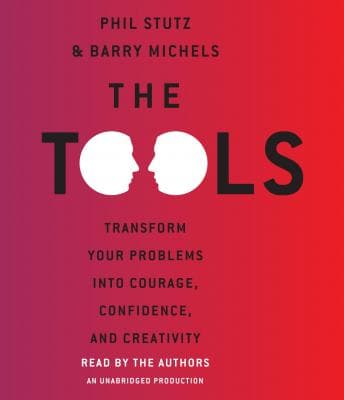

What if the reason therapy takes forever isn't the process—but the model itself?
I was chopping onions for a dal that would take three hours to perfect when this question hit me somewhere around the forty-minute mark of The Tools. Phil Stutz and Barry Michels aren't just offering self-help platitudes here. They're essentially arguing that traditional psychotherapy's obsession with the past is, well, kind of broken. As someone who's spent years studying why people do what they do, this is either heresy or revelation. Possibly both.
The Protagonist Exhibits Classic Impatience (And I'm Here For It)
Here's what makes this audiobook psychologically interesting: Stutz and Michels treat the unconscious not as something to excavate endlessly, but as a power source to tap now. The research actually shows that behavioral activation—doing things differently before you fully understand why—often works faster than insight alone. These two figured that out in the consulting room before the academic literature caught up.
The five tools themselves are concrete. Almost suspiciously concrete for therapists. The "Reversal of Desire" technique for pushing through avoidance. The "Active Love" tool for transforming anger. The chapter on "Jeopardy"—which multiple listeners flagged as particularly impactful—deals with that creeping sense that time is running out. That one got me. Standing in my kitchen, wooden spoon in hand, suddenly very aware that my dissertation committee isn't getting any younger. Neither am I.
What makes this compelling is the underlying theory. They're arguing that obstacles aren't barriers to growth—they're the mechanism of growth. The protagonist of your own life (that's you, by the way) exhibits classic avoidance patterns. We all do. But instead of spending years understanding why you avoid, they want you to use specific techniques to move through avoidance in real-time.
Two Voices, Two Problems
Now. The narration situation.
Barry Michels handles most of the reading, and his clear voice carries genuine enthusiasm. You can hear that he believes this stuff. When he's walking you through a technique or describing a client breakthrough, his energy is infectious—almost youthful, which is saying something for a psychotherapist with decades of experience.
Phil Stutz is... different. His voice is flat. Not monotone exactly, but there's a quality that some listeners describe as "unappealing," and I understand why. When he's explaining the theoretical underpinnings—the "higher forces" concept, the spiritual framework—his delivery doesn't quite match the material's weight. It's like watching someone describe fireworks in a neutral tone.
The contrast is jarring. You'll be engaged with Michels, then Stutz comes in and the energy dips. This is a fascinating case study in how narrator chemistry (or lack thereof) affects information retention. My therapist would have thoughts about why I found Stutz's sections harder to focus on. (Probably something about my father. It's always something about fathers.)
The moralizing segments—and there are some—suffer the most. When Michels leans into the "you must do this" energy without the grounding of a specific technique, his enthusiasm becomes less effective. It starts to feel like being lectured by a very earnest person at a dinner party.
Who Should Listen (And Who Should Probably Skip)
This is not background listening. Don't put this on while you're scrolling Instagram or half-watching cricket with your dad on a video call. The tools require active engagement—you're meant to practice them, not just absorb them.
If you've done therapy and felt frustrated by the pace of change, this will feel validating. If you're skeptical of anything that sounds remotely spiritual (Stutz brings in concepts of "higher forces" that might make the strictly secular uncomfortable), you'll need to decide whether to push through that resistance. Psychologically, the techniques themselves don't require belief in anything metaphysical. The framework is optional; the tools work anyway.
Skip this if: you want pure neuroscience and randomized controlled trials. This isn't that. It's clinical experience systematized into practice. Which, honestly, is how most therapeutic innovations actually happen. The research catches up later.
The same tension between lived experience and formal frameworks runs through True North, though Bill George approaches the leadership version of that gap with considerably less urgency about your mortality.Case Closed, Dal Finished
At seven hours and fourteen minutes, The Tools is a reasonable commitment for what you get: five concrete techniques, some genuinely useful reframing of how problems function, and an argument for action over endless analysis.
The Stutz narration issue is real. It's not a dealbreaker, but it's noticeable. If you've seen the Netflix documentary Stutz and found his presence compelling on screen, know that audio-only strips away the visual warmth that makes him effective there.
I finished the dal. I finished the audiobook. Both required more active attention than I'd planned. Both were worth it. The tools themselves? I've been using the Reversal of Desire technique during my morning jogs through Cambridge when the cold makes me want to quit. My therapist would be proud. Or she'd say I'm intellectualizing again. Probably both.