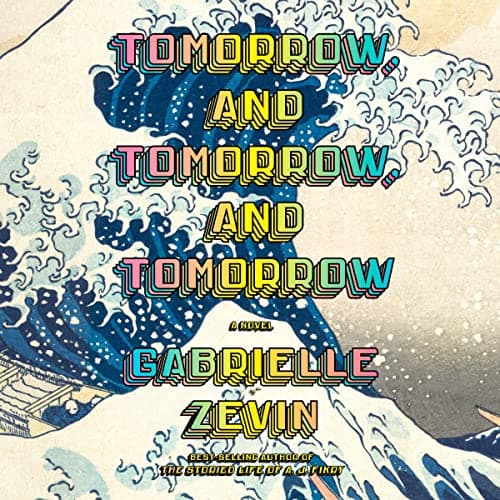

On the surface, Gabrielle Zevin’s Tomorrow, and Tomorrow, and Tomorrow is the story of Sam Masur and Sadie Green, two childhood friends who reunite in 1990s Cambridge to build a blockbuster video game empire. Listen two chapters deeper and you realize the games are only the architecture. Underneath the pixels sits a thirty-year examination of disability, chronic pain, class resentment, and the fierce, non-romantic partnerships that define creative lives.
Structure and Subtext Beneath the Screen
Zevin’s prose is built on restraint: what Sam and Sadie refuse to say to each other carries far more weight than their arguments. Early on, Zevin observes how games allow players to escape the confines of a body that betrays them—a theme that grounds Sam’s physical agony and Sadie’s creative isolation across decades. You don’t need a background in gaming to follow a single scene; Zevin explains every design mechanic through character stakes rather than technical jargon.
The novel also takes daring structural leaps, including a mid-book sequence narrated from inside a virtual game world that shifts the perspective just when the central relationship fractures. It shares that patient, multi-decade attention to moral and relational shaping with classics like To Kill a Mockingbird, while capturing the modern, unspoken communication failures that make Normal People ache.
Two Voices, One Complicated Partnership
Jennifer Kim handles the bulk of the nearly fourteen-hour narration, with Julian Cihi stepping in for pivotal back-half sections. Because Kim avoids theatrical fireworks in the opening chapters, some listeners initially read her delivery as cool or reserved. Give her three chapters: that controlled, deliberate cadence mirrors Sadie’s guarded interiority, and when the major emotional ruptures arrive in the second half, Kim’s restraint makes the impact devastating.
When Cihi steps to the microphone, voicing Marx—Sam’s college roommate and the warm, stabilizing producer who holds their studio together—the vocal contrast is immediate and deeply moving. The production shift between Kim and Cihi isn’t a gimmick; it changes how you hear the entire triangle.
Pacing Across Fourteen Hours
This is an expansive, contemplative novel rather than a plot thriller. A middle stretch focused on studio politics and industry growth moves deliberately, and Sam and Sadie repeatedly hurt each other out of pride and stubbornness in ways that are meant to frustrate you. Keep your player at 1.0x so Kim’s quiet pauses and Cihi’s warmth have room to land—rushing this performance would strip away the very silence where its emotion lives.