
I was elbow-deep in pancake batter at 7:45 AM - post-shift, running on fumes, kids already thundering down the hallway - when the last chapter hit me so hard I just stood there with a whisk in one hand and my phone in the other, staring at nothing. Carlos walked in, looked at me, looked at the batter dripping onto the counter, and just said "Good book or bad book?" Good book, babe. Weird, flawed, occasionally frustrating book. But good.
The Lusitania Hook Got Me Immediately
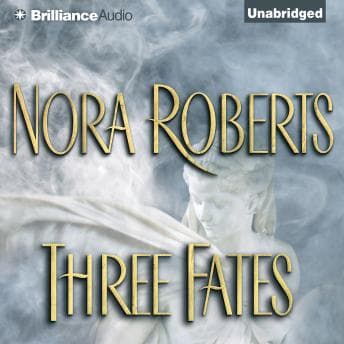
Look, I'm a sucker for a strong opening, and Nora Roberts does something clever here - she starts with a petty thief aboard the Lusitania in 1915, pocketing a small silver statue right before the ship goes down. There's this ominous weight to the opening scene that Bernadette Quigley delivers with real restraint. She doesn't oversell the doom. You feel the water coming. And then we jump forward nearly a century to the Sullivan siblings - Malachi, Gideon, and Rebecca - Irish, scrappy, and determined to recover their great-great-grandfather's stolen heirloom and reunite it with two matching statues scattered across the world.
The premise is genuinely fun. A treasure hunt spanning Helsinki, Prague, and New York, with romance woven through each sibling's storyline. Roberts does three love stories in parallel, which is ambitious for a standalone. Each Sullivan gets paired off - the scholar, the ambitious woman, the various players circling these priceless artifacts. It's a lot of plates spinning.
Quigley's Accent Work Is the Real Treasure Here
Bernadette Quigley's Irish lilt for the Sullivans is warm and lived-in - not the leprechaun caricature you sometimes get. When she shifts to Czech accents for the Prague sequences, there's a texture change that actually helps you track geography without checking your phone. The correspondence between Jack and his father was my favorite stretch of the whole audiobook - Quigley voices it with this dry wit that made me laugh out loud on the I-10 at 4 AM, which is not easy to do when you've just spent twelve hours in a trauma bay.
But here's where it gets tricky. The male voices. Malachi and Gideon are both Irish men of similar age, and Quigley gives them similar registers. During dialogue-heavy scenes between the brothers, I lost track of who was talking more than once. I'd rewind fifteen seconds, listen again, and sometimes still wasn't sure. For a 15-hour audiobook, that's a real problem in the middle stretch when the plot is at its most intricate.
The female voices? No issues. She differentiates the women clearly - different energy, different pace, different warmth. It's specifically the brother-to-brother exchanges that blur.
The Formula That Works (Until You Notice It)
I've read enough Nora Roberts to know the playbook. Meet-cute, resistance, banter, surrender, external threat, resolution. Three Fates follows it pretty faithfully, times three. And honestly? For the first eight or nine hours, I didn't mind. The treasure hunt element gives the romance formula something to hang on besides just feelings - there are actual stakes, actual villains, actual globe-trotting.
But around hour ten, I started feeling the pattern. Each couple hits their emotional beats at roughly the same intervals, and it started to feel like watching three rom-coms on split screen. The ambitious antagonist chasing the Fates never quite became scary enough to raise my pulse. As someone who's actually worked a code, I know what real adrenaline feels like in a story - and the villain here is more inconvenient than threatening.
That said, Roberts writes banter like breathing. The Sullivan sibling dynamic is genuinely entertaining - they rib each other the way my brothers and sisters do, with that specific eldest-sibling exasperation that I felt in my bones. That messy, real family energy is something Last Romantics: A Novel captures beautifully too - siblings who love each other and drive each other absolutely crazy in equal measure. (Being the ate of five kids, I wanted to pull Rebecca aside and say, "Girl, I know. I KNOW.")
Who This Is Actually For
If you want a cozy treasure hunt with romance that doesn't require you to think too hard after a brutal shift - this is your book. It's comfort food. Well-seasoned comfort food. My mom would love this (she still thinks I should've been a doctor), and honestly she'd probably finish it before me because she doesn't have to pause for pancake emergencies.
If you need high-octane thriller pacing or deeply unpredictable plotting, this isn't it. The slow start is real - give it two hours before you judge. And if similar male voices in audiobooks drive you crazy, be warned.
Night Shift Prescription
Perfect for that post-shift decompression. Not so intense it keeps you wired, not so boring it puts you to sleep at the wheel. Fifteen hours is a solid commitment, but it parcels out nicely over a week of commutes. Quigley's accent work alone is worth the listen, even when the brothers blend together. Just maybe don't start it on your most exhausted night - you'll want to actually track who's stealing what from whom.