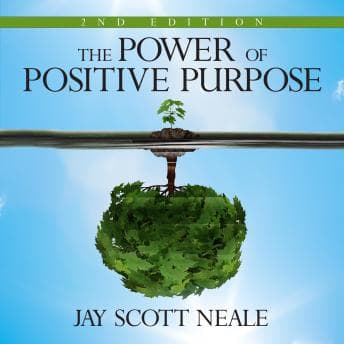

Everyone at McKinsey had a copy of something like this on their desk. The "I'm spiritual but also productive" signal. Usually unread. Usually gathering dust next to the Keurig. So when I saw The Power of Positive Purpose pop up in my Audible recommendations, I rolled my eyes so hard my wife asked if I was having a stroke.
But here's the thing—I was stuck in an airport delay at O'Hare, laptop dead, and this was already downloaded. Four hours to kill. Fine. Let's see what Dr. Neale has to offer.
Sixty Years of Practice, Not Weekend-Seminar Energy
Neale studied Science of Mind for sixty years. Sixty. He learned alongside Ernest Holmes' brother. That's not influencer-discovers-gratitude-journals-last-Tuesday territory. The man lived this stuff, and you can hear it.
The core framework is affirmative prayer and forgiveness as tools for dissolving what Neale calls the trinity of self-sabotage: guilt, unworthiness, and powerlessness. Now look—my parents never had language for this. They just worked. But watching my mom let go of resentment toward difficult customers? That was survival-level forgiveness. Neale's approach feels less like woo-woo and more like practical emotional maintenance.
Paula Langguth Ryan narrates with the kind of calm, measured delivery you'd expect from someone with 25 years in conflict resolution. She's not trying to be your hype woman. More like a patient therapist walking you through exercises. Some listeners will find this soothing. Others might need coffee.
The Efficiency Problem (And Why It Might Not Matter)
Bottom line: there's about 2.5 hours of genuine insight here stretched across 4.5 hours. Classic self-help padding. You'll hear the same concepts reframed multiple ways, which—okay, maybe that's intentional for retention? But at 2.0x speed, I was still checking my watch.
The strongest sections hit when Neale gets specific about how affirmative prayer differs from begging-the-universe prayer. He's not asking you to manifest a Tesla. He's asking you to align your mental state with what you claim to want. That's actually useful. Mindful Athlete works the same angle from the performance side—getting your head right before expecting results. I've seen this work with founders who were sabotaging their own success with imposter syndrome.
Where it drags: the forgiveness chapters repeat the same basic truth (you're forgiving for YOUR sake, not theirs) about six different ways. Skip to chapter 5. Thank me later.
Ryan's Delivery: Counselor Energy
Ryan brings emotional weight to the counseling-adjacent material without overdoing it. Her background in spiritual conflict resolution shows—she reads this like someone who's actually helped people through these exercises, not like an actor performing them. There's a groundedness there.
But I'll be honest—not much vocal variety. For a book about vibrant energy and joy, the narration stays pretty level throughout. Works for passive listening (airport delays, folding laundry, waiting for your flight to finally board). Won't keep you awake on a late-night drive.
Who Gets Value, Who Doesn't
This lands for: People genuinely stuck in guilt loops or self-worth spirals who want a structured approach that isn't purely secular therapy. The Science of Mind foundation gives it philosophical depth that pure productivity self-help lacks.
Skip it if: You want actionable business frameworks. This isn't that. It's inner work dressed in accessible language. Also skip if you're allergic to any spiritual vocabulary—Neale uses terms like "divine" and "magnificence" unironically.
Jenny would say I'm being harsh. Jenny is right. But she'd also point out that I finished it, which is more than I can say for 70% of my business book library.
The Partner's Take
I've seen this fail at three different companies—not the concepts, but the implementation. Leaders read books like this, feel inspired for a week, then go back to running on cortisol and resentment. Neale seems to know this. He's not promising transformation from passive listening. He's giving you tools that require actual practice.
The key takeaway is worth the listen. The other 3 hours? Not so much. But for a short audiobook you can finish in one airport delay, it delivers more substance than most in the spiritual self-help space. My parents would've had no patience for the vocabulary, but they'd recognize the underlying wisdom: let go of what's eating you, or it'll eat your life.
Worth streaming if you've got a subscription. Not quite worth a credit unless you're specifically in the Science of Mind tradition and want a trusted voice walking you through it.