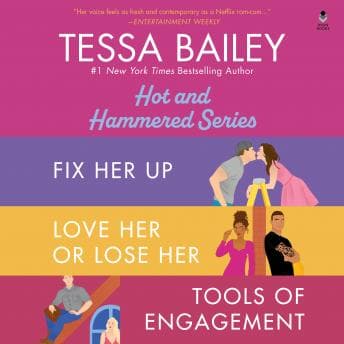

Look, I know. The man who podcasts about Faulkner to 47 listeners is reviewing a Tessa Bailey romance bundle. Denise has been after me to try Bailey for months—something about "reading what actual humans enjoy, Marcus"—and when she queued up this 27-hour monster on our lakefront walks, I didn't fight it. Three books. Three romance tropes. Nearly 28 hours of content I would've dismissed as frivolous five years ago.
I was wrong to be skeptical. Not completely wrong—I'll get to that—but wrong enough to matter.
The Trope Trifecta, or Why Formula Isn't a Dirty Word
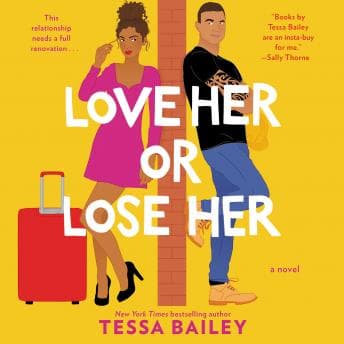
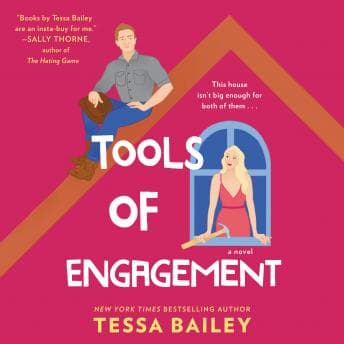
Here's what Tessa Bailey understands that a lot of literary fiction forgets: structure is not the enemy of feeling. Fix Her Up gives you fake dating between a retired baseball player and his best friend's little sister. Love Her or Lose Her puts a married couple in relationship boot camp. Tools of Engagement throws two people who can't stand each other into flipping a house together. Yes, you can see the beats coming. Yes, you know they'll end up together. That's not the point.
The point is Bailey writes desire with a specificity that would make my AP Lit students blush and my colleagues at the faculty lunch table choke on their sandwiches. These aren't vague "their eyes met across the room" moments. She writes characters who want specific things from specific people for specific reasons, and that clarity of wanting is—dare I say—good writing. This reminds me of what Hemingway said about prose being architecture: Bailey's blueprints look nothing like his, but they're just as intentional.
I've got my eye on Fangirl Down now, another Bailey that Denise swears by, and I'm willing to bet the blueprints are just as solid.Fix Her Up is the strongest of the three. The dynamic between Georgie and Travis has real tension because Bailey builds the friendship underneath the attraction—you believe these people before you believe their romance. Tools of Engagement runs a close second; the house-flipping conceit gives the enemies-to-lovers arc physical stakes that most rom-coms lack. You're not just watching two people bicker. They're literally building something together. My students would hate me for saying this, but there's a metaphor there that Fitzgerald would appreciate.
Love Her or Lose Her, though. That's where the bundle stumbles. The marriage-in-crisis plot needs more room to breathe, more history between Rosie and Dominic than Bailey gives us. The relationship boot camp concept is clever, but it rushes the reconciliation in ways that felt unearned. Two out of three isn't bad. But in a 27-hour commitment, a weaker middle act is noticeable—like a sagging second act in a novel your students are already looking for excuses to abandon.
Charlotte North and the Accent Nobody Can Ignore
North's comedic timing is genuinely good. She lands Bailey's humor—the self-aware absurdity of these situations, the internal monologues where characters know they're being ridiculous—with the kind of delivery that made me laugh out loud on the lakefront path. (Denise kept asking what was so funny. I kept saying "nothing." She knew I was lying.)
The emotional beats work too. North reads the tender moments with restraint, which is the right call. Bailey's prose already runs hot, so a narrator who pushed harder would tip into melodrama. The steamy scenes? She handles them. I'll leave it there because Principal Martinez might actually read this one.
But. That fake New York accent for the male characters. It's distracting in the way a squeaky chair is distracting during a good lecture—you can still absorb the material, but every few minutes you're yanked out of it. It doesn't ruin anything, but in a single-narrator romance where you're spending hours inside these men's POV chapters, "not quite right" adds up across three books. The narrator understands that pause is punctuation—she's skilled at pacing and emphasis. She just clearly feels more at home inside Bailey's women than Bailey's men, and across 27 hours, you notice the gap.
One upside: North's best work here is in Tools of Engagement, and I'd happily recommend picking that audiobook alone—fewer hours means the accent is less of a thorn.Who Gets the Assignment and Who Gets a Pass
If you're a romance reader who's done Bailey in print, this bundle is a solid audio companion. North's strengths align with Bailey's strengths: voice, humor, and heat. If you're a literary snob like I was before Denise staged her intervention, start with Fix Her Up alone and see if Bailey's specificity wins you over.
If you need your narrators to nail every accent, or if you bounce hard off formulaic structure regardless of how well it's executed, this probably isn't your 27-hour investment. And if the middle book of a trilogy being weaker than the bookends bothers you more than it bothers me—fair. Skip the bundle and cherry-pick.
The Marginalia
Twenty years of teaching has made me a snob about a lot of things. Pacing. Sentence structure. Whether students actually read the assigned chapter or just watched the movie. But snobbery about genre? That I'm getting over. Tessa Bailey isn't writing Middlemarch. She's writing something Middlemarch couldn't do—short, hot, funny stories about people who want uncomplicated happiness and have to get messy to find it. The prose deserves to be savored on its own terms. I listened at 1.0x. Denise approved.
Now if you'll excuse me, I need to go record a podcast episode about Dorothea Brooke that seven people will finish.