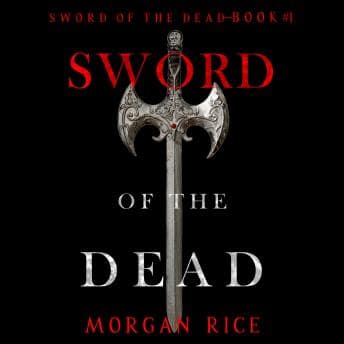

I was folding laundry when I started this one. A mundane task, sure, but I figured a fantasy audiobook would make the sock-matching less soul-crushing. What I didn't expect was to spend the next four and a half hours conducting an informal case study on my own tolerance for AI narration.
Let me be upfront: this audiobook uses a synthesized voice. They tell you right in the title, which I appreciate. Transparency matters. But knowing something intellectually and experiencing it are two very different psychological phenomena.
The Uncanny Valley Problem
Here's the thing about human voices—we're evolutionarily wired to detect emotional cues in speech. Babies do it before they understand words. So when you have a narrator named "Liam" delivering lines about a princess being snatched by a monster and dragged to an underground kingdom, and his voice sounds... calm? Consistent? Almost sedated? Your brain starts sending warning signals.
The voice itself is deep and clear. Some listeners apparently find it soothing, and I can see that. If you're using this as background noise while doing dishes, sure. But when Lance, our peasant-boy-turned-hero, is supposedly in mortal danger fighting hideous creatures, and the narration maintains the exact same emotional register as when he was just dreaming about joining the knights... that's a disconnect I couldn't ignore.
Psychologically, this doesn't track. Stories work because we mirror the emotions we hear. The research shows that vocal prosody—the rhythm and intonation of speech—accounts for a huge portion of emotional communication. Remove that, and you're asking listeners to do all the emotional heavy lifting themselves.
What Morgan Rice Actually Built
Setting aside the narration issue for a moment—because I think that's going to be the dealbreaker for most people and they deserve to know upfront—let's talk about the story itself.
Rice is reimagining the Persephone myth here, which is a fascinating choice. The original myth is basically about power dynamics, consent (or lack thereof), and the negotiation between worlds. Rice takes that skeleton and dresses it in YA fantasy clothes: we've got Meredith, the kidnapped princess; Lance, the peasant with hero aspirations; and a mysterious girl thief who might be the most interesting character of the bunch. Ice Princess works with similar archetypes—royalty, destiny, underground threats—though it leans harder into the emotional isolation that comes with power.
The protagonist exhibits classic "chosen one" patterns, but Rice at least gives us multiple POVs, which keeps things from getting stale. The world-building is serviceable—underground kingdoms, monsters, crumbling political alliances up above. It's not breaking new ground, but it moves fast. Rice clearly understands pacing.
The girl thief, though? She's the one I kept waiting for. Hardened, operating as an unlikely hero in a space where the men in power are distracted and failing. That's a more interesting psychological profile than "peasant boy wants to prove himself," though I get why Lance is the main draw for the target audience.
The Verdict Nobody Wants to Hear
I found myself asking: why does Morgan Rice, a #1 bestselling author with a substantial catalog, choose synthesized narration? The cynical answer is cost. The charitable answer is accessibility—getting audiobooks out faster to fans who want them. I genuinely don't know which it is.
But here's my honest take: if you're someone who can tune out narration and just absorb story, you might be fine. Some listeners in the reviews called this "satisfying" and "calming." Others called it "horrible" and "emotionless." (The research shows this kind of polarization is common with AI voices—people either adapt quickly or never do.)
I'm in the "never adapted" camp. Every time a dramatic moment happened, the flat delivery pulled me out. It's like watching a movie with the wrong soundtrack—technically you're getting the story, but you're missing half the experience.
Fair warning: some listeners reported glitches where the narration skips chunks of story. I didn't experience this personally, but it's worth knowing before you commit.
Skip the Audio, Grab the Paperback
No, I wouldn't listen again. But I'd probably read the print version.
That's the weird thing—Rice's writing is solid. Fast-paced, accessible, easy flow. The story has genuine hooks and the cliffhangers work. If I'd picked this up as a physical book, I might be downloading book two right now.
But audiobooks are a different medium. They're not just text delivered through ears. They're performances. War of the Worlds proved that to me—same synthesized narrator, same emotional flatness, different story entirely. And a performance without emotional variation is... well, it's a case study in what happens when you remove the human element from human storytelling.
My therapist would have thoughts about Lance—the one who keeps trying to prove himself to authority figures who don't see him. But I'll never know if those thoughts would've landed differently with a human narrator bringing his desperation to life.
Who should listen: Fantasy fans who genuinely don't mind synthesized voices and want fast-paced YA adventure as background listening. Who should skip: Anyone who needs emotional performance to stay engaged—just read the print version instead.