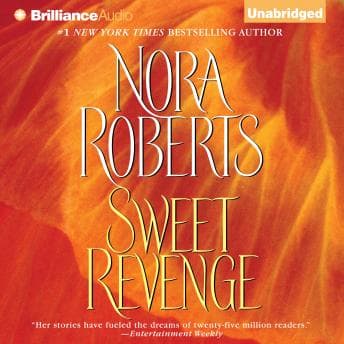

What happens when you take a revenge plot, wrap it in designer gowns and royal titles, and then add a jewel heist? You get Nora Roberts doing something I didn't expect her to do—and doing it pretty well.
I'll be honest. I picked this up thinking it would be standard Roberts romance fare. Something to grade papers to at 11PM, you know? Background listening while I'm bleeding red ink over yet another essay that confuses "their" and "they're." But about three hours in, I found myself actually setting down the papers. That's when I knew something was working.
The Slow Burn That Actually Burns
Adrienne isn't your typical romance heroine, and that's what makes this sixteen-hour listen worth the commitment. She's calculating. She's been planning her father's downfall for a decade. There's something almost Shakespearean about her—the wronged child plotting revenge against a cruel parent, wearing a mask of frivolity to hide her true purpose. (Yes, I'm comparing Nora Roberts to Shakespeare. My students would have opinions about this. They can write me an essay.)
The thing is, Roberts understands that revenge stories work best when you understand the wound. The childhood flashbacks aren't just filler—they're the engine driving everything Adrienne does. When she's floating through galas and charming the wealthy elite, there's this undercurrent of barely controlled rage that Napoleon Ryan manages to convey without going over the top.
And then Philip Chamberlain shows up. A man with his own secrets, his own agenda. The romance doesn't derail the revenge plot—it complicates it in genuinely interesting ways. Who is this guy really? What does he want? The tension between attraction and suspicion kept me engaged through what could've been a saggy middle section.
Napoleon Ryan's Balancing Act
Look, I couldn't find a ton of information about Napoleon Ryan online, but based on this performance, he understands something crucial: this isn't just a romance. It's a thriller wearing romance clothing. His Adrienne has steel underneath the silk. When she's playing the vapid princess for the public, you can hear the calculation. When she's alone with her thoughts, the warmth drops and something harder emerges.
His character differentiation is solid—Philip sounds distinct from Adrienne's father, the various society figures have their own vocal quirks. But here's where I have to be fair: some of the more introspective scenes felt a bit flat to me. Those quiet moments where Adrienne is wrestling with what she's become, what her revenge is costing her—Ryan doesn't quite nail the emotional depth those scenes deserve. The prose is doing heavy lifting that the narration doesn't always match.
Pacing-wise, he keeps things moving. At sixteen hours, this could've dragged. There are moments in the middle where the plot slows down, and I'll admit I started grading papers again during a few of those stretches. But when the heist elements kick in, when the danger becomes real, Ryan picks up the energy appropriately.
Where the Revenge Lands
The final act is where Roberts really delivers. Without spoiling anything, I'll say this: she doesn't let anyone off easy. Not Adrienne, not Philip, not the reader. The question of whether revenge is worth its cost gets answered in ways that felt earned rather than preachy.
This reminds me of what Dumas was doing with Monte Cristo, honestly—that same exploration of whether vengeance destroys the avenger as much as the target. That kind of moral complexity shows up in Mansfield Park too, though Austen's version trades jewel heists for social maneuvering. Roberts isn't operating at that literary level, but she's clearly read the classics. She understands the architecture of a good revenge story.
If you loved The Witness or The Collector—Roberts' other suspense-heavy romances—this is in that same vein. Actually, I'd say this is a spiritual predecessor to those. You can see her developing the formula that would serve her so well later.
Who This Is (and Isn't) For
If you're looking for a pure romance with low stakes and guaranteed happiness, this might frustrate you. The romance is real, but it's tangled up in genuinely dangerous situations. People get hurt. Choices have consequences. Also, if you're sensitive to depictions of childhood abuse and controlling parental relationships, be aware that Adrienne's backstory doesn't pull punches. Roberts doesn't sensationalize it, but she doesn't soften it either.
And honestly? If you need a narrator who brings the same intensity to quiet emotional moments as he does to action scenes, you might find Ryan's performance uneven. He's good. He's not transcendent.
Class Dismissed
Probably wouldn't listen again—but that's not a criticism. This is a plot-driven story, and once you know the twists, the magic diminishes. But that first listen? Worth every hour I spent not grading papers.
Denise asked me what I was listening to when I laughed out loud at one of Adrienne's cutting observations during a society party. "Nora Roberts doing revenge tragedy," I told her. She gave me that look she gives me when I'm being pretentious. But I wasn't wrong.
The prose deserves to be savored at 1.0x. Don't speed this one up—you'll miss the layering Roberts does, the way she plants seeds early that bloom later. My students would hate how slowly this builds. I loved it.